

Overview
At times, handling RFx processes manually can be overwhelming. Procurement teams must juggle endless spreadsheets, back-and-forth emails, and slow approvals. Research shows that inefficient RFx workflows can waste up to 30% of procurement budgets, resulting in missed deadlines, higher costs, and strained supplier relationships.
Enter rfi rfp rfq process. As a structured process, it can help organizations address these challenges by evaluating suppliers, comparing solutions, and obtaining the best deal. When this process runs on traditional methods, there are delays and poor visibility. But the right strategy and tools make it into a streamlined engine for smarter sourcing.
This post walks you through everything you need to streamline your RFI, RFP, and RFQ processes in 2026 and beyond. Think of it as a practical guide that helps you rethink your approach and turn your RFx process into a true competitive advantage. First, we will understand the significance of the process.
Why Streamlining RFI, RFP, and RFQ Processes Matters
Many organizations still handle this process by using traditional methods. Though the process works, it has some drawbacks.
Manual Document Handling- There is an increased risk of errors and duplicated work in spreadsheets and emails.
Approval delays- Waiting for internal approvals can slow the process down and create unnecessary delays.
Limited Supplier Visibility- Without centralized data, it becomes difficult to properly evaluate suppliers or collaborate effectively.
Compliance Risk- Inconsistent documentation can make audits more stressful and increase compliance exposure.
Over time, these inefficiencies can lead to missed deadlines, rising costs, and strained supplier relationships, and impact the organization’s ability to make timely, informed decisions. In short, it affects overall procurement performance. That is why it is necessary to optimize the rfi rfp rfq process.
The next question naturally is- what tools or solutions can help make these processes easier, faster, and more reliable?
Comparing RFx Tools – Which One Fits Your Needs
Selecting the right RFx tool is critical, as not every solution serves the same purpose. There are mainly four types of software solutions.
RFQ Management Software
rfq management software (or standalone rfq software) works best for organizations whose main goal is to collect quotes quickly and compare prices easily. It can gather supplier pricing, line up quotes side by side, handle simple approval steps, and generate basic cost reports.
This type of software is suitable for organizations that focus mostly on transactional purchasing rather than complex sourcing projects.
RFI Management Software
This software is helpful when organizations want to explore and evaluate potential suppliers early in the process. It uses structured questionnaires to collect consistent responses, assess supplier capabilities, and build a list of qualified vendors.
Rfi management software works best for companies that want to expand their supplier base or prequalify vendors efficiently.
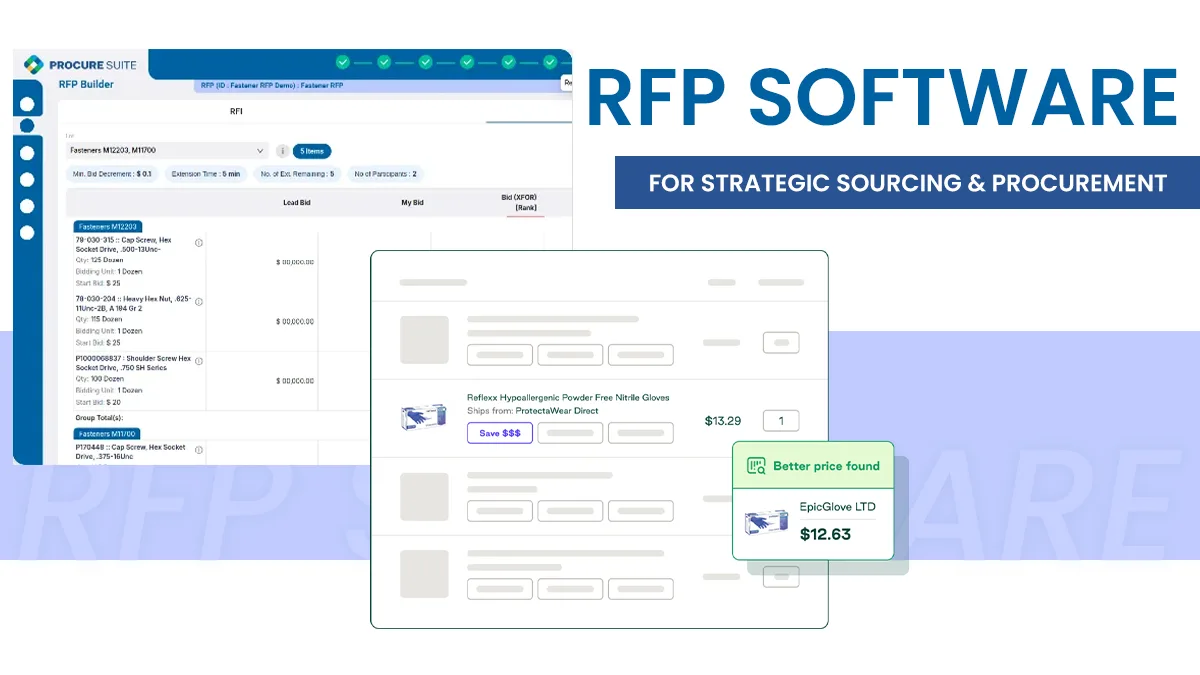
RFP Automation Software
This software can handle more complex sourcing situations, where companies need multi-criteria scoring, cross-functional approvals, and compliance checks. It helps by automating scoring workflows, using weighted evaluation matrices, managing role-based approvals, and keeping documentation ready for audits.
This type of software is best suited for strategic sourcing procurement teams that handle high-value or complex bids.
e Tendering Platform
An e tendering platform offers end-to-end management of the entire RFI, RFP, and RFQ processes. This platform makes the process smoother. It automates workflows, enabling better collaboration with suppliers, offering real-time analytics, integrating with ERP and CRM systems, and keeping compliance tracking all in one place.
They are ideal for mid-size to large organizations looking to scale their procurement operations.
Here is a quick comparison of the features.
Feature | RFQ Software | RFI Management Software | RFP Automation Software | eTendering Platform | Why It Matters |
|---|---|---|---|---|---|
Workflow Automation | Partial | Moderate | Full | Full | Reduces manual errors |
Supplier Collaboration | Basic | Moderate | Advanced | Advanced | Faster responses & transparency |
Analytics & Reporting | Standard | Moderate | Advanced | Advanced | Enables data-driven supplier decisions |
Integration | Limited | ERP only | ERP + CRM | Full ERP/CRM | Smoother workflow across systems |
User Experience | Basic | Moderate | Intuitive | Intuitive | Faster adoption & engagement |
We will now look at the implementation of the process.
How to Implement RFI RFP RFQ Process Efficiently
An effective RFx process involves design, data management, and user adoption. Organizations can follow this step-by-step guide to implement a streamlined RFx process.
Step 1- Review Existing Workflow
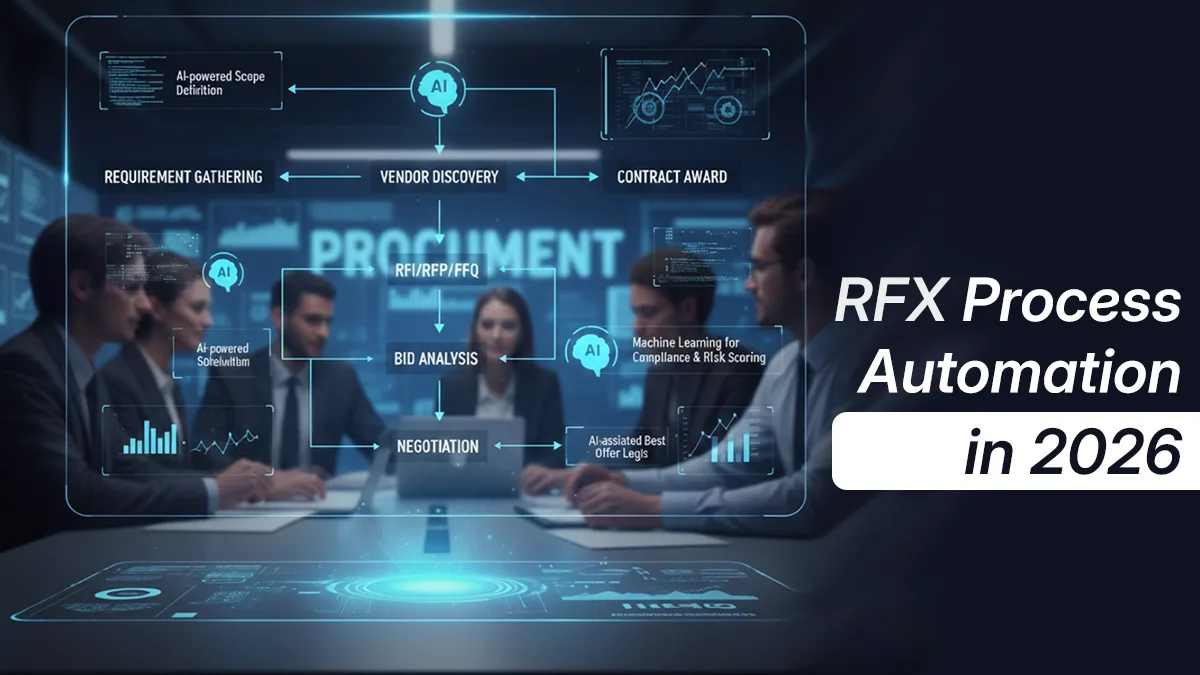
The first thing for organizations is to map out their entire rfi rfp rfq process. They must start from the initial request all the way through to contract award. Then pinpoint the stages where delays, mistakes, or inefficiencies tend to happen.
Step 2- Select the Right Platform
Businesses need to match their goals with tool capabilities. If cost comparison is your focus, rfq management software may be enough. If collaboration and analytics matter more, an e tendering platform may be the smarter choice. Moreover, automation, analytics, and supplier scoring should align with the complexity of your sourcing activities.
Step 3- Define Roles and Permissions
Companies must assign responsibility to team members at every stage of the process. They should make sure everyone understands their roles, from request creation to evaluation and approval. This minimizes errors and ensures accountability. Clear accountability reduces approval lag.
Step 4- Standardize Data
It is essential to consolidate supplier information, contracts, and historical RFQs. Standardized data helps in smooth integration and accurate reporting.
Step 5- Help Users for Adoption
Even powerful software is of no use without users. So, organizations must impart role-based training, complete documentation, and encourage users to give early feedback. When users start seeing real benefits such as reduced workload and faster approvals, then adoption happens naturally.
Step 6- Monitor KPIs
To keep improving the process, organizations need to monitor cycle times, look into cost savings, check whether compliance standards are being met, and determine how actively suppliers are participating.
A structured approach allows organizations to speed up procurement timelines, reduce mistakes, and create clearer, more transparent communication with suppliers.
It is now time to optimize and scale.
Expand and Optimize RFx Processes
The RFx process does not stop at implementation. Organizations must expand and optimize the system so it can support continued growth. Adding advanced features also helps in improving procurement results. These can be-
Supplier Risk Scoring and Audits – It helps identify potential compliance or financial risks before awarding contracts.
AI-Powered RFP Evaluation – It automates scoring and ranking to reduce human bias and speed decision-making.
Predictive Analytics for Budget Forecasting – It improves procurement planning and cost management.
Integration with other procurement systems is crucial. Connecting RFx platforms connect with ERP, P2P (procure-to-pay), and S2P (source-to-pay) systems enables-
Seamless data flow
Speeds up approvals
Eliminates duplicate entries
Budget forecasting improves
Enhances decision-making
Improves supplier relationships
More strategic sourcing decisions
Simply put, streamlined RFx processes transform procurement into a strategic function.
Concluding Remarks
As procurement is evolving fast, organizations need to change the way they manage rfi rfp rfq process to stay ahead. This means taking a close look at current workflows to spot bottlenecks and slow points. Then they can select a platform that fits their needs and keep improving their processes using advanced analytics and automation. By taking these steps, they will be well prepared to handle the demands of 2026 and beyond with greater speed, precision, and clarity.
Procure Suite is a cloud-based e-sourcing solution that manages RFI, RFQ, and RFP processes efficiently. It helps organizations simplify, organize, and standardize their sourcing activities from start to finish. Companies can get rid of time-consuming email-based processes. To learn more about this robust RFx solution, contact us to schedule a demo.