

Overview
Slow approvals, invoice issues, and payment hurdles point toward a bigger problem. It is the process, ranging from procurement to payment, at fault. This can result in issues like reduced trust of suppliers and less participation in the procurement process. Therefore, it is essential to optimize the procure-to-pay (P2P) process. It streamlines the approval process to reduce delays. Here, companies benefit from the evolving technology.
When it comes to optimizing the purchasing cycle, procure to pay software solutions help enterprises by automating approvals and improving visibility. Let’s understand the role of procure to pay solutions in P2P optimization and their major business benefits. Before moving ahead, let’s dig deeper into the factors that slow down P2P approvals and their impact on modern businesses.
Reasons for the Sluggish P2P Approval Process and Its Impact
Most procurement teams struggle to get approval due to multiple reasons. Some major reasons include
Unclear approval hierarchies
Manual emails and processes
Rigid ERP systems
Inconsistent data and siloed finance
Simply put, these reasons initiate an unwanted circle of requisition, confusion, follow-up emails, escalations, and delayed payments. These delayed approvals and payments lead companies to risks related to
Internal productivity
Trust of suppliers
Overall visibility
Payment processes
As per official research reports from reputable firms like Deloitte, inefficiency in procurement operations can increase the processing costs by up to 60 percent.
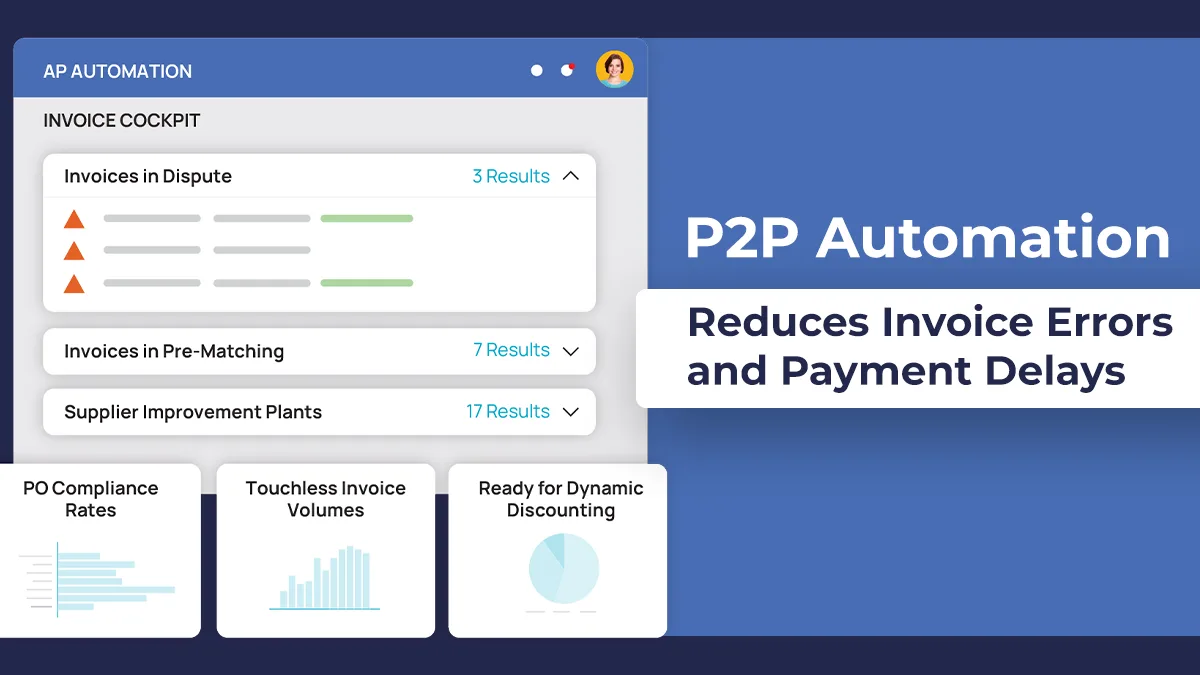
Here, procure to pay management software is useful to optimize P2P by automating approval workflows and standardizing policies. It also enables companies to get real-time spend visibility while reducing invoice cycle time. Simply put, P2P optimization offers structured control, and the right procure to pay platform makes it possible for companies.
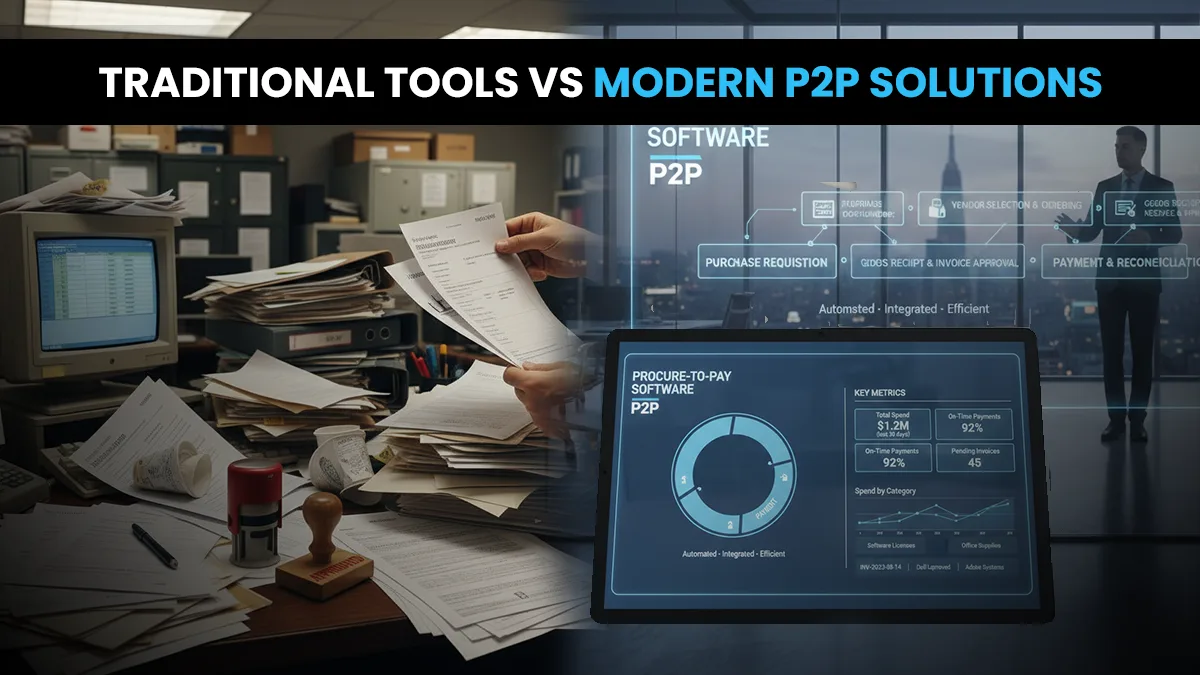
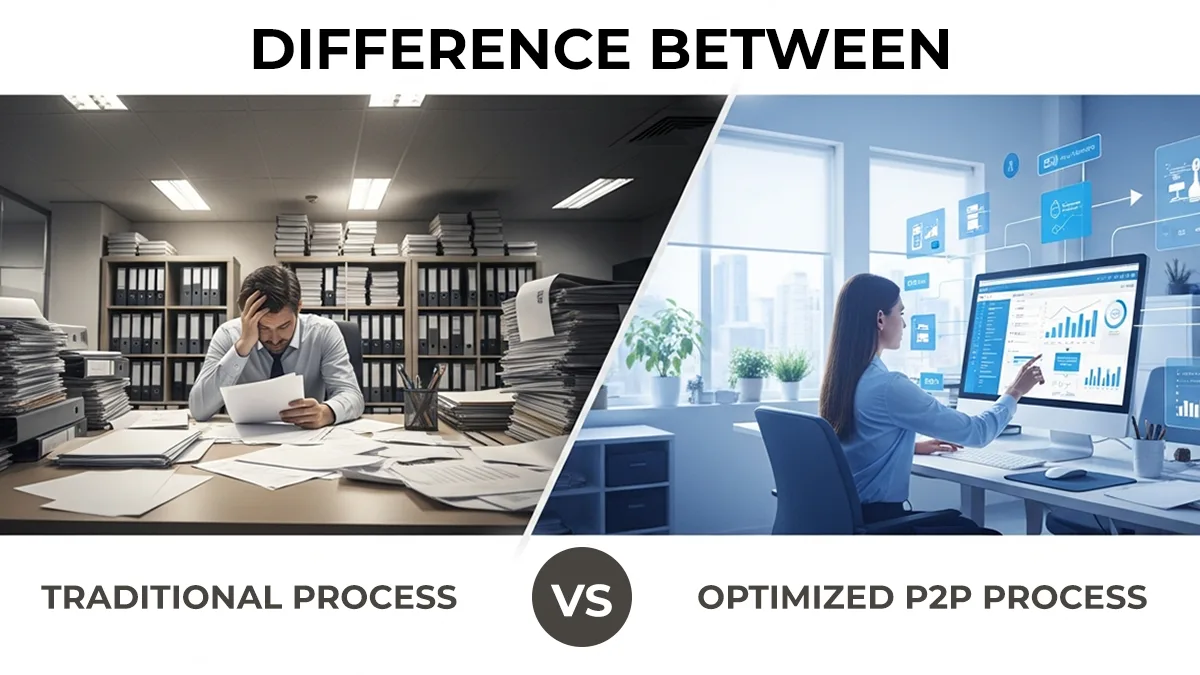
Let’s dig deeper into the difference between traditional P2P and optimized P2P processes.
Difference between Traditional vs. Optimized P2P Process
Here we give a quick table of comparison between the traditional and optimized P2P process.
Factor | Traditional Process | Optimized P2P Platform |
|---|---|---|
Approvals | Email-based, manual | Automated, rule-based |
Visibility | Limited | Real-time |
Invoice Matching | Manual | Automated |
Compliance | Reactive audits | Built-in policy enforcement |
Supplier Communication | Disconnected | Centralized portal |
Cycle Time | 10-20 days | 3-7 days |
Simply put, procure to pay solutions can optimize the process effectively for reducing approval delays. However, it is essential to implement the optimized P2P procurement software to leverage this advantage.
Roadmap for Optimizing P2P Procurement Software
It is essential to optimize the P2P solution before implementing it to get the desired outcome. Here are the steps for effective P2P optimization.
Step 1. Identify the Bottlenecks
It starts with answering questions like the number of manual touchpoints, points where invoices fail to match, and approvals get stuck. In our experience, as many as 40 to 50 percent of delays are related to approvals. Therefore, companies should identify these issues before configuring a p2p procurement software.
Step 2. Automate Approval Rules
It’s time to automate approval rules based on the company’s requirements. Modern procure to pay software solutions are useful in handling department-level routing, spend-based thresholds, and parallel approvals. Altogether, this can ensure quicker processing. These automated processes can eliminate the dependence on emails and build accountability.
Step 3. Centralize Invoice Data
Data fragmentation can reduce speed, and therefore, companies should focus on centralizing the supplier invoice data. An optimized procure to pay platform can maintain clean supplier data with flagged exceptions instantly. Moreover, it can prevent duplicate payments and ensure the accuracy of the process.
Step 4. Integrate with Systems
It is essential to connect the P2P systems with existing business systems like ERP, budget controls, and contract repositories. Without proper integration capabilities, a p2p procurement system can go into silos. Visibility can create the necessary control, and integration can improve the visibility.
Step 5. Measure the Metrics
This is another crucial step that involves the KPI measurement. Companies should track invoice processing time, spend management, and requisition-to-PO cycle time. Moreover, the procure to pay management software should have the necessary dashboards. They help measure these metrics in real time.
An optimized p2p procurement system can help companies streamline their systems and reduce delays in approvals. Let’s go through some real-life scenarios to understand.
Real-Life Scenarios of P2P Process
Whether you own a manufacturing enterprise or run a tech startup, cloud-based procure to pay solutions are always useful. Here are two practical use cases of p2p procurement software.
1. Tech Startup
A tech company faces an issue with approval processing across different departments. Procure to pay software solutions have automated multi-level approval workflows and real-time dashboards to accelerate the process.
2. Manufacturing Company
When a manufacturing firm manages raw material suppliers and complex contracts, they face issues like invoice mismatches and compliance gaps. Here, a robust p2p procurement system with 3-way matching and ERP integration can remain helpful.
3. Retail Chain
A retail company needs to handle decentralized purchasing. However, there is a risk of rogue spending due to policy-related issues. Procure to pay solutions with centralized visibility and policy enforcement can assist retail chains in maintaining governance.
It is, however, necessary to choose the right p2p platform to leverage the benefits and optimize the process. This results in rapid approvals and streamlined processes. Let’s understand why procurement leaders focus on accelerating the approval process.
Why Procurement Leaders Care About Approval Acceleration
Faster approvals are necessary for an effective procurement process. Delays in approval can negatively impact working capital, supplier relationships, audit risk, and employee productivity. Some approval issues also hamper operational continuity. These are some key reasons why procurement leaders consider a quicker approval process as a priority. When p2p procurement software reduces delays, procurement teams can improve financial discipline.
Concluding Remarks
P2P optimization is about creating a seamless, uninterrupted flow from requisition to payment. It enables companies to automate processes and measure performance to reduce approval delays. A robust procure to pay platform offers more control, visibility, and accountability across the entire procurement process. Globally, procurement teams prefer to use such platforms to optimize the P2P process and accelerate approvals.
Procure Suite is user-friendly procure-to-pay software that manages all the key processes, including invoicing, payments, and managing suppliers. It streamlines the procurement process and improves spend management to maintain supplier relationships. Contact us to schedule a free demo to learn more about the scope of the Procure Suite for your company.