



Overview
Procurement plays a pivotal role in ensuring the success of any business, and the source-to-pay (S2P) process is its critical part. Yet, many organizations are still unable to determine the true value of S2P. Hence, it is essential to track key performance indicators (KPIs) in the S2P process to unlock your procurement strategy's full potential.
Source to pay software makes it possible for modern enterprises. It offers real-time insights into procurement performance, streamlines operations, and ultimately boosts your bottom line.
This blog covers the key performance indicators (KPIs) that are essential for tracking the success of your S2P process. Let us dig into why measuring the impact of the S2P process is important.
Why It Is Important to Measure S2P Success
It is crucial to know how well your source to pay process is working to ensure it delivers the value you want. Otherwise, you could miss opportunities to cut costs, strengthen supplier relationships, or simplify procurement processes.
Procurement teams have to handle pressure to boost efficiency and demonstrate ROI. When organizations track the right KPIs, they get insights into performance, identify bottlenecks, and highlight areas for improvement.
Traditionally, procurement was a fragmented process. Teams used to track spend, supplier performance, and compliance manually. The source to pay solution has changed the game by automating these tasks and streamlining daily workflows.
When businesses establish and track the right KPIs, they can move beyond payment tracking and adopt a more proactive, strategic approach to procurement.
It is important to recognize the common challenges that many organizations encounter in procurement.
Common Procurement Challenges
Teams use spreadsheets, emails, and different software tools in traditional procurement methods. These can slow down processes and make it easy to miss important opportunities. Some of the most common obstacles to effective procurement management include-
- Lack of Visibility
Procurement teams often struggle to get a clear, unified view of supplier payment and spend data, making it harder to control costs and track compliance.
- Manual Workflows
A lot of procurement processes still rely on manual work, which can lead to mistakes and slow down approval times.
- Delayed Engagement
Without an automated system, it can be challenging to engage suppliers, monitor performance, and make timely deliveries.
These challenges can reduce procurement efficiency. This is where source to pay software lends a helping hand to organizations. It provides full visibility into their procurement activities and automates key processes.
Let us check out the core KPIs that will help you track and measure the success of your source to pay process.
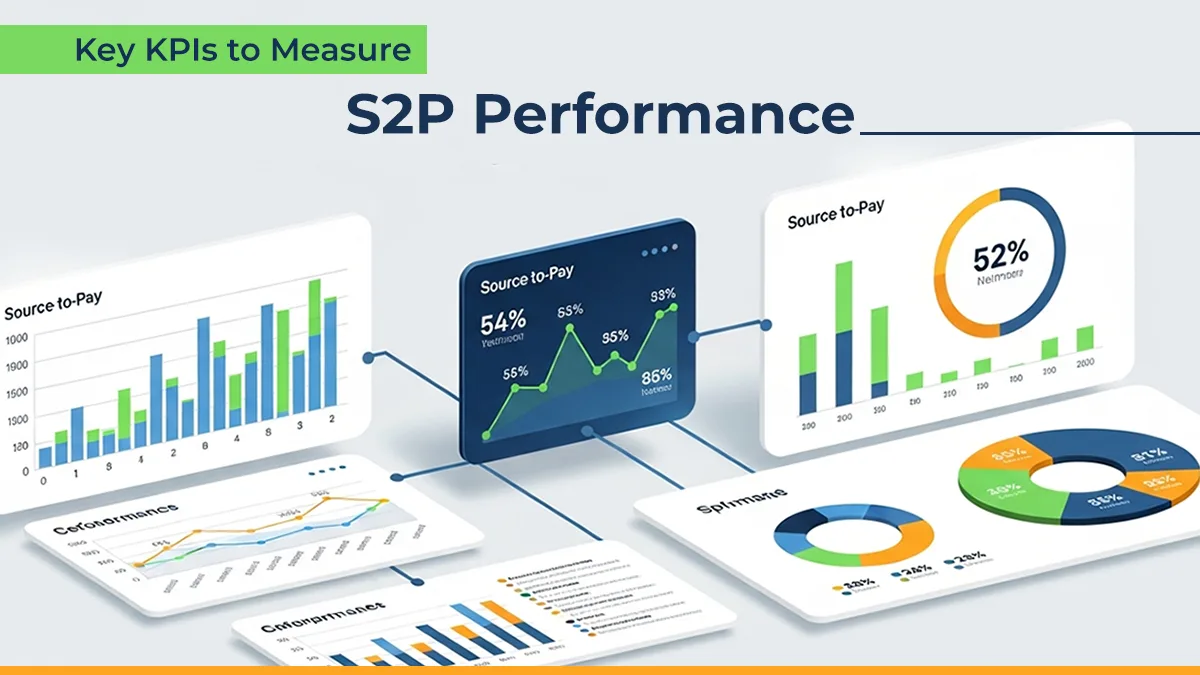
Key KPIs to Measure S2P Performance
These metrics offer useful insights into procurement performance and help companies improve it continuously.
- Spend Under Management (SUM)
It is one of the most important KPIs. It helps measure the percentage of your total spend through your source-to-pay system. A higher number is an indicator of a more streamlined and efficient procurement process.
Why it matters- A high SUM is an indicator that a large portion of your procurement activities is being handled by the source to pay platform.
This helps improve visibility into spending and strengthens compliance with internal policies and regulations.
On the flip side, a low SUM can signal that purchases are happening outside the system, making it difficult to track and manage costs effectively.
- Supplier Performance Metrics
This is another important KPI that measures how well sellers meet established targets. This includes factors such as on-time delivery, product quality, and contract compliance.
Why it matters- Tracking supplier performance helps teams catch issues early and manage risk proactively. It also confirms that suppliers are meeting their contractual responsibilities. With real-time insights from the source to pay platform, procurement teams get a detailed view of supplier performance. These insights help in making data-driven decisions.
- Cycle Time Reduction
It measures the time needed from requisition to purchase order approval. This KPI is an important indicator of how efficiently your procurement team operates.
Why it matters- Reducing cycle time indicates high procurement efficiency. Shorter cycle times mean faster approvals, which can help your company respond quickly to market changes and grab opportunities.
- Cost Savings and Avoidance
This is a vital KPI that tracks every method the team uses to save money. This can be achieved through negotiated discounts, controlled maverick spending, and improved supplier terms that come from using the source to pay software.
Why it matters- Cost savings clearly indicate that your source to pay solution is paying off. When procurement teams use negotiated discounts and keep maverick spending in check, the impact shows up directly on the bottom line. When you track cost avoidance, it helps you spot areas where smarter buying and better strategies can save even more money over time.
- User Adoption and Engagement
Another metric you should track is user adoption and engagement. It tracks how often procurement teams and suppliers interact with the system. Low engagement indicates usability problems or insufficient training. This may reduce the effectiveness of the source to pay solution.
Why it matters- A high adoption rate signals that the procurement team uses all the features within the software. This leads to more accurate data and better decision-making. When engagement is low, it is necessary to reassess the platform’s user experience. It may be necessary to impart more training to ensure the successful implementation of the system.
We will now compare traditional procurement methods with the capabilities of the source to pay software to understand the value of tracking KPIs within the system.
S2P vs Traditional Procurement Tracking
The table below will help to understand the differences in tracking methods of the two processes.
Metric | Traditional Procurement | S2P Software Solutions |
|---|---|---|
Spend Visibility | Low, scattered across departments | Real-time, consolidated view of all spend |
Supplier Performance | Manually tracked via spreadsheets | Automated dashboards and alerts |
Cycle Time | Slow approvals | Fast and optimized workflows |
Compliance Tracking | Limited, prone to errors | Automated compliance alerts and checks |
Traditional procurement relies entirely on manual tracking. This results in inefficiencies and errors. In contrast, S2P software provides real-time visibility, automation, and streamlined workflows, making it simpler to track and manage procurement processes efficiently.
Next, we will look at how to effectively monitor KPIs within your source to pay platform.
How to Track KPIs in S2P Platform
To optimize procurement processes, it is important to monitor KPIs within your S2P platform. These steps will assist you in starting.
Step 1- Integration with Current Systems
First and foremost, you should integrate the S2P platform with your company’s existing ERP and financial systems to get accurate, real-time information. This provides seamless data flow and a complete view of all procurement activities.
Step 2- Clean and Standardize Data
Before you start tracking KPIs, it is necessary to make sure your data is clean and consistent. That means double-checking supplier records and keeping your spend data properly categorized. Having organized, reliable data is essential for measuring KPIs accurately and making informed decisions.
Step 3- Set Up Custom KPI Dashboards
Most source to pay software solutions enable you to make custom dashboards that focus on the KPIs that matter most to your business. You can tailor these dashboards to align with your specific procurement goals. You can then track performance in real time.
Step 4- Provide Training
Your team must receive practical training on how to use the S2P system. When they understand how it works and how to use the data to make better decisions, they will feel more confident engaging with it. This will lead to stronger adoption and better results.
Tracking KPIs goes far beyond measuring performance. Companies can use these insights to refine their procurement strategy and drive growth.
Concluding Remarks
Tracking KPIs enables procurement teams to optimize their processes, strengthen supplier relationships, and develop a more efficient strategy. Insights from your source to pay platform help predict future spending and discover opportunities for cost savings. You can even get alerts related to supplier risks before they become critical issues. As your business grows, continuously optimizing your KPIs will ensure procurement remains a key driver of business growth.
Procure Suite is a robust source-to-pay procurement software that drives sustainable growth for businesses. It integrates sourcing, payments, and procurement processes into one platform. This boosts efficiency, eliminates silos, reduces costs, improves compliance, and provides greater visibility into operations. Contact us today to schedule a demo to learn its role in improving strategic procurement.