

Overview
Reality check. You send out RFQs. Suppliers reply at different times. Negotiations take longer. Ultimately, you wonder whether you got the best price. This is a situation procurement teams face today. Though this process may seem routine, it is slow, lacks clarity, and often results in missed savings opportunities.
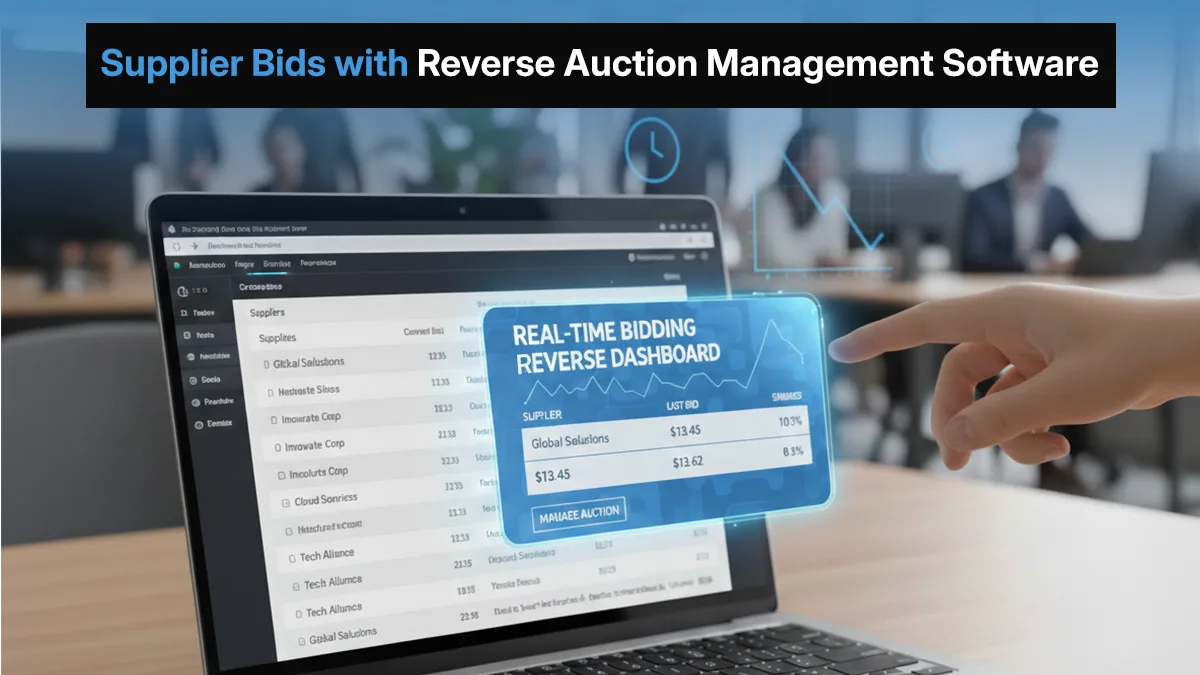
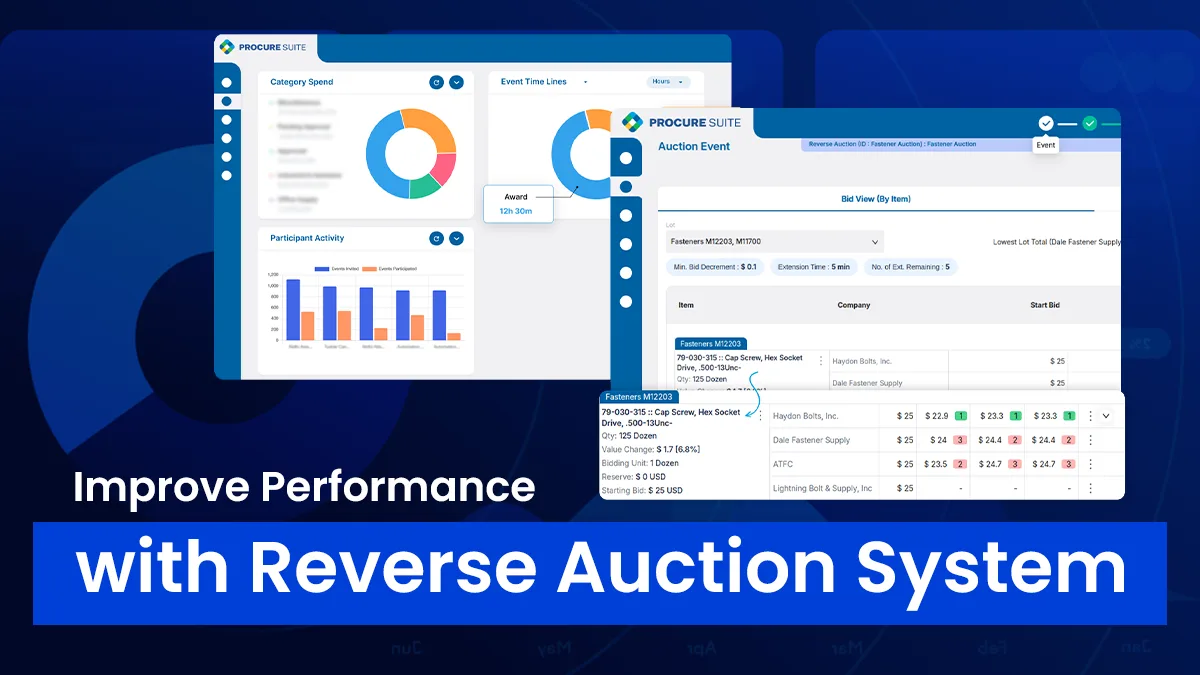
Here, reverse auction management software makes a difference. It reduces procurement costs, boosts supplier competition, and accelerates sourcing decisions through real-time bidding. By replacing manual negotiations, reverse auction solutions make the process clear and data-driven, where suppliers openly compete to win your business.
This post explores how reverse auctions turn sourcing into a live, competitive event. In fact, reverse auctions in procurement highlight their importance in modern sourcing strategies. We will start with the drawbacks of traditional methods.
Why Traditional Sourcing Methods Slow You Down
Many procurement teams still depend on emails, spreadsheets, and long back-and-forth negotiations. Although it is manageable, in reality, it slows down the entire process and creates unnecessary complications.
Due to the limited visibility of all suppliers, you may miss out on better options. Moreover, negotiations often take days or even weeks, which can make pricing unclear and make it difficult to compare offers accurately. On top of that, manual evaluations can lead to errors. In many cases, you may overlook real cost-saving opportunities.
These problems do not just waste time; they directly affect a company’s bottom line. They may have to spend more than necessary because pricing is not fully competitive. Suppliers often hold the advantage in negotiations, which turns decisions into reactive choices rather than strategic ones.
Thankfully, digital solutions like reverse auction software can simplify and organize the sourcing process. Let's compare this platform with traditional methods.
Reverse Auction Platform vs Traditional Negotiation
The following table shows the main differences between these two approaches across important factors.
Factor | Traditional Sourcing | Reverse Auction Platform |
|---|---|---|
Speed | Slow | Instant |
Transparency | Limited | High |
Supplier Competition | Low | High |
Cost Savings | Unpredictable | Measurable |
Data Insights | Minimal | Advanced analytics |
We can see from the table that reverse auction platforms are quicker and more transparent. It encourages stronger supplier competition than traditional sourcing methods. They deliver clear cost savings and advanced data insights, whereas traditional approaches tend to be slower with less visibility and minimal analytics.
Now, we will take a close look at how reverse auctions transform strategic sourcing.
Beyond Cost Savings- Strategic Benefits of Reverse Auction Management Software
Reverse auction systems offer many benefits that extend beyond securing the lowest bid. Many people assume that it is just a tool for reducing costs. But their true value lies in supporting a more structured reverse auction process management.
Here’s how.
Better Supplier Insights
Reverse auction systems give a complete view of supplier behavior. In traditional sourcing, teams rely on fragmented data from emails, spreadsheets, and phone calls. Reverse auctions, on the other hand, analyze data based on supplier pricing trends, competitiveness, and responses to market trends in real time.
Procurement teams can identify suppliers who provide competitive bids consistently by analyzing multiple auction cycles. This also helps to see who responds slowly or overprices. This information allows teams to compare suppliers and track how prices and competition change over time. Accordingly, they can plan more informed sourcing strategies for the future.
Stronger Negotiation Position
Having access to both real-time and historical auction data puts organizations at a much stronger position in negotiations. In contrast, traditional sourcing often depends on assumptions, estimates, or outdated information. This can be a disadvantage for organizations. As a result, suppliers may dictate terms or maintain higher pricing.
A reverse auction platform changes the entire game by providing accurate, up-to-date insights. Clear visibility into competitor bids and market benchmarks helps procurement teams negotiate with confidence. They use concrete data to support pricing expectations and decisions. This data-driven approach helps teams spot the best opportunities and achieve better deals.
Faster Decision-Making
Traditional sourcing methods require repeated back-and-forth communication and detailed evaluations that can last for days or weeks. This delays the entire procurement process and can result in missed opportunities if suppliers pull out or market prices shift.
In contrast, reverse auction software speeds up decision-making by offering real-time visibility into bids. This leads to faster approvals. Teams can monitor supplier activity instantly, compare offers with ease, and make decisions quickly without waiting for lengthy manual reviews. As a result, organizations secure better pricing and gain a competitive edge.
Improved Compliance and Audit Trails
Compliance is critical for procurement teams, particularly in highly regulated industries. Manual sourcing processes often have communication gaps. Hence, audits take longer and increase the risk of errors or non-compliance.
A reverse auction platform addresses this issue by automatically recording every bid and interaction in a secure, traceable way. It documents every decision, adjustment, and final award, thereby creating a transparent audit trail. This strengthens governance and streamlines reporting. Thus, procurement teams can easily show compliance with internal policies, regulatory standards, and supplier contracts. This reduces risks and protects the organizations against disputes or challenges.
Concluding Remarks
Reverse auction management software is more than just a tool. It helps organizations cut procurement costs, increase transparency, and speed up sourcing. To fully realize these benefits, organizations need proper implementation, data-driven decision-making, and strong supplier engagement. In simple terms, reverse auctions turn procurement from a reactive task into a strategic advantage.