

Overview
Supplier bid optimization is necessary for handling the reverse auction process effectively. This leads to transparency, fair competition, and reduced time. Advancing technology can help companies optimize supplier bids and manage the auction process smoothly. This blog talks about the limitations of traditional supplier bidding and the role of technology in optimizing bids. We will also dig deeper into the steps for running reverse auctions seamlessly.
When it comes to optimizing supplier bids and streamlining the process, the right reverse auction management software can work wonders. It enables companies to get better visibility and less difficulty in handling reverse auctions. It is way better than traditional supplier bidding. Though many procurement teams still depend on traditional bidding methods, including email-based RFQs and informal price revisions, they may end up with several issues.
Here, the reverse auction system comes into the picture.
Role of Reverse Auction in Procurement Process
A reverse auction in procurement is a robust sourcing method that enables prequalified suppliers to compete by submitting the lowest bid. Clear specifications, transparent bidding rules, and time-bound competition are the key elements of a reverse auction. In our experience, reverse auctions can reduce sourcing cycle time by 30 to 50 percent when implemented properly.
Whether you want to increase competition, reduce costs, standardize the sourcing process, or improve audit readiness, reverse auction processes can help. However, it is important to make a strategy that matches your goals. A reverse auction platform can assist you in handling these processes. Here is the comparison between manual negotiation and a reverse auction platform.
Comparison between Manual Negotiation and Automated Reverse Auction
A modern reverse auction process offers real-time pricing transparency, and companies can close it successfully in hours or days. Both these aspects are possible in manual negotiations. Here are the key differences between a manual RFQ (Request for Quotation) and an automated reverse auction process.
Aspect or Factor | Manual RFQ | Automated Reverse Auction |
|---|---|---|
Supplier Competition | Sequential | Simultaneous |
Pricing Transparency | Limited | Real-time |
Audit Trail | Manual Documentation | Built-in Digital Log |
Closing Time | Weeks | Hours/Days |
Data Insights | Static | Analytics |
Fairness | Relationship-driven | Rule-based |
A structured reverse auction management software environment creates visibility and accountability for the automated process. However, it is fair to say that a reverse auction is not suitable for every category. Let’s dig in.
Key Steps for Effective Handling of Reverse Auctions
Managing a reverse auction process goes beyond starting another event inside your business system. It requires proper planning and effective execution. Here are the steps for successful reverse auction management.
Step 1. Choose the Right Categories
It is the first step to ensure success in reverse auctions. This process works best when suppliers offer comparable products and services. For example, categories like IT hardware, maintenance services, logistics contracts, and commodity goods are the biggest beneficiaries of reverse auctions. It is simply because these categories have clear specifications and measurable quality benchmarks. Moreover, it is easy to switch costs, and more suppliers are available.
Step 2. Pre-Qualify Suppliers Properly
The biggest mistake in reverse auctions is allowing unqualified suppliers in the event. When it happens, companies face the risk of contract failure and reduced procurement credibility. Therefore, it is better to consider the following tips while shortlisting suppliers for the event-
Validate technical capabilities
Assess financial health
Check for compliance
Review performance history
In our experience, auctions with weak pre-qualification led to post-award renegotiations. This can kill the core purpose of competitive bidding.
Step 3. Configure the Auction Event
This is one of the key steps because it has the potential to make the reverse auction successful. It includes the determination of several aspects, including the duration of the auction, auto-extension of rules, and visibility settings. Each of these aspects impacts the supplier’s psychology. For example, too long an auction creates fatigue, and too short one creates panic. Small configuration choices create big behavioral outcomes.
Step 4. Manage the Live Event
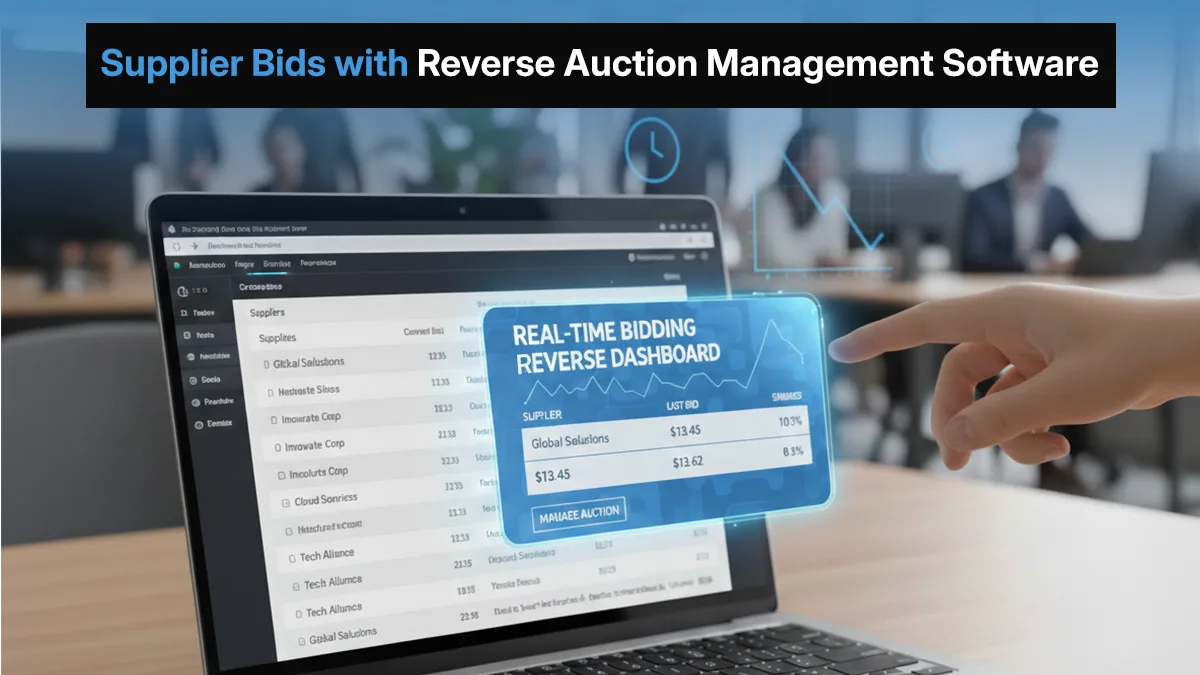
Once the auction is live, the procurement teams need to monitor bid patterns, communicate clearly with one another, and maintain neutrality. Real-time dashboards are useful for monitoring bid timing, price drops, and supplier activity levels. Here, effective communication holds a key to successful execution. For example, suppliers may have technical questions, and it is essential to give them answers on time.
Step 5. Evaluate Price and Process
Many teams make the mistake of awarding the contract to the lowest bidder. However, it is essential to consider the real value. Delivery timelines, warranty terms, risk exposure, and ESG compliance are some of the aspects that determine real value. Advanced reverse auction process management needs weighted scoring models. These models can assist companies in gaining controlled risk and long-term value.
Simply put, reverse auctions are structured competitive environments. Its success depends on choosing the right category and configuring the right rules with continuous monitoring. When done correctly, reverse auctions create measurable value and accelerate sourcing cycles.
Real-World Scenarios of Reverse Auctions
You may raise a question- ‘Will reverse auctions work for my business model?’ Let’s understand the answer to this question through real-world examples.
- Growing Mid-Market Manufacturer
Increasing production volumes and raw material spending have made reverse auctions inevitable for the mid-sized manufacturer. The manufacturer collaborates with steel suppliers, logistics providers, and component manufacturers. Here, specifications are standard, and prices impact margins directly. This is the ideal scenario for a structured reverse auction process. It gives benefits like a clear audit trail and quicker sourcing cycles to the manufacturing company.
- Global, Compliance-Related Business
A multinational company operates across different countries and deals with regulatory frameworks. The company faces procurement challenges, including currency fluctuations and regulatory issues, and ESG reporting with complex audit documentation requirements. Here, cost savings and governance matter the most. A robust reverse auction platform can address these challenges through digital audit trails and better access control.
These examples show that reverse auctions work best when-
The category is standardized
Multiple suppliers exist
Price is one of the fundamental differentiators
Governance or compliance requirements are strong
It is, however, better to consult a reputable reverse auction software provider to learn more about the scope and benefits.
Common Mistakes to Avoid to Prevent Failure of Reverse Auctions
Let’s be clear. Reverse auctions fail because of weak execution and even overuse. Some procurement teams tend to apply auctions to every category. However, this can be a mistake because the overuse of reverse auctions can make suppliers feel commoditized. This can weaken long-term partnerships. The second mistake is focusing only on price. It is, instead, better to consider warranty coverage, risk exposure, and other major factors.
Finally, poor execution and selection of outdated software can also fail reverse auctions in the long run.
Concluding Remarks
A reverse auction is better than traditional negotiations. It can standardize the sourcing process and save costs while optimizing supplier bidding. However, it is essential to consider several factors and avoid common mistakes to leverage the benefits of reverse auctions. Finally, the right selection of a reverse auction solution and proper execution with transparency can make all the difference.
Procure Suite is one of the best online auction software for modern enterprises. Works on advanced reverse auction technology; it helps companies save 18 to 40 percent on their addressable spend. Contact us to schedule a demo and learn more about how Procure Suite maximizes savings by reducing workloads.