


Introduction
Procurement has evolved beyond price negotiations or supplier comparisons to meet transparency and other challenges. An advanced procurement process plays a vital role in building resilient supply chains and structuring sourcing processes. Procurement teams can take advantage of tools such as Requests for Information (RFI), Requests for Quotation (RFQ), and Requests for Proposal (RFP) for collecting insights and selecting the most suitable solution.
Selecting an approach that aligns with business objectives can increase efficiency and create long-term value for your organization. This blog talks about the details of RFI, RFP, RFQ processes along with advanced digital tools. Companies can choose the right method and tools, like an e-tendering platform, to streamline the procurement process and improve sourcing outcomes. Let’s start with the importance of RFP, RFI, and RFQ in modern businesses.
Overview of RFP-RFI-RFQ Importance in Modern Businesses
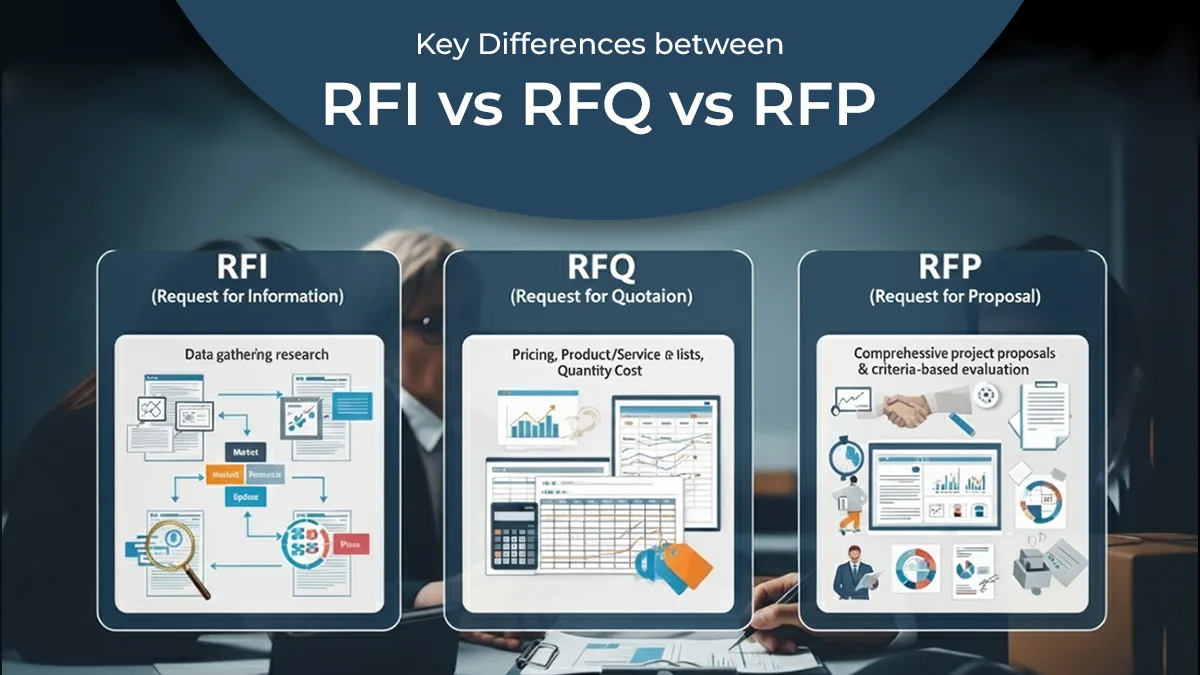
When businesses focus on streamlining procurement processes and make informed decisions, they should understand the differences between RFI, RFQ, and RFP. An RFI (Request for Information) is a primary stage to get the necessary information. Companies can explore market options, supplier capabilities, and emerging technologies before defining their requirements. This stage is categorically useful for organizations that are unsure about available approaches.
The modern RFI management software enables procurement teams to simplify data collection. Teams can standardize questionnaires and maintain consistency across multiple requests using this software. Simply put, RFIs offer clarity and broaden market understanding. However, RFIs are time-consuming and may provide businesses with high-level information, making them a crucial but preliminary step within the rfi rfp rfq process.
RFQ (Request for Quotation), on the other hand, is useful when requirements are clear and specifications are well-defined. Here, price is the primary driving factor. This process helps procurement teams obtain competitive pricing from multiple suppliers and negotiate more effectively. Companies can combine request for quotation software within an e tendering platform to reduce manual errors and minimize errors.
Though RFQs offer speed and transparency in pricing, they may not capture detailed solution approaches or strategic insights. This characteristic makes these processes ideal only for standardized procurement processes with straightforward requirements. Procurement teams use this option after determining their requirements.
When it comes to complex or strategic purchases, businesses opt for the RFP (Request for Proposals) option. This approach is most effective when organizations need customized solutions or multi-dimensional evaluations based on technical and financial criteria. RFP management software and RFP automation software can enhance the efficiency of the procurement cycle. These solutions automate scoring and ensure consistency across different stages.
RFPs offer the necessary insights about potential partners. However, they are resource-intensive and require thorough cross-functional involvement. These challenges make RFPs suitable for high-value procurement decisions.
Key Differences between RFI vs RFQ vs RFP
The broader rfi rfq rfp processes should be combined with procurement-specific needs. However, it is essential to know when to deploy what option to have a significant impact on the procurement process and supplier alignment. The comparison between RFI vs RFQ vs RFP can play a vital role in determining the right approach to achieve the specific goals. Using the right method at the right time can improve accuracy and ensure better supplier alignment.
Here is a quick table of comparison between RFI, RFQ, and RFP.
Criteria | RFI | RFQ | RFP |
|---|---|---|---|
Process Complexity | Low- simple information-gathering | Medium- requires defined specs and pricing format | High involves detailed proposals |
Supplier Information | Basic company details and capabilities | Specific product/service details | Detailed technical and functional information |
Pricing Clarity | Low-pricing usually not included | Very high-core purpose is price comparison | Medium pricing included but varies by solution |
Decision Stage | Early Stage | Mid-Stage | Final Stage |
It is better to get robust procurement management software with RFI RFQ RFP functionality. Such a solution can help companies leverage the benefits of a broader process to streamline the procurement cycle.
How to Choose the Right Process for Procurement
Selecting the right process for procurement depends on several factors. Some of them are business needs, competitive pricing, the comprehensiveness of solutions, and the necessary flexibility as per the project objectives. For example, companies should use an RFI for exploring possibilities at the initial stage and an RFQ when they have predefined specifications and the requirement of price comparison.
RFP is a complex process useful for evaluating the detailed and multi-dimensional solutions for procurement requirements. It is better to utilize intuitive and sophisticated digital tools to leverage the advantages of any of these processes. Companies can combine clear procurement objectives with the right digital tools and select the most appropriate approach. This results in strategic alignment and shorter cycle times.
Role of Advanced Digital Solutions in RFI/RFQ/RFP Management
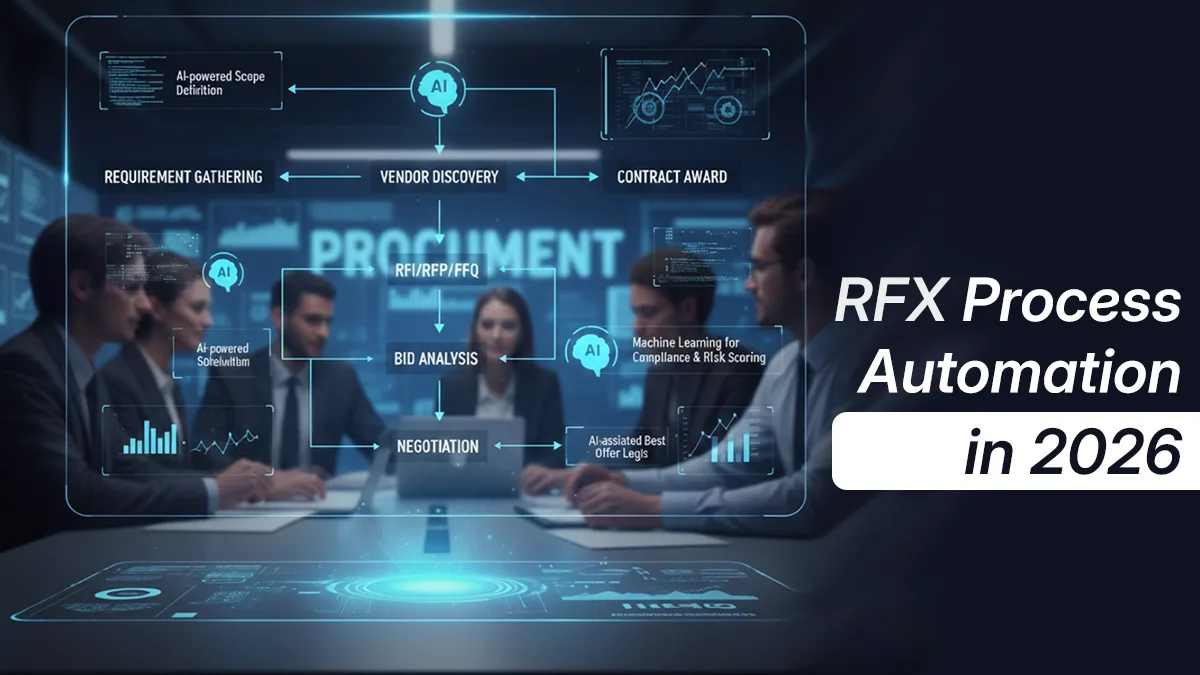
Feature-rich digital solutions can assist organizations in managing RFI, RFQ, and RFP workflows by centralizing data and automating repetitive processes. For example, RFI management software, request for quotation software, and RFP management software can streamline every stage of the procurement process. These tools enable teams to create, distribute, and evaluate documents within a unified system.
Furthermore, these digital tools can improve accuracy and speed through automation. It also minimizes human errors and ensures that quotes, proposals, etc., remain structured. Real-time dashboards accelerate evaluation and assist stakeholders in collaborating seamlessly, making informed decisions quickly. Finally, these digital solutions can assist companies in maintaining compliance and ensuring the standardization of workflows.
Robust digital procurement tools can enhance transparency, reduce risks, and enable organizations to manage sourcing with more confidence.
How Procure Suite Assists Companies in Achieving Procurement Goals
Procure Suite enables companies to streamline and standardize end-to-end sourcing operations. Its unified RFI, RFQ, and RFP management platform centralizes every step of the procurement cycle. It also contributes to making the process highly efficient, transparent, and straightforward to meet different objectives. Procure Suite can simplify RFI creation and distribution for early-stage exploration.
The RFQ module assists companies in managing competitive pricing with precision if the requirements are clear. Suppliers can receive standardized formats with real-time quote analytics and comparisons. When organizations require in-depth solution assessments, Procure Suite offers RFP capabilities that deliver advanced scoring workflows and automated compliance checks. This results in high-quality proposals and informed decision-making.
Concluding Remarks
Whether RFI, RFQ, or RFP, it is essential to choose the right sourcing method for optimizing supplier selection and driving long-term value. These approaches and advanced digital tools, like e tendering platforms, assist companies in centralizing workflows and automating time-consuming tasks in a fast-paced environment. It is better to consult a renowned procurement solution provider to learn more about the scope of RFI, RFQ, and RFP processes.