



Introduction
Speed is essential to turn a business’s vision into real growth. But manual procurement processes often slow down operations and create delays.
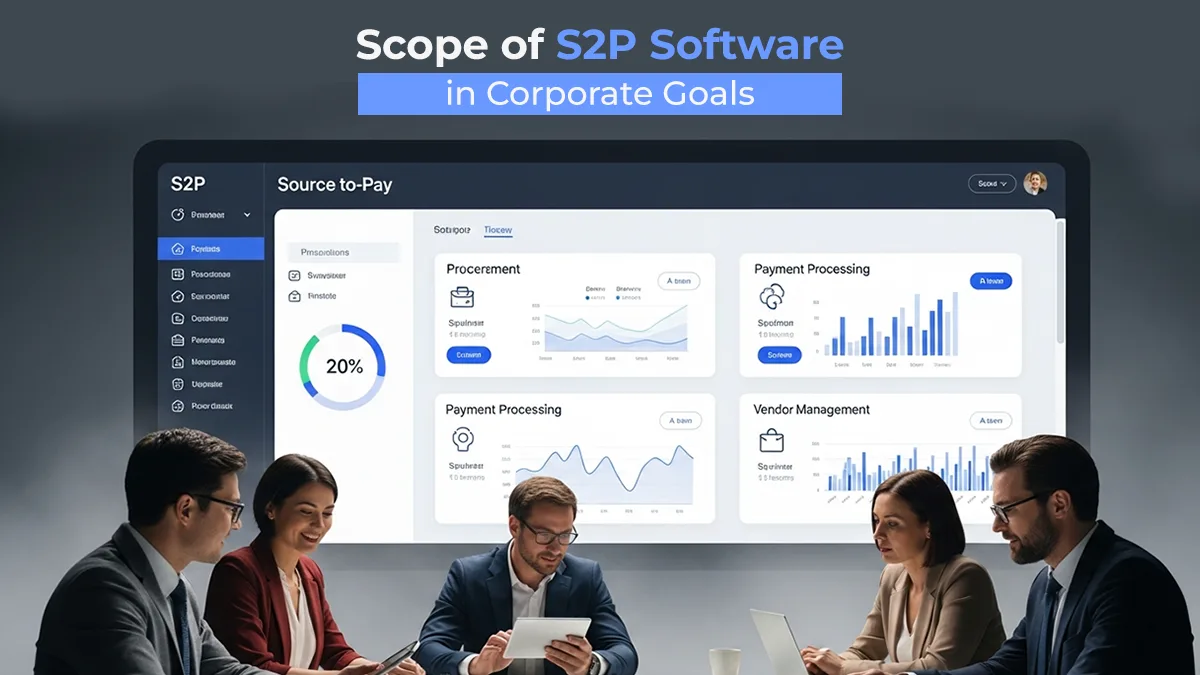
This is where source to pay software can speed up the procurement process for businesses. A technologically equipped procure-to-pay platform connects sourcing, procurement, supplier management, and payments into a single system. It eliminates the need for manual efforts and boosts growth with better control.
If a business is dealing with delays, errors, or a lack of visibility, this playbook will guide you on how S2P automation can fix these problems step by step.
Why Manual Process Breakdown
Most procurement teams in business do not consider automation in their work processes. They heavily rely on:
Spreadsheets for supplier data
Emails for the approval process
Multiple tools with limited features
These methods are sufficient for small-scale businesses. But, as the business grows, the need for an all-in-one system arises to eliminate
Delayed approvals
Duplicate data entries
Compliance risks
Lack of visibility
Manual processes in scaling a business create bottlenecks because they rely on teams instead of investing in systems. This is where investing in a source to pay solution can help businesses build processes that help achieve optimum output.
Let’s learn more about what a source to pay software is and how it replaces manual processes and builds an efficient ecosystem.
What is Source to Pay Software?
It is a digital solution for procurement lifecycle management. From finding suppliers to making payments, it covers all aspects of procurement for a time-saving and efficient business workflow.
A source to pay solution includes:
Supplier sourcing
Contract management
Procurement workflows
Invoice processing
Payment tracking
In simple terms, it seamlessly connects everything into one system, allowing teams to switch between multiple tools. A reliable source to pay gives a business visibility, control, and speed across procurement operations.
Here is a brief comparison between Traditional Procurement vs S2P Automation.
Traditional Procurement vs S2P Automation
The traditional procurement process relies heavily on offline spreadsheets and email-based communication. While source to pay software solutions offer a centralized platform that handles automation, approvals, and communication in a single interface.
Process Area | Traditional Procurement | Source to Pay Solutions |
|---|---|---|
Supplier Data | Stored in spreadsheets | Centralized platform |
Approvals | Email-based | Automated workflows |
Sourcing | Manual tracking | Digital sourcing tools |
Invoice Processing | Manual entry | Automated matching |
Visibility | Limited | Real-time insights |
The manual review process is time-consuming and has a chance of errors, whereas S2P offers dashboards for better visibility.
Now, let’s break down how to eliminate bottlenecks using a step-by-step approach.
The S2P Automation Playbook: Step-by-Step to Eliminate Manual Bottlenecks
If any business experiences a slow or messy procurement process, the problem usually lies in multiple small bottlenecks across the workflow. The S2P automation playbook guides you to resolve those problems step by step.
1. Centralize All Procurement Data
Scattered data is one of the most significant problems in workflows. Businesses use spreadsheets for data, emails for communication, and accounting tools for invoices. A source to pay platform brings all the data into a single interface.
Supplier data
Contracts
Purchase Orders
Invoices
S2P software improves teamwork by providing a single source of data. Instead of switching between multiple tools, teammates can go to S2P and find everything they need in a single place.
2. Automate Approval Workflow
Approval in the procurement process is responsible for the most common delays in the entire workflow. With source to pay software, approvals do not need to depend on follow-ups anymore.
A Business can set customized rules like
Approvals based on budget limits
Auto-routing to the right manager
Instant notifications
In S2p, the system takes care of the workflow, and teams can focus on the important tasks.
3. Streamline Supplier Onboarding
Manual supplier onboarding takes days to weeks. While S2P allows quick onboarding with a streamlined digital process. Rather than relying on emails, documents, and manual verifications, S2P onboards suppliers with
Online forms
Upload documents
Complete compliance steps
In S2P, everything is structured, well-organized, and easy to find. Hence, a business witnesses faster onboarding and a better supplier experience.
4. Digitize Sourcing and Vendor Selection
In many businesses, sourcing is often handled manually. Emails, Excel sheets, and back-and-forth communication are multiple channels that are used to keep track of procurement.
A source to pay platform helps a business to:
Create RFQs/RFPs in one place
Collect supplier responses digitally
Compare bide side by side
With S2P, a business can make a wise decision with infographic dashboards and quick insights.
5. Automate Invoice Processing
Processing invoices manually is time-consuming. Manual entry leads to chances of errors, delays, and duplicate processes. With invoice automation, invoices can be
Captures automatically
Matched with purchase orders
Flagged if something doesn’t match
Hence, no manual checking is required at each stage of the procurement process.
6. Improve Contract Management
Contracts are usually stored offline, which makes finding the right information at a time more time-consuming. A centralized system helps the team
Store contracts digitally
Track contract expiry dates
Receive contract renewal notification
It ensures strong compliance and eliminates the chances of missing opportunities.
7. Gain Real-Time Visibility
One of the biggest advantages source to pay solutions offer a business is visibility. It helps teams track their
Spending patterns
Supplier Performances
Procurement Cycles
It helps businesses make data-driven decisions and identify inefficiencies.
8. Reduce Errors and Duplicate Work
Manual data entry in business often creates errors that are time-consuming to correct. Data automation reduces:
Duplicate entries
Incorrect data
Missed approvals
It helps teams improve overall accuracy and saves a lot of time.
9. Integrate with Existing Systems
S2P platforms perform best when they are paired with existing systems such as ERP and accounting tools. Seamless integration ensures:
Smooth data flow
Reduced manual work
Better collaboration across teams
It creates an interconnected ecosystem within businesses that helps speed up the procurement process.
10. Monitor and Improve the System
Once all the steps are implemented, a business can run smoothly without errors or delays. But continuous improvement helps the system adapt to fast-paced growth quickly.
Keep checking the following aspects from time to time:
Where delays still happen
How long processes take
Where improvements are possible
S2P platforms give businesses the ability to adapt and improve.
We went through the step-by-step process of S2P automation. Now, let’s see where it can be applicable in real-life business scenarios.
Examples Where S2P Automation is Useful
It is equally important to understand real-life applications to apply S2P automation to achieve the desired procurement performance.
Growing Mid-Sized Company
As the company expands its business, its procurement processes become more complex. Using a source to pay platform helps mid-sized companies:
efficient supplier management
faster approvals
Improves visibility
Large Enterprises
As large-scale, complex business organizations, enterprises deal with multiple suppliers and complex work processes every day. Source to pay software solutions offer user-friendly software that simplifies workflows and business communication.
In simple words, an S2P solution helps standardize and maintain compliance across departments in enterprises.
Rapid Scaling Startups
Startups aim for fast growth with fewer operational expenses in the initial stage. Here, manual processes like approvals, data entry, and tracking suppliers can increase costs and consume time.
Source to pay software solutions offer process automation, which reduces manual work. It allows startup teams to focus on tasks that are more important for growth.
Conclusion
Manual processes support the procurement ecosystem until the business is small. Once the business expands, a need for an efficient system arises. A technologically advanced source to pay platform helps your business eliminate these bottlenecks through data centralization and workflow automation.
This S2P automation playbook can help businesses streamline their procurement operations by seamless integration with existing systems. Hence, it is helping them build a more efficient and scalable system with a reliable solution.
Procure Suite offers customized solutions that align with the unique needs of our customers.
Visit our website to learn more about our products and services.