

Overview
Imagine you are evaluating dozens of supplier proposals for weeks. You realize that more than half of them do not meet your expectations. Result? You will feel frustrated. Now, the question that crosses your mind is, “Can I avoid this wasted time and effort with a more structured approach?”
The RFI stage in the rfi rfp rfq process comes as an answer to this question. It saves time, reduces risk, and helps in identifying the right suppliers. You do not have to commit to suppliers early on. An RFI allows you to explore their capabilities, technology fit, and industry experience first. Simply put, RFI filters suppliers and prepares your organization for a smoother RFP or RFQ stage.
This post dives into how RFIs work and their usage to qualify suppliers without unnecessary commitments. Though the RFI stage offers clear benefits, many procurement teams tend to skip it. As a result, they face challenges when trying to qualify the right suppliers early in the process.
Let’s dig this further.
Why Procurement Teams Struggle with Supplier Qualification
Let’s be honest. Many procurement teams bypass the RFI stage altogether. They go straightaway to RFPs or RFQs, thinking it will save time. But the opposite happens. They have to deal with irrelevant proposals, suppliers who do not meet their needs, longer evaluation cycles, and higher costs.
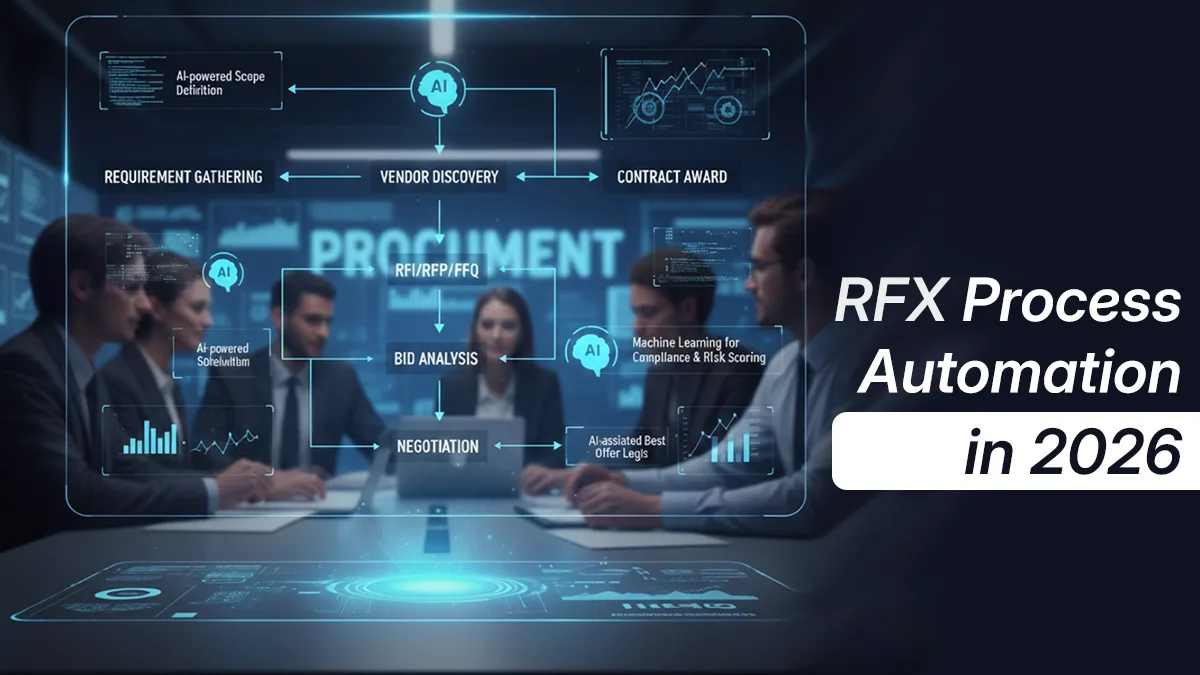
For complex projects, the real challenge lies in finding the right suppliers early on. This is where the RFI, RFP, and RFQ process comes in. An RFI (request for information) helps teams understand a supplier’s capabilities before making any early commitments.
The RFP, or request for proposal, allows you to assess solutions and approaches. You can compare pricing for shortlisted suppliers through an RFQ or a request for quotation.
Think of the RFI as a discovery stage, not a commitment. However, teams need to follow the right best practices.
RFI Best Practices for Supplier Qualification
Here are some best practices that help procurement teams collect useful supplier information without making early commitments.
Define RFI Objective
Teams can begin by clearly defining the objective of the RFI. They can ask a simple question: “What do we need to learn from suppliers?” RFI collects key information from suppliers such as their capabilities, industry expertise, technology compatibility, and regulatory compliance. It is better to avoid questions related to pricing at this stage. In simple terms, an RFI is for gathering information, not negotiating.
Structure Questionnaire
If an RFI is too long or unorganized, suppliers may lose interest. That’s why it is important to make the questionnaire in an easy-to-follow format. Keep simple sections for company overview, technical capabilities, industry experience, certifications and compliance, and integration capabilities. Additionally, an e tendering platform can standardize the format. This makes it easier for suppliers to respond.
Focus on Qualification Criteria
There should be qualification criteria to quickly identify suppliers that are not suitable. Project experience, financial stability, product scalability, support services, and regulatory compliance matter for qualification. This makes sure only the right suppliers move forward. It also saves time, reduces extra work, and leads to better proposals.
Use Technology to Manage Responses
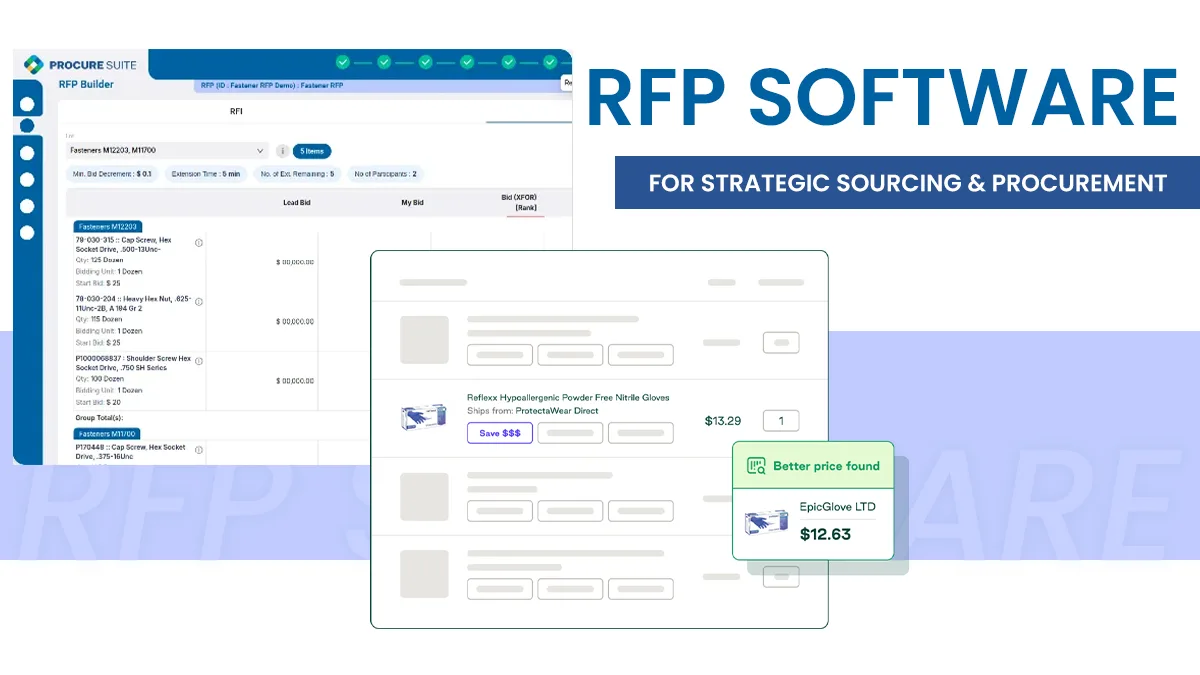
It can overwhelm you when you try to manage multiple suppliers' information manually. By leveraging technology, you can simplify the process. You can use tools like rfi management software. There are others like rfp management software, rfq software, and e tendering platforms. These tools keep supplier responses consistent, automate the scoring process, track all communications, and store records clearly. Simply put, it makes evaluations quicker and reduces errors.
Shortlist Suppliers Strategically
This involves scoring responses based on defined criteria. Procurement teams have to find out any deficiencies in suppliers’ capabilities. Next, they have to form a smaller group of suppliers who can move to the RFP stage. In this way, teams can concentrate only on those who are likely to add value.
Let’s jump into how procurement software can make the rfi rfp rfq process easier and faster.
How Procurement Software Improves RFI RFP RFQ Process
Procurement software has come as a game-changer in the RFI, RFP, and RFQ process.
Digital tools like rfp automation software and rfq management software document every step of the procurement process, ensuring compliance and auditing.
Thus, technology makes the RFI stage more strategic. It frees teams to concentrate on gaining useful insights instead of paperwork.
Now let’s look at some real-life examples of how RFIs add real value.
Real-World Scenario- When an RFI Makes Biggest Impact
Let’s explore two common procurement scenarios to see how an RFI makes a difference.
Scenario 1- Technology Procurement
A company that wants enterprise software may receive dozens of proposals. In the absence of an RFI, evaluating all of them can be overwhelming. Moreover, many suppliers may not possess the required capabilities.
But an RFI helps teams to filter suppliers based on experience and technical compatibility. This way, only the most relevant suppliers move to the RFP stage.
Scenario 2- Strategic Supplier Selection
In complex projects, an RFI helps organizations understand market options, discover innovative solutions, and identify emerging suppliers. Without an RFI, companies may miss important market insights, overlook potential suppliers, and face confusion during the RFP or RFQ stage.
Overall, the RFI stage becomes a strategic discovery tool. It provides clarity before sending formal requests for proposals or quotes.
Let us now take a look at some small errors that can weaken the RFI stage.
Common Mistakes to Avoid in RFI Stage
Procurement teams often make mistakes by treating an RFI like an RFP or asking pricing questions too early. At times, the questionnaires are too long and confusing for suppliers to respond. Inviting too many suppliers or not having a clear plan for evaluating responses can also create unnecessary work.
The best approach is to keep the RFI straightforward, informative, and exploratory. Clear objectives and organized questionnaires give valuable insights to teams while saving time for everyone involved.
Concluding Remarks
The RFI stage plays a crucial role in supplier qualification within the rfi rfp rfq process. It helps procurement teams explore the market, assess supplier capabilities, and identify the right suppliers early on. When teams use RFIs strategically, it makes the qualification process more focused and improves the quality of shortlisted suppliers. With the help of procurement software, organizations can turn supplier qualification into a structured, data-driven process.