Introduction
Reverse auctions have changed how organizations source goods and services. It offers a competitive, efficient, and cost-effective approach to procurement. Yet, procurement teams can stumble when managing these auctions by committing common mistakes. These mistakes can reduce savings, strain supplier relationships, and compromise project outcomes.
This post digs deep into the five mistakes teams often make in reverse auction process management and offers steps to steer clear of them. By applying these principles, procurement teams can conduct auctions that are transparent, fair, and deliver the greatest possible value. Before proceeding further, we will take a glance at the reverse auction process.
Importance of Reverse Auction Process
A properly designed reverse auction brings fairness, competitiveness, and efficiency to procurement. It kicks off with supplier prequalification, where suppliers are evaluated for capabilities and compliance. Next is the auction setup, which defines bidding rules, timelines, and evaluation criteria.
During live bidding, suppliers compete in real time to offer the best bid. Last but not least, evaluate bids based on price, quality, and total cost of ownership before awarding the contract to the supplier offering the best bid.
Strong reverse auction process management ensures fairness, removes bias, and strengthens trust between buyers and suppliers. With a structured approach, organizations can achieve cost savings, streamline procurement, and enhance supplier relationships.
Now that we have understood the fundamentals, it's time to look at the pitfalls that can hamper auctions' success. Also, how to prevent them from occurring.
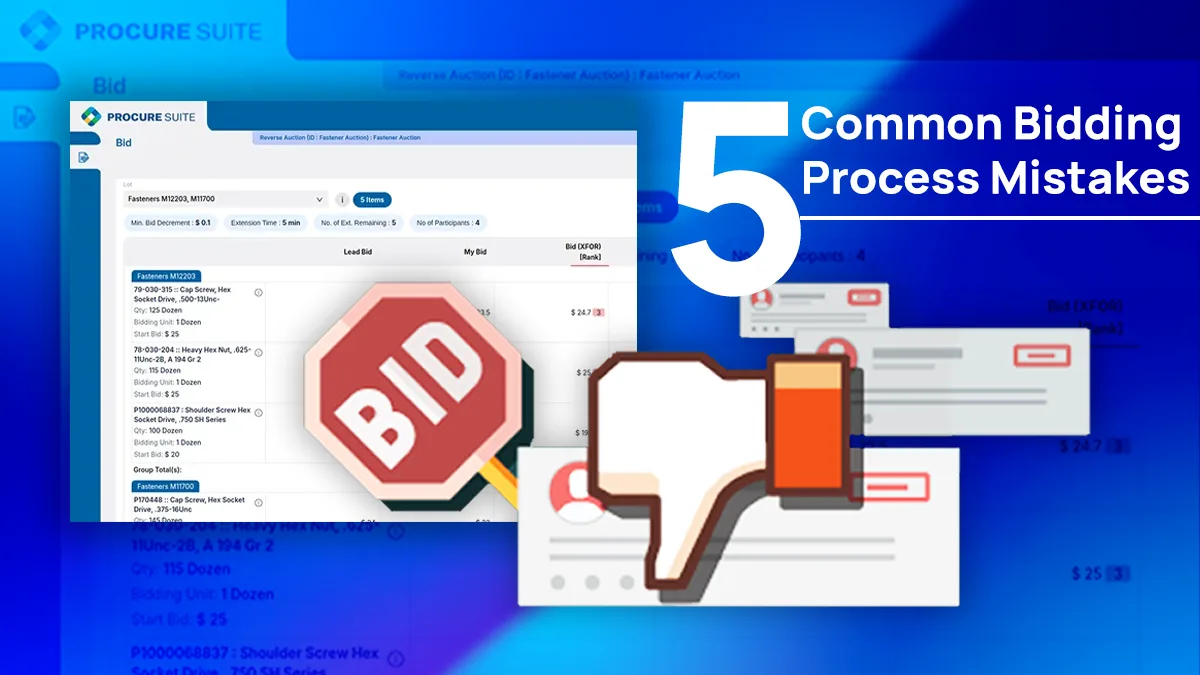
5 Common Mistakes to Avoid in Reverse Auction Management
Reverse auction software serves as a powerful tool. To make the most of it, it's utterly important to be aware of and avoid certain common mistakes.
- Poor Supplier Preparation
The mistake- This is one of the most common mistakes that organizations commit. They launch reverse auctions without training their suppliers. Suppliers who do not possess knowledge about the process may submit incomplete bids or face difficulties in competing.
Impact- This can cause reduced competition, delayed timelines, and suboptimal pricing.
How to avoid
Procurement teams should devote time to preparing suppliers before the auction. They should explain the process clearly, provide detailed guidelines, and give training to suppliers to help them understand how to participate effectively. Organizations should set expectations in advance and handle supplier questions ahead of the auction. This helps in promoting stronger competition, improving bid quality, and making the reverse auction process more effective.
Moreover, teams should offer ongoing support throughout the auction. They should help suppliers in real-time, answer any urgent queries during bidding, and ensure that all participants understand any changes or clarifications.
- Inadequate Auction Design
The mistake- Designing a reverse auction poorly, such as choosing unsuitable auction types, setting unrealistic timelines, or choosing an inappropriate starting price, is a frequent mistake.
Impact- It can decrease supplier participation, result in unrealistic bids, or cause confusion during the event.
How to avoid
While designing the auction, organizations should clearly establish rules, practical timelines, and an appropriate starting price. With the best reverse auction software, procurement teams can run simulations, test different configurations, and go for the most optimal format. An auction that is properly structured encourages fair competition, reduces confusion, and helps achieve the desired savings.
Auction designers should also take into account factors like the complexity of the goods or services being procured. For example, suppose an item requires specific delivery timelines or unique terms. Then these factors should be clearly outlined in the auction.
- Ignoring Supplier Relationships
The mistake- Giving importance only to reducing costs without considering supplier relationships.
Impact- Overemphasis on price may damage long-term partnerships, deplete trust, and decrease the willingness of suppliers to participate in future projects.
How to avoid
Procurement teams should engage in transparent communication with suppliers and treat them as valued partners. Providing feedback post-auction and acknowledging supplier performance is also necessary. This promotes collaboration and ensures suppliers participate in future reverse auction processes. By balancing cost savings with relationship management, businesses can maintain healthy supplier networks and achieve competitive pricing.
Long-term supplier success depends on partnerships. Organizations should involve suppliers in discussions and share their opinions. This creates a sense of mutual respect. As a result, there are chances of suppliers offering favorable bids in the future.
- Relying on Manual Processes
The mistake- Some organizations use traditional reverse auction processes.
Impact- These methods are error-prone, time-consuming, and lack transparency.
How to avoid
By using reverse auction management software, companies can automate bid collection, provide real-time analytics, and simplify scoring, thereby reducing human errors. Procurement teams can monitor bids accurately, make faster, data-driven decisions, and ensure a transparent process for both internal stakeholders and suppliers.
Conducting periodic reviews of the auction process is also important for smooth running. Organizations should set clear guidelines so that everyone knows how to interpret and evaluate bids.
- Focusing Solely on Price
The mistake- Reverse auctions prioritize the lowest price and overlook other important aspects like quality, delivery timelines, or service levels.
Impact- Too much importance on price can decline supplier performance, lead to higher costs, or contractual issues.
How to avoid
For fair evaluation, organizations should analyze bids based on technical capability, past performance, and overall cost of ownership. A reverse auction management software, having weighted scoring and multi-criteria evaluation, streamlines this process. Together with competitive pricing and supplier reliability, procurement teams can maintain sustainable outcomes without compromising quality or service standards.
Organizations should also consider future risks and the value of long-term supplier collaboration. It may so happen that a slightly higher-priced bid from a trusted supplier can save costs by reducing delays.
Let's jump into the best practices to avoid the mistakes.
Best Practices for Reverse Auction Process Management
To leverage the benefits of reverse auctions fully, organizations should apply best practices. First and foremost, it is necessary to clearly define objectives, scope, and evaluation criteria for every auction. Organizations should invest time in training both internal teams and suppliers so that everyone understands the process properly.
The best online auction software helps simplify bid evaluation, track supplier performance, and minimize errors. Furthermore, it is important to keep proper documentation for audit and compliance purposes.
Organizations should take a holistic approach while selecting suppliers. Along with price, they should evaluate quality, delivery time, and post-auction support too. When a reverse auction system is used, it ensures procurement decisions are fair, transparent, and data-driven.
Organizations should also regularly review auction outcomes and apply insights from the past to improve future strategies. This improves both efficiency and supplier relationships over time.
By integrating these best practices into their reverse auction strategies, organizations can make smarter and more informed decisions.
Concluding Remarks
Reverse auction in procurement can be a powerful tool, but mistakes in managing the process can reduce its effectiveness. The best reverse auction software helps streamline operations, improve decision-making, and keep things transparent. By following best practices, companies can achieve fair and efficient outcomes, strengthen supplier relationships, and create long-term value.
Procure Suite is a comprehensive and reliable procurement management solution. Its advanced features streamline the reverse auction process. Contact us to find out how Procure Suite can drive operational efficiency and deliver results.