Introduction
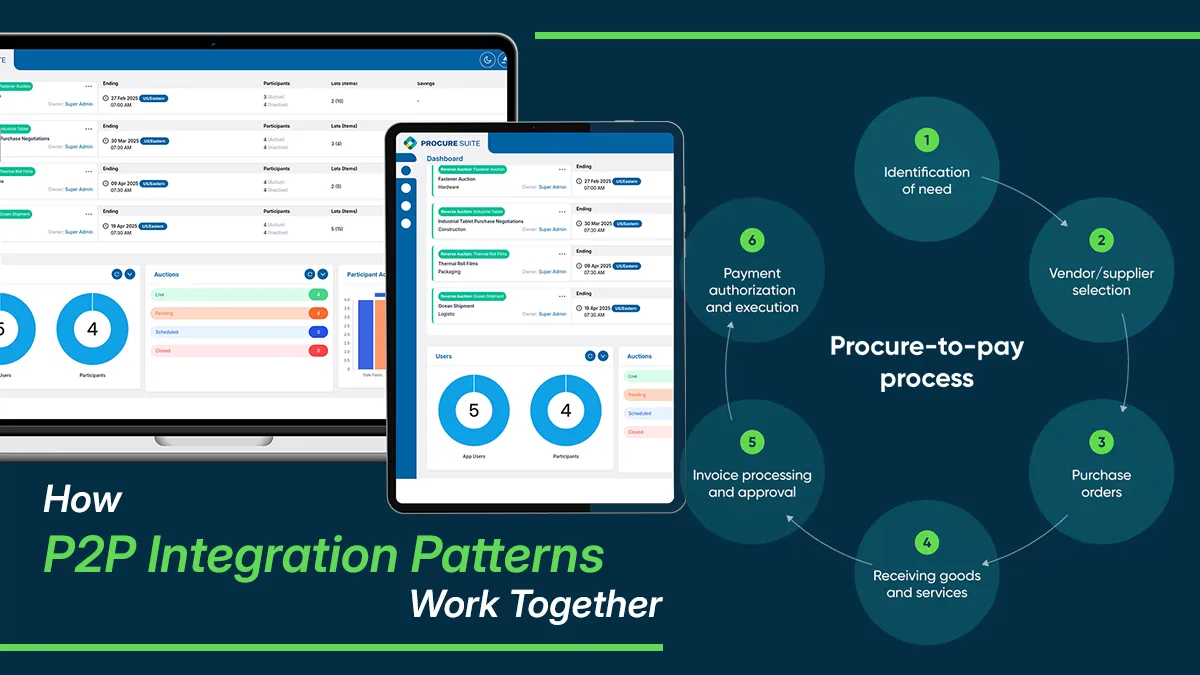
Integration of a procure-to-pay (P2P) system with ERP, finance, and supplier platforms is mandatory for modern enterprises. But here is the real question- how do we integrate P2P without breaking security, slowing approvals, or losing control?
Let’s find the answer to this question first. Security, identity, and approvals are three pillars of the most reliable P2P integration patterns. These pillars offer safe movement of data and with accurate user verification and seamless decision-making. Let’s dig deeper into the role of procure to pay management software in strengthening the three pillars of integration patterns.
Let’s start with the reasons for the failure of P2P integrations.
Why P2P Integrations Fail before Delivering Value
Globally, many enterprises adopt procure to pay management software to reduce the burden of human resources and gain spend visibility. However, this integration may lead to some issues, including bypassing approval rules in purchase requests, the existence of supplier data in multiple versions, and the lack of acceptance for system data from the finance department. Eventually, these gaps lead to security.
Here, it is fair to say that the p2p procurement software is not the problem. The real problem lies in the way of integrating it with other platforms. Many such systems were connected merely for the purpose of establishing connections. Such connections have issues with APIs and identities. Though they work, your company finds it difficult to scale and audit using such systems.
Let’s understand how such faulty integration leads to hidden costs.
Hidden Cost of Poor P2P Integration
Your company may end up paying for treating security, identity, and approvals separately.
A poor P2P integration results in-
Approval Delays These delays are due to the proper synchronization of roles.
Access Risks These risks are apparent when users keep permissions they do not need.
Compliance Gaps Shortcomings related to compliance come during audits.
Shadow Workflows Such workflows remain outside the scope of the P2P system.
In our experience, it is the loss of trust in integration capabilities that compels enterprises to replace their procure to pay solutions. This is a major reason modern P2P architecture treats security, identity, and approvals as a single system.
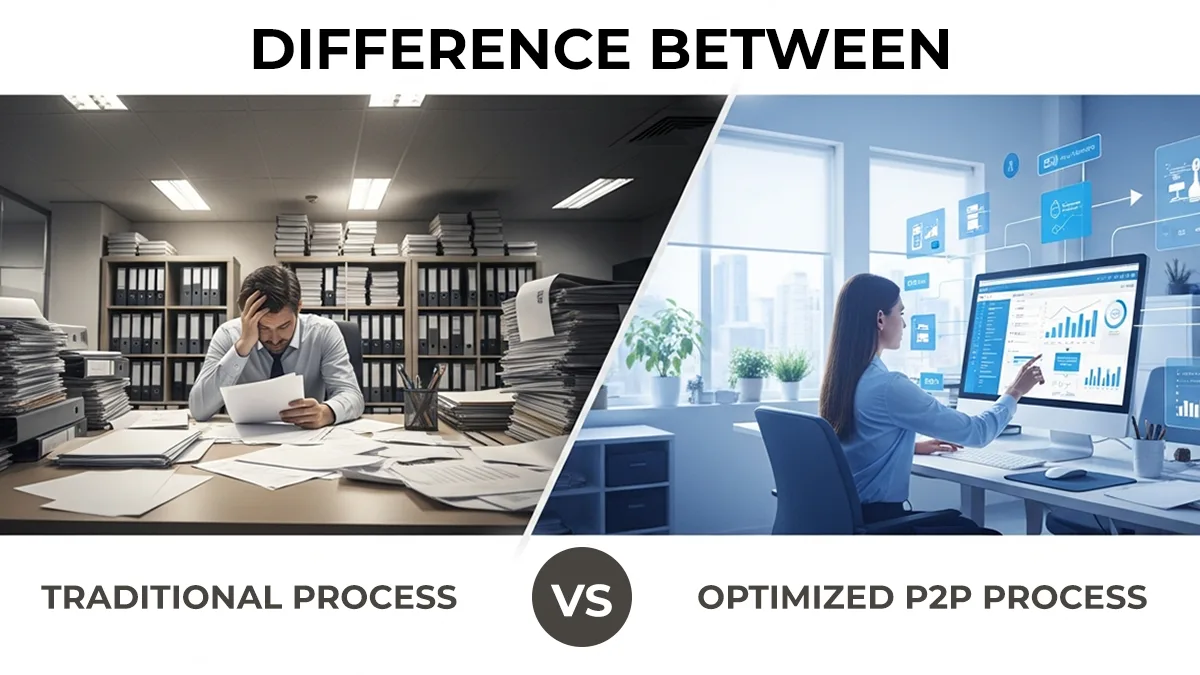
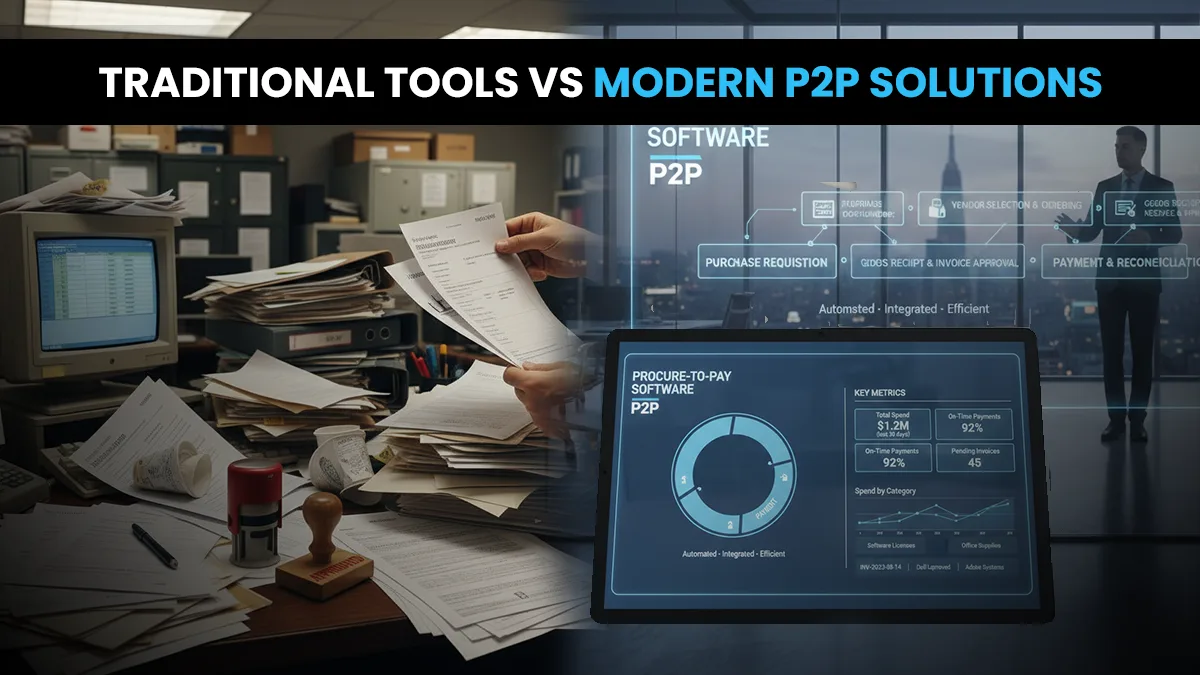
Old vs Modern P2P Integration Models
It is interesting to jot down the differences between the old and new P2P integration models.
Traditional Integration Model
It offers point-to-point integrations
It has static user roles
It consists of hardcoded approval logic
It has limited visibility
This model has several limitations, and any change to the ERP can disrupt workflows.
Modern P2P Integration Pattern
It has an API-first architecture
It has centralized identity management
It enables policy-driven approvals
It offers event-based monitoring
Simply put, advanced p2p procurement systems can deliver long-term value by offering more scalability than traditional ones.
How P2P Systems Protect Data Across Integrations
With advanced P2P systems, you just do not get encryption to secure data. It is about who can access the type of information and for how long. A secure procure to pay software solution can protect data across different integrations by following various principles, including-
- API Authentication
This is one of the core security patterns that uses OAuth or token-based access in P2P integration.
- Data Encryption
It is a holistic approach that safeguards data in transit and at rest. It is one of the most popular security patterns.
- Least-privilege Access
It is a robust security pattern that works for both services and users effectively to ensure role-based access.
- Audit Logging
This pattern is useful for all procurement actions. It improves the overall security of confidential data throughout the process.
When data remains secure, integrations can become a compliance asset for your company.
The Backbone of P2P Control
Identity management is another crucial aspect of P2P implementations and control. Whenever you onboard employees and offboard users, permissions always play a vital role. Modern p2p procurement software can integrate with enterprise identity solution providers to ensure improved management and control.
A robust identity integration is capable of syncing users from IAM systems and assigning roles to resources as per their job function. Moreover, effective integration can revoke access immediately when roles change and implement classifications for their duties. Proper identity flows make approvals flow faster and safer than ever.
How Approval Workflows Become Business Enablers
Let’s face it. Approvals go beyond checkboxes and reflect the decision-making ability of your organization. Poor approval integrations cause frustration, and therefore, it is essential to implement smart approval patterns in P2P systems. Rule-based approvals in amount, risks, and category are one such pattern.
Other approval patterns are keeping dynamic approvers based on organizational structure, parallel approvals, and escalation rules for exceptions. As a maker of preferred procurement management software, we believe that approval efficiency is the biggest driver of ROI.
Implementation of Security, Identity, and Approvals Together
Security, identity, and approvals are always in a procurement loop. Companies need to ensure that these three elements work together. They make a loop as- identity verifies the user, security validates the user’s access, and approval logic evaluates their request. Finally, audit logs can capture the decision. If any of these elements break, the entire procurement system becomes risky.
In other words, a well-integrated p2p procurement system treats every transaction as a controlled event. However, it is necessary to follow the best practices to leverage the advantage of a seamless p2p integration.
Best Practices for Implementing P2P Integration Patterns
Let’s focus on some best practices for ensuring the effective implementation of P2P integration. These practices will help you optimize P2P integration as well.
Start with identity integration
Define approval policies
Use APIs and not file-based integration
Monitor events and failures
Involve security teams
All these best practices can reduce rework and build confidence in procurement activities for the long term.
Final Takeaway- Integration as the Real Differentiator
Whether you choose the right procure to pay solution or implement it in your company, it is better to focus on integration. You can ensure that security, identity, and approval work together through scalable procure to pay management software. You can follow best practices for effective implementation of the p2p solution and drive control of the entire process.