Overview
When it comes to centralizing supplier data and automating onboarding with real-time monitoring, the right solution is essential. If your current procurement system is reactive and requires manual intervention or has fragmented tools, you should upgrade. Moreover, if your company finds supplier management time-consuming and messy with spreadsheet-based work, it is essential to change.
Here, evolving technology lends a helping hand to your organization. Whether it is an issue of duplicate suppliers or delayed approvals, supplier management solutions can assist. However, it is essential to choose the right system to gain a strategic advantage. This blog discusses the tips and techniques to choose the right supplier management platform for your company. Let’s start with the scope of these systems.
Scope of a Supplier Management Platform
Simply put, a supplier management software is a centralized system to manage—
Risk assessments
Supplier onboarding
Performance monitoring
Compliance documentation
Communication workflows
In our experience, companies that implement structured supplier management software solutions can reduce related risks significantly. Such enterprises can also improve the decision-making process. However, it is better to choose the most suitable option from the available advanced supplier management solutions. Such advanced solutions are different from basic databases. Here is a quick table of differences between basic and advanced supplier software.
Feature | Basic Supplier Database | Advanced Solutions |
|---|---|---|
Records | Manual | Automated |
Onboarding | Email + Docs | Structured Supplier Onboarding Software |
Risk Monitoring | Manual | Real-Time Alerts |
Performance Tracking | Periodic Reviews | Continuous |
Compliance Monitoring | Spreadsheet-Based | Automated |
Integration | Standalone | ERP and Procurement |
Such advanced supplier management systems support governance, collaboration, and compliance. You can keep several factors in mind while evaluating supplier management systems.
Evaluation Questions for Supplier Management Systems
Here, we give some useful questions to evaluate supplier management solutions.
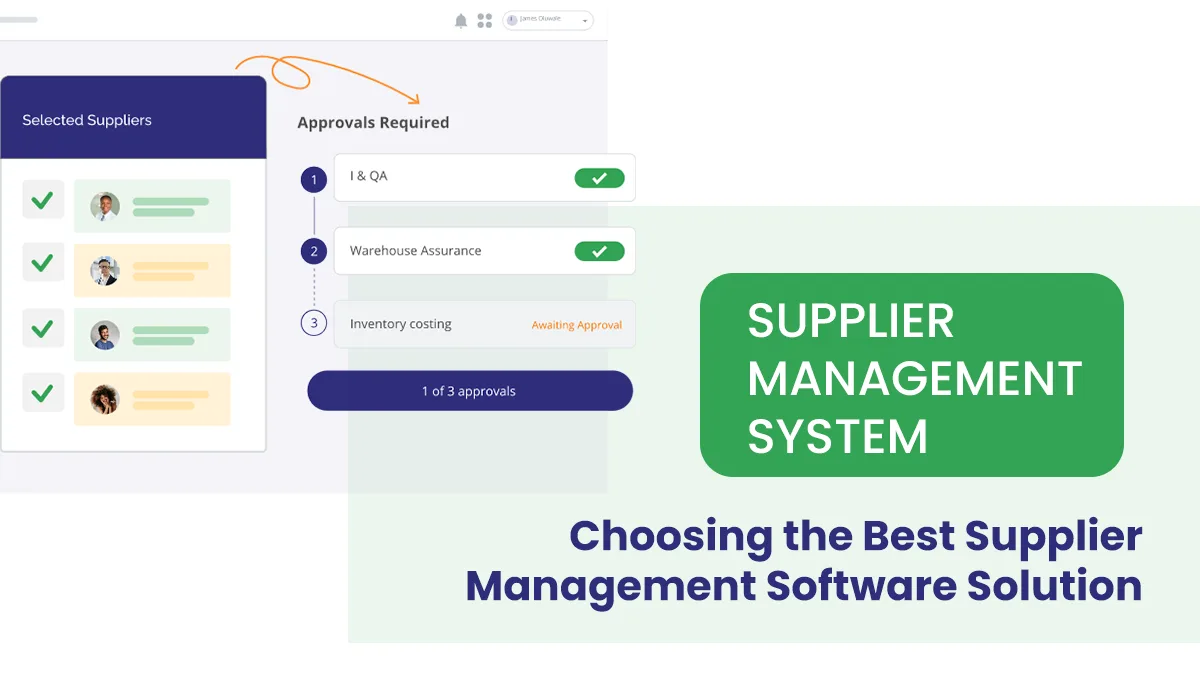
1. Does it simplify supplier onboarding?
Your supplier onboarding software should be capable of collecting structured data and validating compliance documents. Moreover, it is necessary to have an automation feature to reduce the onboarding time.
2. Can it monitor supplier risk proactively?
This is an important question to be asked because no company can consider risk management as optional. The right system should have features for financial risk monitoring and regulatory alerts. It should offer document expiration notifications as well.
3. Does it provide actionable insights?
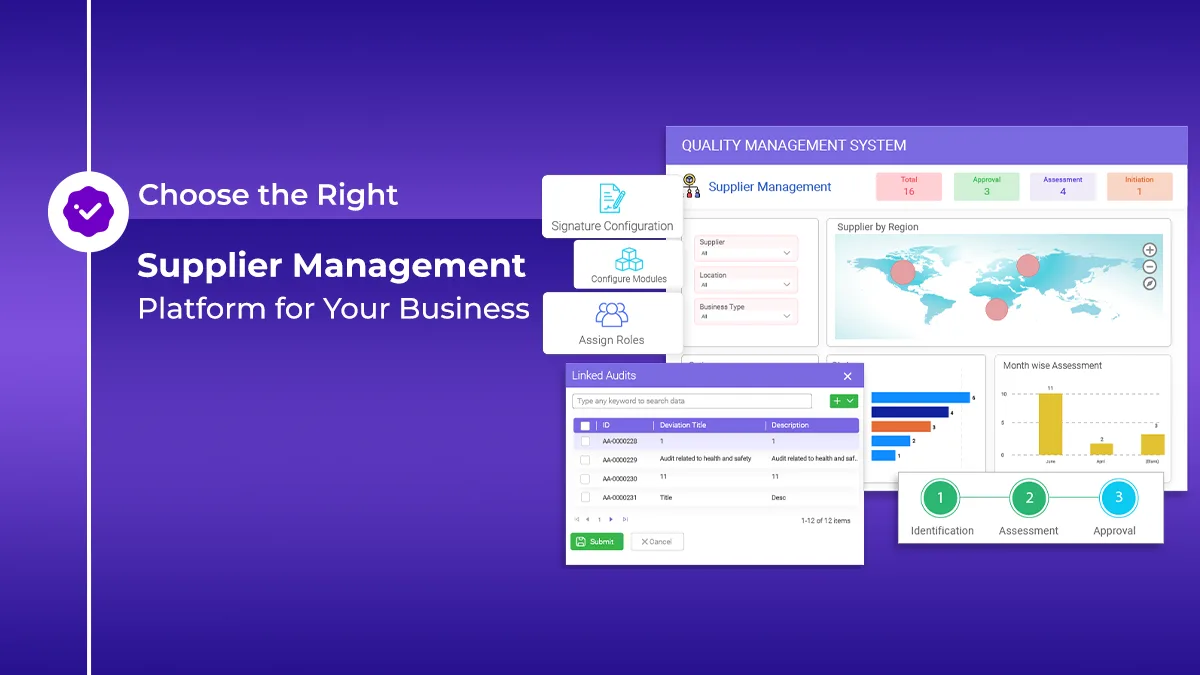
A suitable platform can transform supplier data into actionable insights for proper decisions. It should also have supplier performance dashboards that give spend insights. It should have risk heatmaps and scorecards for suppliers for improving the decision-making process.
4. Will it integrate with your existing business system?
Let’s handle it. Supplier data cannot live in silos. It is, therefore, necessary for the supplier management software to integrate with the existing ERP systems, source-to-pay platforms, and finance systems.
After evaluating and selecting the right software, effective implementation is mandatory to gain its advantages.
Step-by-Step Implementation Guide for Supplier Management Software
Your procurement team can get the benefits of a feature-rich and seamless supplier management platform. However, you need to ensure its effective implementation. Let’s go through the step-by-step guide to implement it successfully.
Step 1. Clean Your Data
This is the first step before migrating your supplier data to the management system. You should remove duplicates and standardize naming conventions. Moreover, it is necessary to validate active suppliers because even if you use an advanced system, it cannot fix poor data.
Step 2. Define Governance Ownership
This is another important step. It is better to assign ownership to your procurement team for supplier master data, compliance reviews, and performance evaluation. As supplier management is cross-functional, you should make a team from different departments with different roles and responsibilities.
Step 3. Start with Strategic Suppliers
Let’s handle it. When you start digitizing everything from day 1, it can lead to a mess. It is, therefore, better to focus on strategic suppliers and critical service providers. You can also include regulated vendors in the list for automating processes. Such priorities can help companies build internal adoption.
Step 4. Track Measurable Outcomes
This is an important step. You must monitor measurable outcomes, including a reduction in onboarding time and an improvement in compliance. Furthermore, you can find out whether there is a decrease in supplier risk incidents and an increase in spend visibility. This measurement shows the effectiveness of a supplier management solution.
Let’s understand the real-life examples of supplier management solutions.
Real-Life Examples of Supplier Management Software Solutions
Companies can utilize these solutions for streamlining supplier onboarding and management through automation. Let’s go through different scenarios.
- Tech Startup
A technology scale-up can quickly onboard its suppliers using supplier management software. It can also manage compliance with the cloud-based supplier onboarding software using the basic risk tracking feature. It gives such companies both speed and structure for automating the supplier onboarding process.
- Manufacturing Firm
The company manages global suppliers and faces high regulatory pressure. Moreover, it has risk exposure for supply chains. Here, the advanced supplier management system assists with real-time risk monitoring and ESG monitoring. It also offers ERP integration for managing the procurement process effectively.
- Retail Organization
The retail firm largely depends on seasonal and regional suppliers. Here, performance variability among suppliers can impact margins. Therefore, supplier management software with robust performance scorecards is beneficial. It also offers real-time spend analytics to get more visibility into supplier consistency and the source-to-pay process.
Altogether, different industries have different risk levels and complexity. However, supplier management software solutions with user-friendly interfaces can make the difference. Forward-looking companies will use these solutions to leverage the benefits of AI and automation. This results in high ESG performance visibility and real-time supplier risk alerts.
Concluding Remarks
Selecting the right supplier management software involves several factors apart from features and functionality. Companies should consider risk visibility, governance, and scalability while choosing the right solution. Finally, this selection should be in line with the future growth perspectives of your organization.
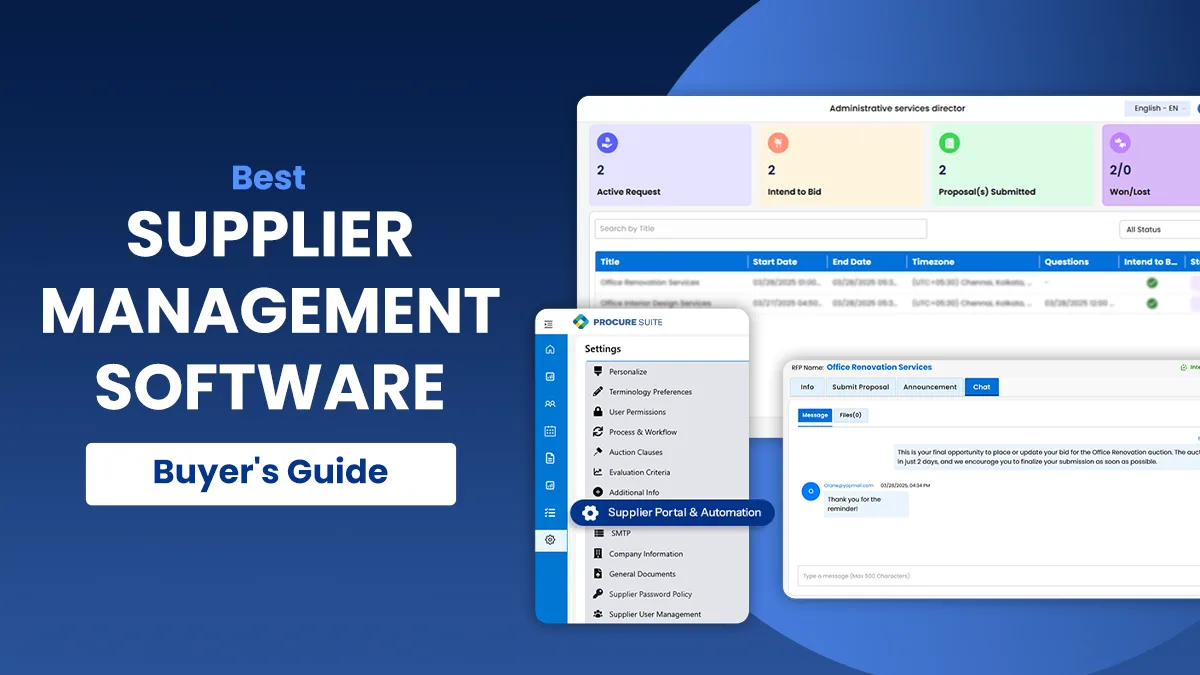
As one of the best supplier management systems, Procure Suite offers a centralized platform for handling supplier data. Features like supplier onboarding automation and real-time performance monitoring can assist you in following compliance and improving supplier relationships. Contact us to schedule a free demo and learn more about the benefits of Procure Suite.