Overview
Saving is a simple yet complex procurement objective. A sourcing team may negotiate a lower price and create a measurable reduction in expenditure. It is, however, fair to say that it may prevent a supplier from increasing prices, reduce unnecessary demand, or protect the business from inflation in the future.
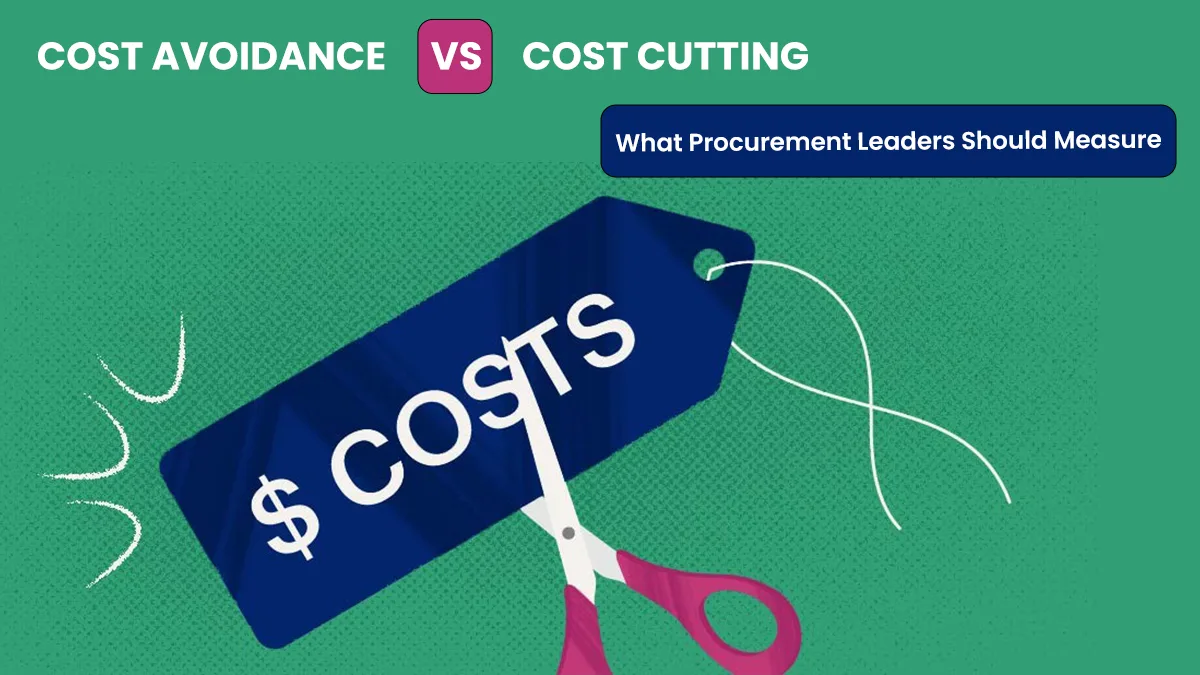
The difference between cost avoidance vs cost savings enables procurement directors and CPOs to get a clear picture. When it comes to procurement, cost savings should include clearly defined hard savings. Cost avoidance, on the other hand, should include credible financial value that prevents increases.
Procurement cost savings, together with cost avoidance, help management gain a more comprehensive view of procurement. This becomes necessary for comprehending the financial implications of procurement in the long run. Let’s take a closer look at both these ideas.
Hard Savings vs. Cost Avoidance
One of the most important differences in procurement reporting is between hard savings and cost avoidance. Both these concepts are essential for creating procurement value, but they represent different financial outcomes. It is, therefore, fair to say we should not consider them as interchangeable.
Hard savings are measurable reductions in actual or contracted expenditure. For example, if procurement renegotiates a USD 1 million contract down to USD 900,000 for the same scope, the USD 100, 000 reduction can generally be classified as a direct saving. It is, however, subject to the organization’s agreed baseline and finance validation.
These outcomes contribute to realized savings when the negotiated benefit is reflected in actual purchasing or financial results. Cost avoidance procurement, on the other hand, focuses on costs that procurement prevents from occurring. Both outcomes matter. The key is to define the baseline clearly and separate savings from avoidance.
Companies should avoid overstating reported procurement savings.
Negotiated Vs Realized Savings
Negotiated savings represent the commercial improvement procurement achieves during a sourcing event or supplier negotiation. Realized savings can measure whether there has been any savings impact on the bottom line as a result of those negotiated savings.
For instance, a negotiation can yield a 12 percent discount on cost. However, if the business units still source from the same non-preferred supplier or buy more quantities than contracted, the result may be different.
This makes savings realization an important part of procurement performance. Procurement leaders should connect sourcing outcomes with contracts, purchase orders, invoices, and purchasing behavior.
A useful measurement framework here should document the baseline, implementation date, applicable spend, and actual realization. This gives finance and leadership more confidence in the reported procurement value.
Why Cost Avoidance Matters to Your Company
Not all procurement value appears as a direct reduction in the P&L. Suppliers may propose price increases because of inflation, labor costs, raw material changes, or market conditions. Procurement can reduce the effect by negotiating, alternative sourcing, or managing demand.
The same concept is applicable in the case of unnecessary demand. When we remove unused subscriptions, reduce excessive requirements, or prevent duplicate services, it helps us prevent spending in the future. This makes cost avoidance an important part of a larger procurement savings strategy.
When measured over several years consistently, such avoidance will enable firms to maintain their margins through better financial planning.
Contract Savings- How to Generate Them Year after Year
If there are opportunities for savings through the contracts, then low rates, favorable escalation provisions, good payment terms, volume flexibility, and elimination of unnecessary fees can do the trick. Contract savings will bring much benefit when the favorable terms remain throughout the contract period.
Contract management is important for procurement savings and cost avoidance. Monitoring renewal dates, escalation clauses, and actual purchasing activity can help procurement protect the value.
How to Create Procurement Savings
An effective procurement cost savings strategy needs to incorporate multiple value drivers other than just price negotiation. Spend analysis could be used to detect areas where procurement savings could be made.
Strategic Sourcing can create competition, whereas Demand Management could help in curbing unnecessary spending prior to negotiations.
Contract reviews would detect potential future cost increases, whereas Supplier Consolidation would provide commercial strength.
The goal should be to develop an effective process capable of creating measurable and sustainable financial value.
Here is a quick table containing the example and financial impact of each type of saving.
Savings Type | What It Means | Typical Example | Financial Impact |
Hard Savings | A measurable reduction in actual or committed expenditure compared with an established baseline. | Supplier price reduced from USD 100 to USD 90 per unit. | Direct and measurable reduction in cost. |
Soft Savings | Benefits that improve productivity, efficiency, or resource utilization but may not immediately reduce the P&L. | Automating sourcing saves 40 hours of procurement staff time. | Indirect financial benefit; may not appear as immediate budget reduction. |
Cost Avoidance | Actions that prevent a potential future cost increase or additional expenditure. | Negotiating a proposed 8% supplier increase down to 3%. | Prevents future cost growth rather than reducing current spend. |
Negotiated Savings | Savings or financial improvements secured through supplier negotiations, sourcing events, or contract discussions | RFQ negotiation reduces quoted price by 12%. | Represents the commercial outcome achieved through negotiation. |
Realized Savings | Savings that actually flow through purchasing and are reflected in the organization’s financial results. | A negotiated 10% reduction is reflected in subsequent invoices and actual spend. | Actual financial impact on expenditure. |
Contract Savings | Financial benefits secured through contract terms, pricing, volume commitments, payment terms, or reduced fees. | Removing an annual service fee and locking in lower rates for three years. | Can create recurring savings over the contract period. |
Procurement Cost Savings | The broader financial savings generated by procurement across sourcing, negotiation, demand management, suppliers, and contracts. | Combining supplier consolidation, negotiation, and demand reduction to lower total spend. | Can include multiple savings categories. |
Sourcing Savings | Savings generated specifically through strategic sourcing activities such as RFQs, RFPs, auctions, and supplier competition. | Reverse auction reduces the winning bid by 15% versus the approved baseline. | Usually measurable commercial improvement from a sourcing event. |
Demand Management Savings | Savings achieved by reducing, standardizing, or optimizing what the organization purchases rather than simply negotiating a lower price. | Eliminating unnecessary software licenses or reducing excess order quantities. | Reduces the quantity or specification of spend. |
Procurement KPIs that Matter Beyond Savings
Useful procurement KPIs can include realized savings, price avoidance, spend under management, contract compliance, supplier consolidation, demand reduction, and procurement ROI. Procurement leaders should monitor the difference between negotiated and realized outcomes.
A sourcing event may generate significant negotiated value. Weak contract compliance can, however, prevent that value in the business. These measures or KPIs give a broader view of procurement performance. They show whether procurement is reducing costs, preventing cost growth, and improving purchasing discipline.
How Procurement Technology Strengthens Measurement
Accurate measurement depends on connected procurement data. Sourcing events, suppliers, contracts, requisitions, purchase orders, and spend information exist in separate systems. When this happens, it becomes difficult to establish whether a negotiated benefit was realized.
Proper spend management software and procurement workflows enable teams to compare negotiated supplier terms with purchasing activity and track savings initiatives. Here, it is fair to say that technology does not replace finance validation or procurement judgement; it creates a more reliable information foundation.
This makes procurement ROI easier to evaluate and helps leaders distinguish between negotiated, realized, and avoided costs.
Role of Procure Suite in Demonstrating Procure Value
Procure Suite is a sophisticated enterprise procurement management software. It assists organizations in linking sourcing, supplier management, contracts, approval, and purchasing in a procurement process framework. The linked approach might help procurement managers monitor business results beyond the sourcing event.
It brings a negotiated supplier rate into purchasing processes, while keeping contract and related information connected to the relevant activity. CPOs and procurement managers can receive more solid background because of Procure Suite. Procure Suite may also improve procurement value. Though Procure Suite does not report the negotiated value during a sourcing event, it enables teams to examine the outcome.
Procure Suite gives a complete overview of procurement cost savings, sourcing savings, contract performance, and cost avoidance.
Conclusion
Procurement savings play a crucial role in modern enterprises and are not limited to cost reduction. Hard savings provide tangible spending reductions, whereas cost avoidance ensures future cost savings. Negotiated savings reveal what the procurement department is able to obtain from a respective activity. Realized savings are about real procurement results.
Businesses can get a complete picture of the financial implications using these savings with the elements of strategic sourcing, demand management, contract discipline, important KPIs, etc. CPOs and procurement directors can make performance measurable and profitable in the long term.