Overview
Any organization negotiates major contracts, runs competitive sourcing events, and consolidates strategic suppliers during procurement. Still, it leaves significant value on the table. The reason is making smaller purchases. Though individually these transactions may seem significant, they become a persistent source of cost and inefficiency.
Effective tail spend management brings these purchases into the procurement conversation. CFOs and strategic sourcing leads focus on minimizing the impact of unmanaged buying behavior on supplier leverage, cost structure, etc. Advanced spend management software can help them identify patterns and turn such transactions into actionable opportunities.
This post talks about tail spend management and its impact on savings. It will also dig deeper into the role of spend management software in procurement savings.
Tail Spend- No Organization Should Ignore
The term tail spend refers to the long tail of low-value, infrequent, or fragmented transactions. Usually, such transactions sit outside an organization’s strategically managed spend. As per the common rule of thumb for procurement, the tail is roughly 80 percent of transactions representing around 20 percent of total spend.
The exact ratio, however, varies by organization, category, and industry. The problem is that transaction count and spend value are not the same thing. A company may have a lot of money concentrated in relatively small purchases. Those purchases can involve office supplies, maintenance services, software subscriptions, professional services, etc.
Apart from these services, facilities expenses, marketing services, and other forms of indirect spend are included in small purchases. They may not trigger the same scrutiny as a multimillion-dollar sourcing event. This is a major reason why such purchases are difficult to manage.
What Creates Tail Spend Leakage
Tail spend procurement becomes difficult when purchasing decisions happen outside the predefined processes. Here are some patterns that contribute to unmanaged spend-
When employees choose suppliers independently
When companies make purchases without competitive quotes
When low-value suppliers receive fragmented orders
When employees use preferred suppliers inconsistently
When purchases are made outside negotiated contracts
When duplicate suppliers provide similar products or services
When recurring subscriptions are not reviewed actively
None of these patterns look alarming if we consider them in isolation. It is, however, fair to say that when these patterns get repeated across multiple locations, they will cause spend leakage for the organization.
Maverick Spend Is More Than Buying Without Permission
When companies spend outside established procurement processes or preferred supplier arrangements, it is maverick spend. Contrary to that, maverick purchasing can happen due to difficulties in the approval process. If employees cannot find an approved supplier, compare available options, raise a requisition, or obtain approval, they may opt for an alternative.
A compliance problem may actually reveal a process-design problem. For example, when a department needs a specialized service immediately, the procurement team has a preferred supplier list. When the employee or a team member does not know which supplier is right, they can contact a familiar one. Such transactions may appear as rogue spending.
Why Spend Visibility Comes Before Savings
Fragmented purchasing data can make spend visibility difficult. Supplier names may appear differently across systems. Business units may use different descriptions for similar purchases. Companies may record some purchase orders while others appear only through invoices or expense reports.
A spend analysis should help answer questions including-
Which suppliers are receiving small, repeated purchases?
Which categories have the highest transaction volume?
How much spend occurs outside preferred suppliers?
Where are purchases made without contracts?
Which suppliers provide overlapping products or services?
Which business units generate the most tail transactions?
The answers to these questions can create the foundation for a targeted procurement savings strategy. Supplier consolidation is a crucial part of this savings strategy. It is because the organization can grab opportunities to negotiate volume-based terms with the help of supplier consolidation.
Practical Framework for Tail Spend Management
We can segregate a practical framework for tail spend management into five different stages-
1. Map Tail
You can start by analyzing transaction and supplier data. It is better to identify low-value suppliers, infrequent purchases, fragmented categories, and high-volume purchasing patterns. There is no need to classify every small purchase as waste. You can firstly establish what the tail actually contains.
2. Segment Spend
We cannot manage every tail transaction in the same way. It is necessary to classify purchases, suppliers, business units, locations, transaction values, and frequency. A low-value office supply purchase requires a different intervention from a recurring professional service contract.
3. Identify Leakage
Spend leakage occurs in cases of repeated purchases from non-preferred suppliers, inconsistent pricing for similar items, unnecessary expedited orders, purchases outside contracts, etc. Procurement cost savings opportunities often become visible in such cases.
4. Design Intervention
The appropriate response might involve supplier consolidation, renegotiation, competitive sourcing, policy changes, or better purchasing workflows. It is fair to say that the best intervention is simply making the preferred buying route easier.
5. Continuous Monitoring
Tail spend is an ongoing project in which suppliers and employees keep changing. New subscriptions appear, and contracts expire. Continuous monitoring is therefore necessary to prevent previously controlled spend from returning to the unmanaged tail.
Spend management software can connect transaction data, supplier information, and procurement workflows to provide a more consistent view. Let’s understand how to make purchasing compliant.
From Maverick to Compliant Purchasing
Robust purchasing compliance should not depend on employees remembering procurement policies. Let’s consider two purchasing experiences.
In the first, an employee has to search through a spreadsheet to identify approved suppliers, email procurement for guidance, wait for approval, and explain why a purchase is necessary.
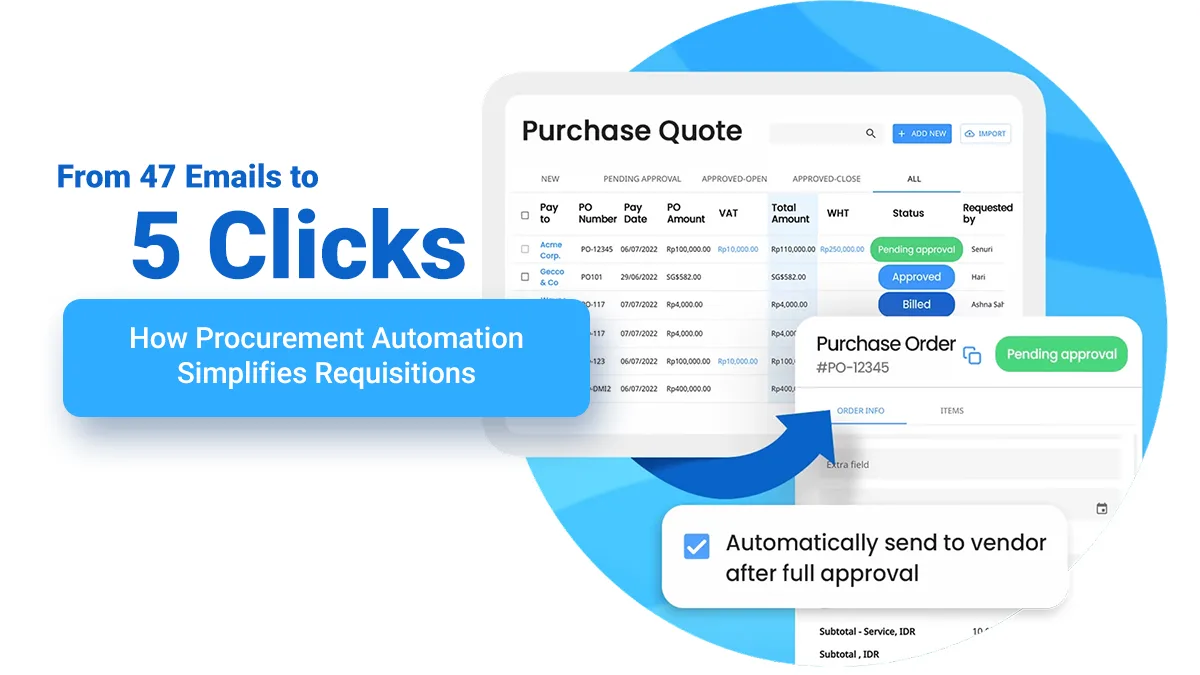
In the second, the employee can search an approved catalog, select an authorized supplier, and follow an automated approval process. The second model makes compliance easier because the compliance choice is highly convenient.
It is an essential principle for controlling maverick purchasing. Procurement teams should not rely exclusively on enforcement. It is necessary to design workflows that make preferred buying channels practical for users. Finally, it is essential to capture savings in actual purchasing behavior.
Role of Procure Suite Explained
Procure Suite can make fragmented purchasing activity a more structured environment. Organizations can leverage the benefits of connected procurement workflows. They can get a more connected view of spend by combining requisitions, supplier management, sourcing, approvals, contracts, and purchasing processes in the same platform.
The broader role of Procure Suite is to connect tail spend management with the entire procurement lifecycle. It enables organizations to get rid of treating the tail as a separate spreadsheet exercise. CFOs can improve control over the money already being spent with the help of Procure Suite.
Concluding Remarks
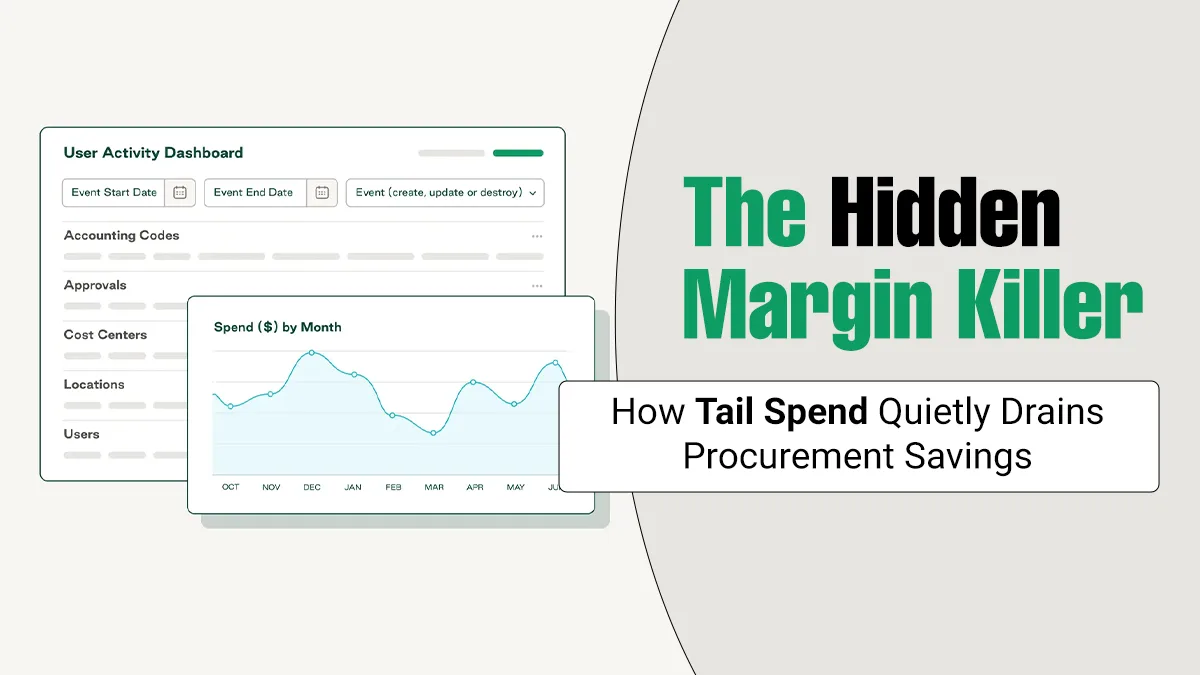
Tail spend rarely becomes a margin issue because of one dramatic transaction. It becomes a repetition problem. Together, they can weaken procurement savings strategy , reduce negotiating leverage, increase administrative costs, and make spend visibility harder to maintain.
Structured spend analysis, robust purchasing compliance, targeted supplier consolidation, and continuous monitoring are essential to prevent unmanaged spend. This can be part of their procurement strategy with spend management software.
CFOs and strategic sourcing leads can stop thousands of small purchasing decisions that erode savings quietly.