Overview
BCG's 2026 report, The Procurement Leader's First 100 Days, cites a CFO Leadership survey with an uncomfortable result: only 38% of CFOs have high confidence that procurement savings reach the P&L, and the figure drops to 29% at large enterprises. Supporting this trust gap, a Gartner survey of over 200 CFOs shows that 56% rank enterprise-wide cost optimization as a top priority, yet leaders consistently struggle with cross-functional tracking and forecast accuracy. Put another way, roughly six in ten finance chiefs lack high confidence in the number you plan to report.
That gap is your starting position, whatever you inherited. Closing it takes three months of deliberate work: build trust with the people who spend, and make that spending visible to Finance. Then connect every sourcing decision to what the company wants this year. BCG counts 100 days, most leaders plan around 90 (one quarter), and the logic holds either way.
This new procurement leader checklist works as a 30-60-90 day plan with a deadline and an owner on every line. It covers stakeholder interviews, a 12-month spend audit, a savings rulebook you write with Finance, and a roadmap you can present on day 90.
90 Days Checklist for New Procurement Leader
Skip the urge to renegotiate supplier contracts on day one. You'll spend the first three months assessing your team and building financial transparency both earn you the right to renegotiate in month four. Implementing procurement process management software can also help streamline workflows, improve spend visibility, and support data-driven decisions throughout your first 90 days.
Days 1–30: Listen, Learn, and Map the Data
Month one is for listening and collecting facts. Hold off on supplier changes and policy rewrites: you don't yet know which rules people work around, or why.
Week 1: Meet Your Stakeholders and Agree on Goals
Spend Week 1 with executives. Picture a marketing VP who put a $40,000 agency retainer on a corporate card because the last procurement quote took six weeks. You want to hear that story now, before you launch a savings drive that makes it happen again.
Interview executives: Book 30 minutes each with the CFO, COO, VP of Technology, head of Marketing, and legal counsel.
Map stakeholders: Sort leaders by how they see your team:
Supporters: already value smart sourcing.
Skeptics: buy on their own because procurement feels slow.
Critics: see procurement as a roadblock.
Bystanders: never think about procurement until a contract lapses.
Ask two questions: Put these to every leader: "Which vendor relationship gives you the biggest headache?" and "Which process in our department frustrates your team most?"
Ask Finance how it counts a saving: Put the question to the CFO now; you'll need the answer in Weeks 7–8.
Week 2: Conduct a Spend Audit and Organize Purchasing Data
Pull 12 months of data and look hard. A proper audit exposes rogue spending, forgotten subscription renewals, contracts that auto-renewed at a higher price, and duplicate vendors (the same supplier entered as "Acme Ltd" and "ACME Limited" shows up as two).
Collect spend data: Gather invoices and card statements from AP for the last 12 months.
Classify spend: Split negotiable categories (office equipment, shipping) from fixed ones (taxes, rent).
Clean vendor names: Remove duplicates so each supplier appears once. Data that's 80% clean is enough to start.
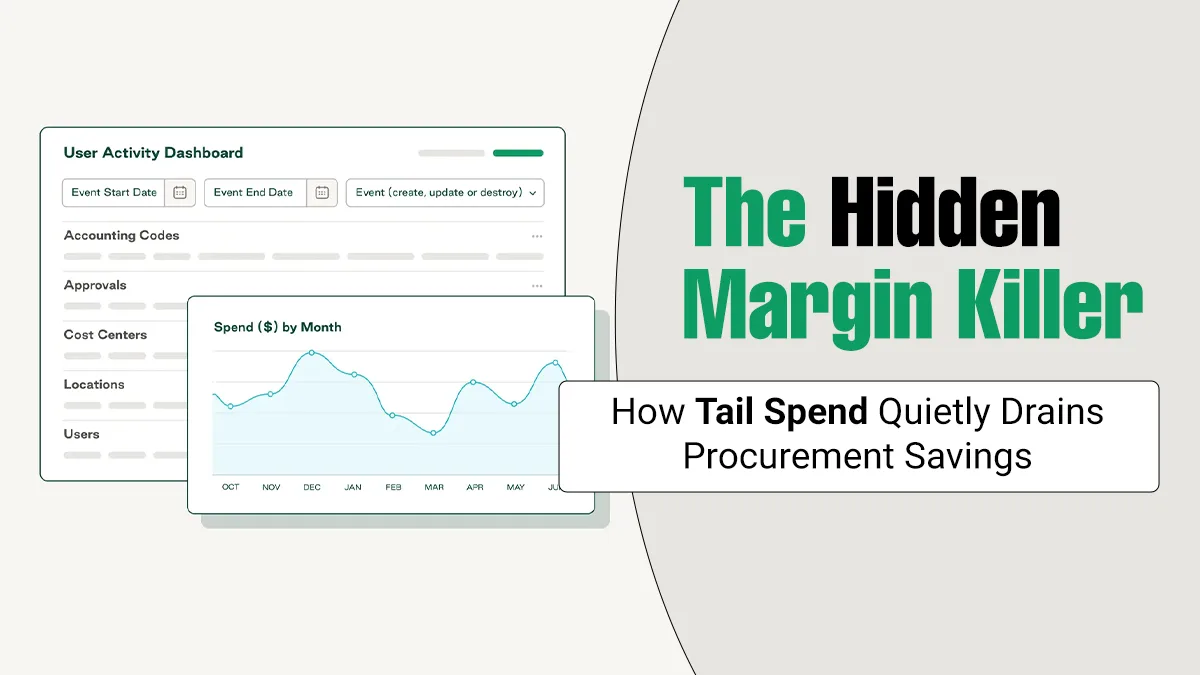
Spot small-vendor waste: Sort vendors by invoice count. The ones with the most invoices and the fewest dollars make your consolidation list.
Weeks 3–4: Assess Team Skills and Operational Flow
Now look inward. Give each person work that fits their strengths your best negotiator shouldn't spend Fridays chasing invoice approvals.
Assess team skills: Rate each person on contract negotiation, market price analysis, supplier management, and data analysis.
Check your software: Open your purchasing and contract tools. Do people use them, or do they work around them?
Find approval bottlenecks: Follow one purchase request from submission to payment and log every handoff and wait. A request that sits 11 days across five approvers is a process problem you can fix in Month 2.
Review contract renewals: List every contract that renews in the next 180 days ,those dates set your Month 2 calendar.
Days 31-60: Build Trust with Quick Wins and Clear Rules
With data in hand, month two is for action. Bank easy savings and show the company that procurement makes buying faster.
Weeks 5-6: Score High-Impact Quick Wins
Pick wins that finish inside two weeks and leave daily operations alone.
Clean up software licenses: Work with IT to review subscriptions, cancel unused seats and merge duplicate tools (two teams paying for two project-tracking apps is a classic find).
Consolidate suppliers: Move office supplies and facilities maintenance to one or two vendors, and ask for better rates in return for the volume.
Renegotiate payment terms: Move standard vendors from 30 to 60 days. On $20M of annual spend with those vendors, that releases about $1.6M in cash, once.
Run one competitive bid: Choose a category with three or more qualified suppliers and run an RFQ or a reverse auction.
Weeks 7-8: Create a Savings Rulebook
Sit down with the head of Finance in Month 2 and write a one-page Savings Rulebook. BCG's playbook makes a CFO-approved version a first-100-days priority, and the reason is simple: a saving Finance can't trace to the P&L doesn't count.
What is a Procurement Savings Rulebook?
Procurement Savings Rulebook is a formal, one-page agreement co-authored by Procurement and Finance that defines exactly how cost reductions, cost avoidances, cash flow gains, and non-countable items are calculated and verified before any figure is reported to executive leadership.
Your rulebook should separate four things:
Hard savings: A lower unit price that cuts a budget line. A $2.0M contract renegotiated to $1.8M is $200,000 in hard savings.
Cost avoidance: A price increase you blocked or a free service you won. If a supplier asks for 8% on a $1M contract and you hold it flat, that's $80,000 avoided, report it in its own column.
Cash flow improvement: Better payment terms that keep cash inside the company longer.
Exclusions: One-time rebates, forecasts, and volume you never bought. List what won't count before anyone asks.
Get Finance's signature on those definitions before you report a single number that way nobody argues about the total in month six.
Days 61-90: Build a 12-Month Strategic Roadmap
The final month shifts from quick fixes to long-term goals. You'll adjust the team's structure and set the year's priorities.
Weeks 9-10: Update Procurement Roles and Responsibilities
Take daily paperwork off your buyers' desks so they can spend their time on high-impact decisions.
Move to category management: Shift the team from placing orders to owning whole categories, such as IT or raw materials.
Assign business partners: Pair a sourcing lead with each department head (one lead embedded with the IT team, for example).
Weeks 11-12: Present Your 12-Month Roadmap
Build a one-page plan covering spend targets and vendor risk, plus the tools you'll need, then present it to the CEO and CFO together.
Set spend targets: Give each major category a savings target and an owner, using the rulebook's definitions.
Automate daily work: Start with requisition routing and contract renewal alerts, those two remove the most manual follow-up.
Manage key suppliers: Name the 10 to 15 suppliers the business can't run without, and hold quarterly reviews on results and new ideas.
Secure supply and sustainability: Have a backup plan for your major suppliers and get ESG documents now. Audits will be on time whether you’re ready or not.
Downsides and Potential Risks of a 90-Day Plan
Alienating stakeholders: Pushing price cuts in Month 1 without asking department heads sends teams around procurement.
Reporting unverified savings: A claim Finance can't trace to the P&L costs you credibility fast, and with only 38% of CFOs confident, you start with no cushion.
Over-analyzing: Waiting for 100% clean ERP data delays every win 80% clean is enough to act on.
Over-automating: Buying complex software before you fix a manual process confuses users and wears them out. You end up with a faster broken approval chain.
Next Steps
Do these before Friday. Ask the CFO for read-only access to AP and GL spend data, and book 45 minutes to agree on how Finance counts a saving. Then fill your Week 1 calendar with the five executive interviews.
Procure Suite takes on the heavy lifting from Week 2 onward: automated spend analytics, supplier tracking, tail-spend controls and fast approvals. Power & Instrumentation (Guj.) Ltd. reports a 30% shorter cycle time and a 15% average cost reduction across high-expenditure categories since deploying the platform. Your CFO will ask for a savings number by day 90; walk in with one Finance has already signed.