Overview
Procurement departments encounter many challenges in price negotiations, supplier management, and faster decision-making during sourcing events. Conventional sourcing methods require extensive manual effort from the procurement department. The teams rely on Excel sheets, emails, manual bidding, and unstructured supplier communication.
The eSourcing system assists businesses in making this process easier with the help of modern technologies. The eSourcing system offers features such as supplier identification, RFQ, RFP, online bidding, and sourcing events.
Overview of eSourcing Software
This e-sourcing software assists procurement professionals in digitalizing sourcing activities by providing various useful tools. It minimizes the need for human intervention with its features such as communication with suppliers, bidding, offer comparison, and selection of suppliers.
It enables procurement professionals to conduct strategic sourcing with digital RFQ, RFP, and reverse auction processes. It automates various sourcing processes such as supplier management, contract management, reverse auction, etc.
Businesses handling multiple suppliers or many sourcing events can utilize eSourcing platforms to simplify processes. Businesses also gain more visibility into their procurement processes.
Important Features of eSourcing Software
There are many types of e-procurement software available for businesses of various industries. Below are some important features they should consider when evaluating a procurement system.
1. RFQs and RFPs Management
The software should offer simplified RFQ and RFP management. It should enable teams to state requirements, invite suppliers, and evaluate their responses with ease.
2. Supplier Bidding
Supplier bidding capability allows suppliers to create and change their bids using a controlled online process. Some platforms support reverse auctions where suppliers compete by reducing prices.
3. Sourcing Event Management
Sourcing event management assists teams in organizing the whole sourcing event process. Teams can create the event, invite suppliers, and perform supplier evaluation.
4. Bid Comparison and Evaluation
Manual proposal comparison is a time-consuming procedure. Strategic sourcing systems provide a bidding process with criteria and a scoring system.
5. Supplier Management
Price is not the only criterion businesses consider during strategic sourcing. Supplier data such as their qualifications, certifications, performance, and communication history is also essential to make a strategic sourcing decision.
6. Reporting and Analytics
Reporting features may help procurement managers understand the sourcing process results, supplier participation, savings, and purchasing trends.
Here are the top e-sourcing platforms businesses can consider for smooth operations.
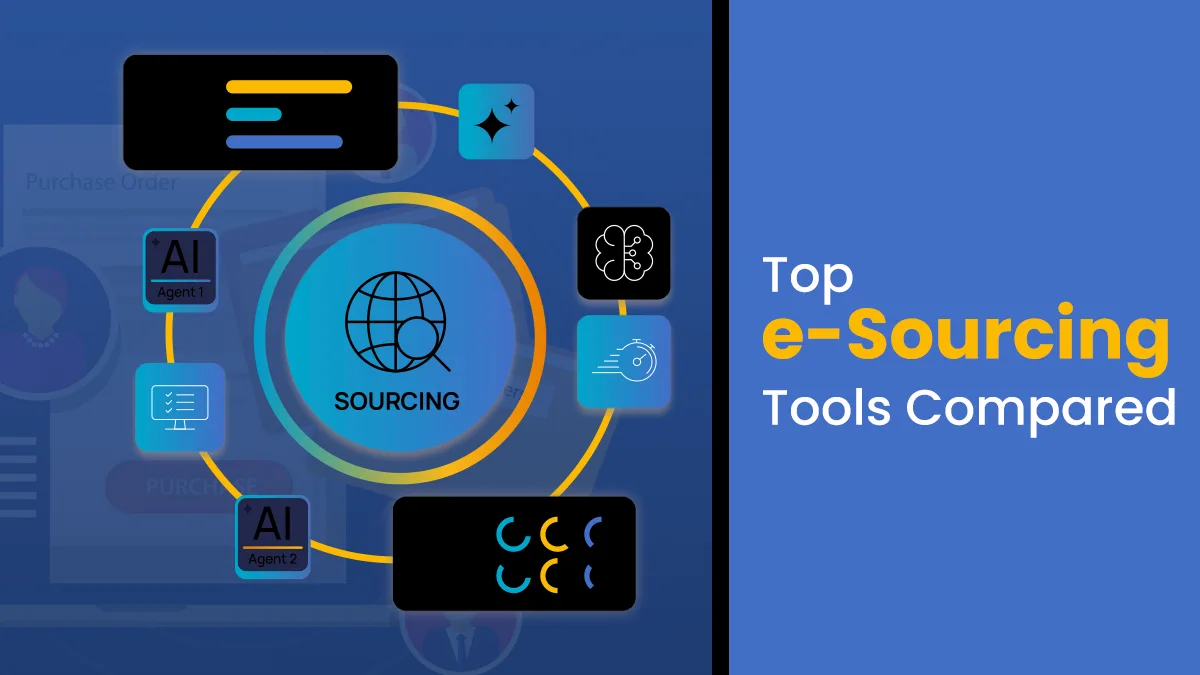
Top eSourcing Tools Compared for Modern Businesses
The best tool depends on an organization's procurement complexity, supplier base, budget, and existing technological environment. The following are some widely used solutions businesses consider.
1. Procure Suite
Procure Suite is a platform that supports both procurement and sourcing activities. Businesses can manage all their procurement processes digitally. It combines all the procurement information and reduces the need for multiple spreadsheets and emails.
For companies evaluating good esourcing software, Procure Suite is an effective procurement sourcing software solution that optimizes sourcing and procurement activities. It unifies all procurement processes on a single platform, helping businesses streamline workflows and improve efficiency.
2. Procoro
Procoro is a procurement management tool that assists businesses in managing their purchases and sourcing processes. Businesses can simplify supplier management, purchase orders, invoice creation, and many other sourcing tasks using Procoro.
Procoro ensures a streamlined procurement process for businesses wanting to reduce manual effort. It ensures increased transparency in the procurement process for the team.
3. SAP Ariba
SAP Ariba is a well-known procurement and sourcing solution. It is a good choice for companies with complicated procurement processes. Its procurement functionalities consist of creating proposals, hosting live auctions, supplier collaboration, and bidding management.
Its association with other SAP modules makes it an ideal choice for companies working with other SAP modules. Companies should keep its implementation cost in consideration.
4. Coupa
Coupa provides cloud-based business spending management, including sourcing and procurement. The sourcing functionality enables competitive bidding, supplier collaboration, and sourcing event management.
This procurement sourcing platform is designed to provide business spending insights and connect sourcing with overall procurement processes.
5. Ivalua
It offers an integrated procurement and source-to-pay solution that includes strategic sourcing, supplier management, procurement, and contract management.
Ivalua’s strategic sourcing tool can help teams manage complex procurement processes and supplier evaluation. It is a perfect solution for large corporations that need flexible procurement solutions.
6. Jaggaer
Jaggaer provides sourcing and procurement software for companies operating in different industries. Its capabilities include strategic sourcing, supplier management, auctions, and procurement process management.
It is useful for businesses looking for centralized sourcing with structured supplier management
7. GEP Smart
GEP Smart is a cloud-based procurement platform integrating sourcing, procurement, supplier management, and spend analysis features.
Its strategic sourcing tools help perform activities such as RFx events, auctions, supplier collaboration, and spend analysis. The solution is positioned toward companies that have complex procurement needs.
8. Oracle Fusion Cloud Procurement
Oracle includes sourcing capabilities, among other useful features, in Oracle’s broader cloud procurement suite. It helps with supplier negotiation, sourcing events, qualifications, and procurement.
Organizations actively using Oracle’s enterprise applications may benefit from the integration with other Oracle Cloud services.
9. Zycus
Zycus provides procurement technology, which comprises strategic sourcing, supplier management, contract management, and spend analysis.
Zycus’s sourcing features are particularly developed to help procurement teams effectively organize supplier events and make informed sourcing decisions.
How to Choose Right eSourcing Tool
Selecting e procurement software should involve more than comparing feature lists. Procurement teams should consider how well each platform fits into their existing processes and technology environment.
Start by evaluating the complexity of your existing sourcing processes. The small company with simple bidding requirements does not have to use the same software as the large company conducting multi-stage negotiations.
Next, consider supplier adoption. You should choose the tool that provides a seamless experience for suppliers.
Integration is another significant aspect businesses should consider before choosing the tool. The selected solution might require integration with ERP, procurement, supplier management, contract management, and finance applications.
In addition, businesses must also consider reporting, automation, security, scalability, implementation, and total cost of ownership.
Benefits of Using eSourcing Software
Businesses can experience the following benefits when switching from manual sourcing processes to online sourcing software.
Enhanced Efficiency: Automation makes the process less tedious and enables the procurement team to conduct sourcing faster.
Supplier Competition: It becomes easy for the procurement team to include more suppliers in bidding. It makes the whole process competitive.
Greater Transparency: Centralization of sourcing information leads to greater transparency of the procurement department in the sourcing process.
Consistent Sourcing Process: Through standardization of workflows, businesses can build consistent sourcing processes for each category and branch.
Effective Negotiation: Supplier-related information helps make better negotiations.
Improved Auditability: Digital records, supplier evaluation, and online approvals make it easier to audit the procurement process.
eSourcing Tools vs. Traditional Sourcing
Traditional sourcing methods require using -
Email
Spreadsheets
Documentation
Manual calculations
These techniques might be sufficient to carry out traditional sourcing processes. The complexities increase when businesses expand and deal with multiple suppliers.
eSourcing tools centralize the processes and provide a structured management approach that supports the entire procurement cycle. The procurement staff can interact with suppliers, receive bids, evaluate proposals, and store the sourcing history.
Not every organization needs an enterprise-level platform. Smaller procurement teams may benefit from a simpler solution that focuses on core activities such as RFQ, RFP, and supplier bidding requirements.
Final Thoughts
The robust eSourcing software allows the procurement team to switch from manual sourcing to a more advanced sourcing system. With the use of modern technology, eSourcing platforms provide functionalities from managing RFP/RFQ to conducting strategic sourcing.
While choosing strategic sourcing software, businesses should consider its user-friendliness, integration, scalability, analytics, implementation, and overall value.