Introduction
Procurement today is not what it used to be. Organizations have to manage complex supplier networks and sourcing strategies. As a result, connected, intelligent systems are gaining momentum. They simplify complexity by unifying every stage of the procurement lifecycle into a single, cohesive platform.
Modern platforms include advanced capabilities such as procurement auction software. Such software allows businesses to run competitive sourcing while keeping procurement activities consistent and transparent. These platforms are built on a strong system architecture and seamless data synchronization.
However, if there is no foundation that enables real-time data exchange, even advanced solutions will fall short. To maximize their value, businesses must understand their structure and how data moves between them.
This post digs deep into the importance of architecture and data synchronization in integrated procurement systems. First, let us take a glance at these systems.
Overview of Integrated Procurement System
These systems consolidate all procurement activities into a single, unified digital platform. It covers everything from sourcing and supplier onboarding to contracting, purchasing, invoicing, and spend analysis. Instead of relying on multiple disconnected tools, organizations manage the entire Source-to-Pay (S2P) process through one cohesive procurement management system.
An integrated system includes core procurement management software capabilities such as requisitioning, approvals, supplier management, and reporting. It even includes specialized modules like procurement auction software, which supports reverse auctions and competitive bidding to secure better pricing and stronger supplier engagements. Together, these modules automatically flow into purchasing, contract execution, and payment.
One of the biggest benefits of an integrated procurement system is end-to-end Source-to-Pay continuity. Everything- from finding suppliers to making the final payment- happens in one place. This keeps information from getting lost across different systems, reduces manual work, and ensures that negotiated prices and contract terms carry through accurately into purchase orders and invoices.
E-procurement features such as digital catalogs, RFQs, and online auctions simplify buyer-supplier relationships and standardize procurement workflows.
We have understood how integrated procurement systems work across the Source-to-Pay process. Now, we will take a closer look at the architecture behind it.
Architecture of Integrated Procurement Systems
The real strength of an integrated procurement system lies in a well-designed architecture. With a robust system architecture, data, and workflows, users remain aligned throughout the process. It ensures that every procurement activity works together instead of in isolation.
A. Layered Architecture Explained
These systems are built around a layered architecture. Though each layer handles a specific role, they work together to deliver a seamless Source-to-Pay experience. Thus, procurement becomes faster, clearer, and more reliable.
Presentation Layer
This is the layer that users interact with the system every day. It has user-friendly portals for buyers, suppliers, and administrators. It also includes dashboards, reports, and auction interfaces. Here, buyers raise requisitions, suppliers submit bids, and managers review dashboards.
Think of this layer as the bridge between systems. It uses APIs and connectors to move data between procurement modules and other enterprise systems like ERP or finance tools. Hence, supplier details, item information, and pricing stay consistent everywhere, reducing errors and confusion.
Application Layer
This layer holds the main business logic of the platform. It includes modules such as sourcing, procurement auctions, contract management, purchase order management, and supplier master data. Procurement auction software operates within this layer. It stays fully connected to sourcing and purchasing workflows. This ensures auction outcomes flow directly into contracts and purchase orders.
Integration/Middleware Layer
This layer acts like a bridge between modules and external systems. It uses APIs, event buses, and prebuilt connectors to move data between procurement modules and other enterprise systems like ERP or finance applications. This ongoing data synchronization ensures that vendor records, item catalogs, and negotiated prices remain accurate across all systems, thereby minimizing errors and confusion.
Data Layer
At the foundation is the data layer, which stores structured and unstructured procurement data. It includes transaction records, supplier details, contract documents, audit logs, and analytics results. Centralized data storage supports reporting, compliance, and better decision-making over time. A well-built internal architecture lays the foundation, but integrated procurement systems can deliver real value when they connect effortlessly with the broader enterprise landscape.
B. Integration with Other Enterprise Systems
These platforms connect easily with existing ERP systems that handle finance, budgeting, and inventory. It helps maintain accurate recording of purchase orders, invoices, and payments.
At the same time, they also integrate with supplier relationship management tools and supply chain systems. This enables teams to align planning, logistics, and supplier performance. The method enables end-to-end workflows and enhances the effectiveness of supply chain management software. The next step is to ensure that data moves efficiently and reliably between the connected systems.
C. Real-Time Data Sync
With real-time data synchronization, everyone can work with the same, up-to-date information. Technologies such as APIs, webhooks, and data connectors automatically update records when a bid is submitted, a price is approved, or an invoice is generated.
These mechanisms allow procurement data to move instantly between modules and external systems as events occur. As a result, teams gain visibility on exact spending, approvals move faster, and there are fewer data errors. Moreover, real-time updates strengthen compliance. This ensures approvals, pricing, and contracts follow the latest rules and agreements.
Let us delve into the main capabilities made possible by a strong architecture.
Key Features Enabled by Integrated Architecture
With the right architecture, integrated procurement systems offer features that transform the way procurement teams work.
Procurement auctions and eSourcing encourage fair competition among suppliers and drive better pricing.
Workflow automation removes bottlenecks by handling approvals and supports three-way matching between purchase orders, goods receipts, and invoices.
Supplier management is more effective and organized with centralized vendor management and ongoing performance tracking.
Meanwhile, contract and spend analytics provide insights into purchasing patterns, helping teams identify saving opportunities and improve sourcing strategies.
Built-in security and compliance controls protect sensitive information and support regulatory requirements.
Thus, these features provide measurable business value for organizations using integrated procurement systems.
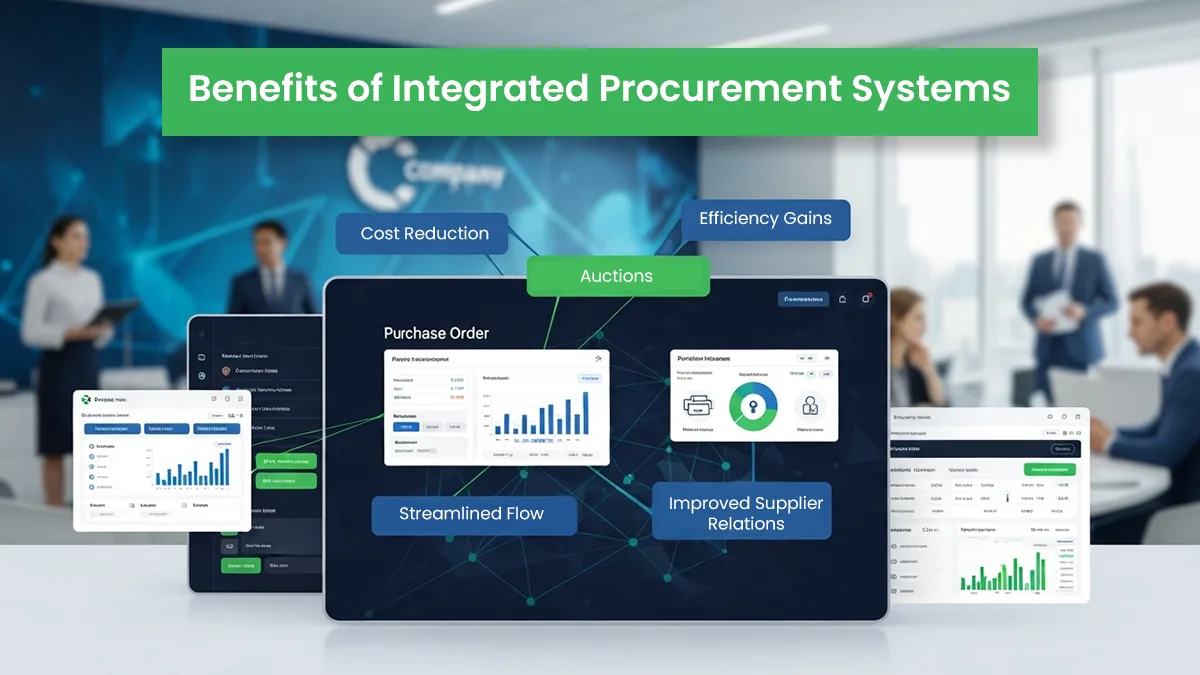
Benefits of Integrated Procurement Systems
These systems change the way how procurement works. Let us jump into it.
Operational Efficiency and Cost Reduction
Automation reduces manual work, accelerates procurement cycles, and reduces errors, which lowers operating costs.
Enhanced Transparency and Data Accuracy
With a single source of truth, teams avoid duplicate records and inconsistent information.
Stronger Risk Management and Compliance
Built-in approval workflows, audit trails, and policy controls reduce the risk of fraud and non-compliance.
Smarter, Data-Driven Decisions
Advanced analytics and reporting offer useful insights to procurement teams for making better negotiations and informed decisions.
Improved Supplier Collaboration
Real-time communication and performance visibility metrics build trust and foster stronger, more reliable supplier relationships.
These benefits highlight the significance of integrated procurement in today's digital-first world.
Concluding Remarks
To sum up, integrated procurement systems turn even the most complex procurement processes simpler. With the right architecture and real-time data flow, procurement transforms from a routine function into a strategic advantage. Choosing the best e procurement software enables organizations access a solution with powerful features that integrate seamlessly and scale along with the business.