Overview
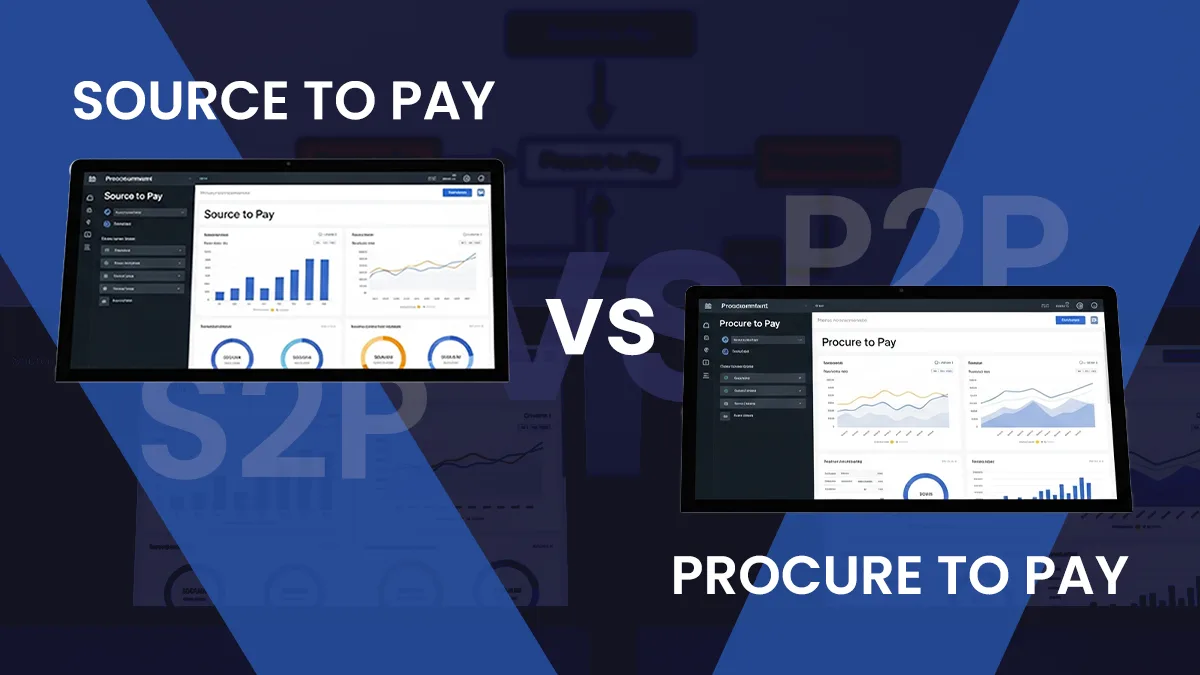
Source to Pay (S2P) or Procure to Pay (P2P): Which solution should you choose? Well, the short answer to this question is that Source to Pay manages the entire lifecycle of suppliers and sourcing. Whereas, Procure to Pay handles transactional purchasing and payments. Here, the right choice between S2P and P2P is essential to resolve some crucial issues and get strategic control over spending.
This post discusses the differences and technological stakes of source to pay procurement software and P2P solutions. Let’s understand it step-by-step so that you can make a future-ready decision.
Why S2P vs P2P Is a Real Procurement Challenge
Most procurement teams find the answers to questions like
Why don’t we know our real spending until the end of the quarter?
Why are sourcing savings lost during buying?
Why is finance still reconciling data manually?
Process fragmentation is a common issue behind all three questions. As procurement evolves in layers in many organizations, sourcing teams use one tool and purchasing teams use another. Additionally, AP and finance teams rely on ERP modules. As a result, supplier data remains present everywhere. This, however, creates gaps between intent and execution.
In our experience, procurement teams realize that process scope matters more than features at this moment. Here, it is essential to compare source to pay vs procure to pay solutions. Let’s begin with the intent of both these solutions.
What Problem Are You Actually Trying to Solve?
The selection of solutions is crucial for companies in managing procurement-related activities. If your organization’s primary objective is quicker purchasing and reduced AP errors, you should look for procure to pay solutions. On the other hand, if you want better sourcing outcomes and end-to-end spend governance, it is advisable to invest in a Source to Pay platform.
Simply put, answers vary for different questions, and comparing Source to Pay vs. Procure to Pay solutions can help us find the right option.
Comparison between Source to Pay vs Procure to Pay
Before comparing these solutions, let’s understand their mechanism and scope for modern enterprises.
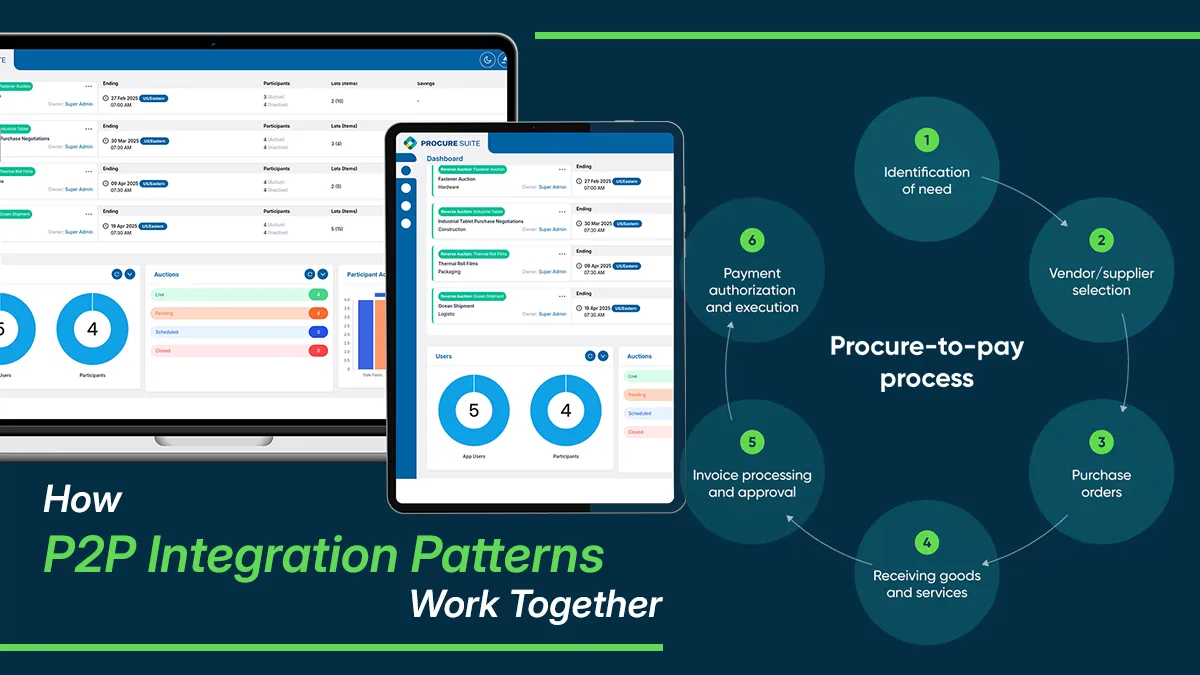
Procure to Pay covers every activity from purchase requisition to supplier payment. A p2p procurement system includes features like requisition management, purchase orders, goods receipt, invoice processing, and basic supplier onboarding. All these features contribute to handling financial and ERP-related procurement activities.
The Source to Pay or S2P process includes spend analysis, strategic sourcing, supplier evaluation, guided buying, procurement, and contract lifecycle management features. In other words, source to pay software can handle all the activities from sourcing and purchasing to invoicing and managing suppliers. This is a reason procurement teams prefer this solution.
Let’s go through side-by-side comparison between Procure to Pay and Source to Pay solutions-
Aspect or Factor | Source to Pay Software | Procure to Pay Software |
|---|---|---|
Scope | End-to-end | Transactional |
Starts at | Spend & sourcing | Requisition |
Supplier lifecycle | Full lifecycle | Limited |
Savings tracking | Strong | Weak |
Compliance | Strategic | Tactical |
Ideal for | Control and optimization | Execution |
It is fair to say that P2P optimizes execution and S2P improves decisions for the company. Let’s elaborate on this statement.
P2P vs S2P- Which One Fits Your Company?
Here are the scenarios for which your organization should opt for either p2p procurement software or a Source to Pay platform.
Choose p2p procurement software if
You have strong sourcing processes
ERP is central to operations
Invoice and payment efficiency are priorities
Procurement is more operational than strategic
Mid-market and growing companies prefer procure to pay solutions for improving audit readiness and creating discipline in procurement processes.
Select a Source to Pay platform if
You want savings in sourcing
Supplier risk and performance are priorities
Complex categories need to be managed
Procurement process needs to drive value
In our experience, organizations moving toward Source to Pay have a strategic mindset of influencing spending in advance.
Technology Stacks of P2P vs S2P Solutions
Some visible differences in the tech stacks of P2P and S2P are
For P2P Technology
ERP or related Tools
They act as the backbone for purchasing and finance. ERP can store master data and enforce basic procurement controls.
AP (Accounts Payable) Automation
It streamlines invoice processing by reducing manual entry, accelerating the approval process, and improving accuracy.
OCR and Invoice Matching
OCR captures invoice data automatically and matches it against purchase orders and receipts. This is necessary for reducing errors.
Payment Gateways
Payment gateways enable secure and timely supplier payments through multiple methods while improving visibility of outflows.
For S2P Technology
Spend Analytics
It consolidates data across systems to show where money is spent, with whom, and where savings opportunities are available.
Supplier Management
It manages supplier onboarding, performance, risk, and compliance across your company's supplier lifecycle.
Guided Buying
It enables users to select suppliers and assign contracts while following compliance and prevalent regulatory requirements.
Contract Lifecycle Management
This technology controls contracts from creation to renewal to ensure negotiated terms and pricing.
Integrated P2P Layer
It ensures sourcing decisions flow into purchasing, invoicing, and payments seamlessly without losing data.
Sourcing and RFx Engines
These tools support structured sourcing events and negotiations to drive measurable and repeatable savings.
S2P software offers more comprehensive technology than the P2P solution. Organizations can evolve from P2P to S2P by following the common maturity path. It starts with implementing a p2p procurement system for control. The addition of sourcing tools and the struggle with disconnected or fragmented data can lead them to a unified source to pay software.
Why S2P Matters More as Procurement Scales
Evolving procurement requires flexible and scalable tools due to increasing complexity. Organizations need to manage more categories and a wider supplier base. Moreover, risk exposure increases, and companies have to follow stricter compliance requirements, all at once. Here, procure to pay software solutions may remain insufficient because of their focus on the execution part mainly.
A Source to Pay platform can connect sourcing, contacting, procurement, and payment into a single flow effectively. It can turn the procurement process from a set of tools into a unified model. This can scale easily as the business grows.
Final Outcome- Making the Right Decision
Both Procure to Pay and Source to Pay matter, but they serve different stages of procurement. If your company gives priority to efficiency, it is better to start with P2P, but if it focuses on value, growth, and governance, S2P is the next step. Both have different technology stacks and functionality with differences in scope.
How about planning for the future? You can choose Procure Suite, a 360-degree procurement solution that enables your company to evolve with time. Contact us to schedule a demo and learn more about Procure Suite’s Procure to Pay and Source to Pay functionality.