
Overview
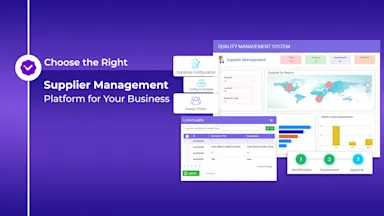
Building strong relationships with suppliers is indispensable to reducing supply chain risks and getting better pricing. These strong supplier relationships can make businesses more resilient and innovative to achieve growth. A modern supplier management platform can help you build strong relationships through a tech-enabled process. This platform offers onboarding, performance, and collaboration monitoring with risk assessment into one system.
This post explores the key steps for managing supplier relationships. It also includes real-life scenarios and some useful implementation tips. Let’s start with the challenges of supplier relationship management.
Hurdles for Effective Supplier Relationship Management
Today, maintaining supplier relationships is cumbersome due to several reasons. Here we mention some of these hurdles:
Scattered supplier data across emails and Excel files
Lengthy onboarding process
Lack of visibility into supplier risk
Reactive approach for performances
Absence of real-time collaboration
In our experience, most companies that face these issues lack structure and systems. The best supplier management solution can help companies manage supplier relationships effectively. It acts as a process enabler and offers a structured way for supplier relationship management (SRM).
Supplier relationship management is a complex process that includes all the steps from identifying suppliers to controlling risks related to their transactions and performances. Advanced supplier management software can handle this process while generating long-term value.
Let’s dig deeper into the steps of SRM.
Key Steps of Supplier Relationship Management Process
We can segregate this process into six different steps. High-performing procurement teams can utilize supplier management solutions for these steps.
Step 1. Supplier Discovery and Segmentation
Let’s face it. All suppliers are not equal. It is, therefore, necessary to treat them accordingly. Companies can start supplier identification by reviewing their risk profiles and category mapping. A supplier management system can assist your organization in identifying the right suppliers. Moreover, you can categorize suppliers into three different categories—
Strategic Suppliers—for businesses focusing on generating long-term value.
Tactical Suppliers—for companies focusing on efficiency in sourcing and procurement
Transactional Suppliers—for enterprises that want to automate the process.
Step 2. Onboarding Suppliers
Manual onboarding is expensive and vulnerable to human errors. Whereas a customized supplier onboarding software can automate document collection. It can verify the supplier's certifications to standardize their profiles and ensure compliance. Moreover, companies can integrate it with ERP or P2P systems. The process eventually led to an accurate and transparent supplier onboarding.
Step 3. Performance Management
This is one of the most important steps in SRM. It includes KPIs, SLAs, scorecards, delivery metrics, and quality benchmarks for suppliers. Companies can utilize feature-rich supplier management platforms that offer data-driven reviews on real-time dashboards. These platforms have automated scorecarding and the ability to show predictive performance trends. This step is crucial for shortlisting suppliers.
Step 4. Collaboration for Relationships
This step offers businesses the advantage of strategic partnerships. It optimizes processes by handling demand forecasting. Procurement teams can initiate innovative changes. This step helps you make shared growth plans and co-investment models with suppliers. A reliable supplier management system can handle this step effectively and improve the collaboration.
Step 5. Risk and Compliance Management
Supplier-related risks, including operational risk, cyber risk, financial risk, and regulatory compliance, can hit businesses hard. Moreover, increasing geopolitical exposure and ESG risk also require priority. A powerful supplier management software can send automated alerts and display risk scoring models to handle this process. Some advanced solutions offer continuous risk monitoring and business continuity mapping features.
Step 6. Value Creation and Optimization
It is the final stage that involves cost optimization, revenue enablement, sustainability goals, supply chain resilience, and innovation sourcing. Here, the SRM serves as a business strategy function, providing the company with a competitive advantage. The best supplier management solution enables these activities by driving growth through effective supplier relationship management. It is indeed better than managing relationships manually.
Talking about the tech stack for supplier management solutions, we can include ERP integration, P2P integration, risk intelligence tools, and compliance systems. Let’s go through some real-life examples that can help you choose the right model for managing supplier relationships.
Real-Life Scenarios for Selecting the Right Model
Here we take examples of a tech company and a manufacturing enterprise. A fast-growing tech company needs a scalable supplier base with compliance automation. It requires high-risk visibility with a quick supplier onboarding process as well. A supplier management system with an automation-first design can help the company achieve these objectives effectively.
Another example is of a manufacturing company. It needs the right model for ensuring strategic supplier collaboration and maintaining long-term contracts. Moreover, the company wanted to implement robust workflows for risk resilience and performance optimization. An enterprise-grade supplier management platform, like Procure Suite, can help the manufacturing company achieve these objectives.
Integrated supplier management solutions are also useful for supplier governance and cost control in service-providing companies. These solutions are useful for compliance monitoring and their performance visibility. Service providers can grow their business with the help of these solutions. However, it is essential to implement them properly to leverage these benefits.
Key Implementation Tips for Supplier Management Software
Here are some useful tips for implementing the supplier management solution effectively.
- Get Standardized Supplier Data
Accurate and standardized data can make any supplier management solution more efficient. You should ensure that duplicate and outdated records are not included in the data.
- Create Repeatable Onboarding Process
It is essential to create a single, repeatable onboarding process to reduce delays and improve compliance. This can ensure that every supplier enters the system with verified information.
- Define Supplier Segmentation Logic
You can segregate suppliers on the basis of various criteria like spend, risk, or strategic importance. It helps you apply the right level of governance and collaboration.
- Align KPIs with Outcomes
You can monitor metrics that support business goals directly. KPIs are useful in measuring the impact on cost savings and risk reduction.
- Integrate SRM with P2P
Integration of the Procure-to-Pay system and SRM enables you to get seamless data flow across sourcing, purchasing, and payments.
- Automate Compliance Process
Automation is beneficial in monitoring certifications and meeting regulatory requirements in real time. It minimizes manual effort and reduces compliance risk.
These tips will help you choose the best supplier management system for your company.
Concluding Remarks
Supplier relationship management can play a vital role in driving growth. It can give measurable business outcomes when following all the steps and implementing deployment processes effectively. A modern supplier management platform can connect ecosystems and enable companies to achieve sustainable growth across the organization. However, companies should choose the most suitable solution to handle the SRM process.
Procure Suite is a reliable supplier onboarding solution. Its inbuilt features can simplify the complexities of the supplier management process. Contact us to schedule a demo of one of the best supplier management solutions, Procure Suite.