Overview
A Chief Procurement Officer (CPO) does not think only about savings. Risk control, working capital optimization, supplier innovation, and ESG alignment are other areas of concern for CPOs these days. In other words, CPOs have some strategic corporate goals to achieve and drive digital transformation. Advancing technology can help them achieve these objectives.
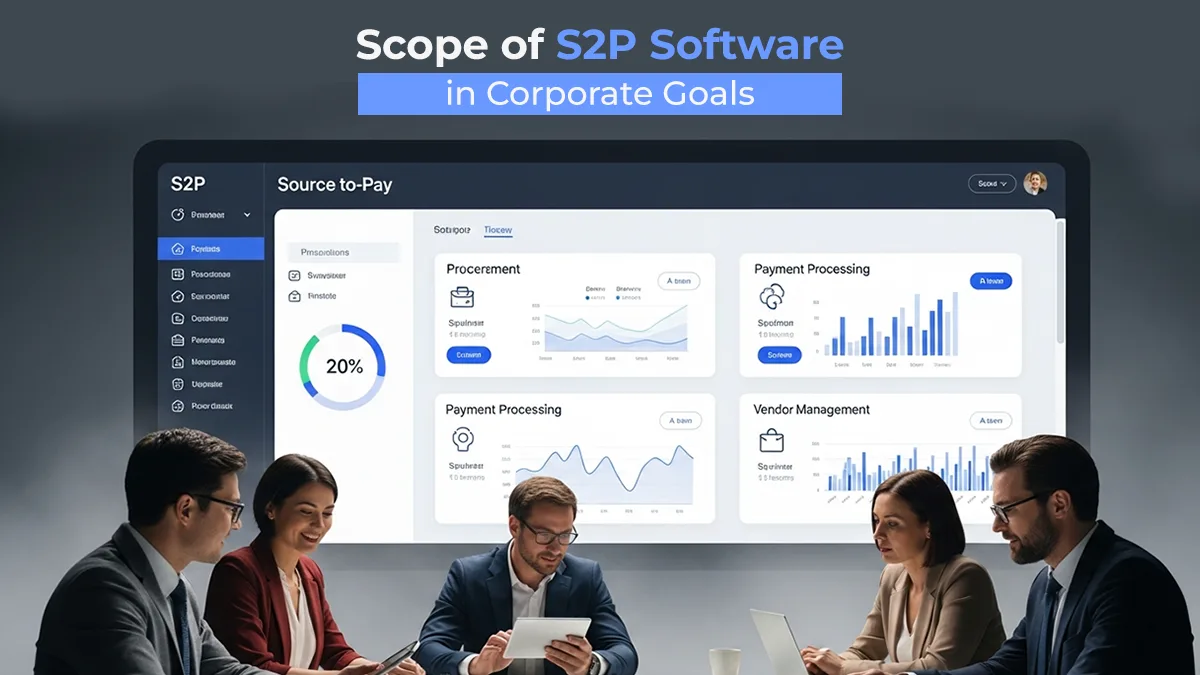
Source to pay software is an advanced tool that helps CPOs align procurement operations with corporate strategy. It connects sourcing, contracting, purchasing, invoicing, and analytics into one system effectively. This post discusses the role of source to pay solutions in achieving corporate objectives. Let’s start with the reason behind the CPO’s struggle in meeting these goals.
Why CPOs Struggle to Meet Strategic Objectives
Let’s face it. The procurement process gets more complicated than ever in the challenging business scenario. Though this process brings many complexities, CPOs still rely on disconnected tools. These are individual software applications that do not integrate to perform the procurement lifecycle. Some disconnected tools include
Separate tools for sourcing and contracts
Basic procurement management software
Manual spreadsheets for supplier risk
Limited spend visibility solution
As a result, CPOs get fragmented data and face compliance gaps. Moreover, poor supplier collaboration leads to issues related to decision-making. In our experience, the lack of integration is the biggest issue. Here, a modern source to pay platform emerges as a game-changer. Let’s understand the role of source to pay software.
Importance of Source to Pay Software
A feature-rich source to pay platform can handle the entire procurement lifecycle, ranging from supplier discovery to payment and analytics. A unified solution enables CPOs to connect strategy and assist them in predicting spend. These S2P solutions can automate the approval process and assist the team in monitoring it in real time.
Let’s go through the four ways source to pay software supports CPOs in achieving their corporate goals.
How Source to Pay Solution Supports Corporate Objectives
An S2P software solution bridges the gap between procurement and board-level priorities. Here are the four different ways it can help CPOs achieve strategic objectives:
1. Cost Leadership
A centralized s2p software enables the procurement teams to get spend analytics across different categories. Teams can handle competitive eSourcing events and consolidate demands effectively. As a result, 5 to 12 percent category savings are possible with accurate prediction.
2. Risk and Compliance Management
These days, supply chain management is getting more complex than ever. Geopolitical risks, ESG scrutiny, and supplier insolvency complicate supply chains. Here, advanced procurement process management software can offer audit trails, compliance tracking, and centralized documentation for ensuring fewer disruptions.
3. Working Capital Optimization
Finance teams focus on cash flow, whereas procurement teams pay attention to cost optimization. Integrated source to pay software solutions can assist companies in aligning procurement teams with contracts and reducing invoice mismatches. These solutions can improve three-way matching and automate the process for accelerating approvals.
4. Digital Transformation
Disconnected tools cannot drive transformation. A scalable source to pay platform can integrate with ERP systems and replace manual workflows effectively. As a result, the procurement process becomes more data-driven. This leads to digital transformation of the process.
However, here it is essential to get the feature-rich and seamless source to pay procurement management software to leverage these benefits. Let’s understand this with some real-world scenarios.
Real-World Examples of S2P Implementation
S2P is useful in several conditions. Here, we mention some of the top real-life use cases of the S2P solution.
- Tech Startup
A forward-looking tech firm can utilize the S2P software for multiple objectives. For example, managing SaaS subscriptions and establishing rapid vendor onboarding are possible with the S2P solution. The startup can also address poor contract visibility and get accurate invoices for the process.
- Retail Chain
An eCommerce cum retail chain owner uses S2P for managing the global presence. Whether it is private label sourcing or handling international contracts, a scalable source to pay platform is highly beneficial for the retailer. Moreover, it has a vital role to play in managing customs compliance and inventory-linked procurement.
However, companies should ensure the effective implementation of the source to pay software.
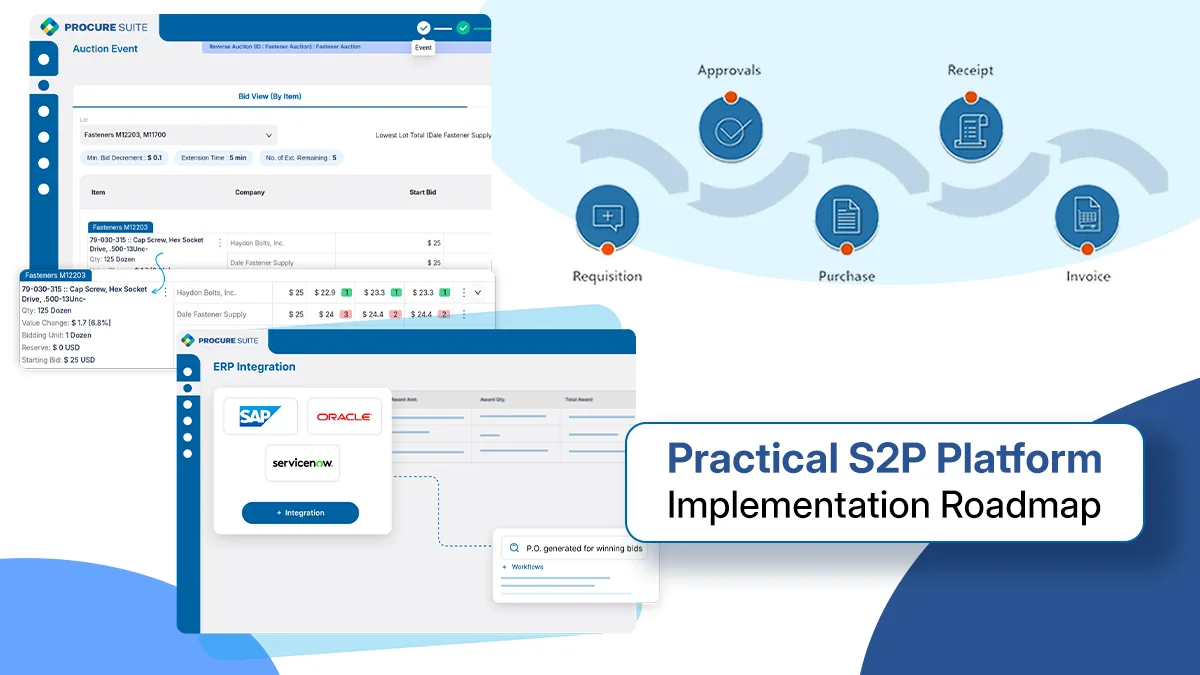
Step-by-Step Guide to Implement S2P Software Successfully
Here are the necessary steps to ensure effective deployment of the S2P solution.
Step 1. Clean Your Data
First things first. You need to standardize the supplier master records and contract repositories. It is fair to say that if data is messy, even the best source to pay software cannot perform well. This leads to errors in insights.
Step 2. Define Strategic KPIs
This is a crucial step. You should implement software by considering the realistic targets. Some of such targets include-
Reduce maverick spend by 20 percent
Improve sourcing cycle time by 30 percent
Achieve 95 percent contract compliance
Here, a reputable procurement process management software provider can help you.
Step 3. Focus on Experience
It is essential to prioritize user experience while implementing modern procurement process management software. It should be mobile accessible, user-friendly, workflow-driven, and with high integration capabilities. Such a solution can drive high ROI in a short time.
Step 4. Start with Priorities
There is no need to digitize everything at once. You can, instead, start with high-spend categories and high-risk suppliers. When companies start small in adopting the S2P software, they can leverage its benefits more effectively.
In our experience, organizations that implement source to pay software solutions can witness three major shifts. They can improve the procurement cycles. They can make data-driven decisions in real time. Also, these solutions can align the Chief Financial Officer (CFO) and Chief Procurement Officer (CPO) more effectively. Simply put, the right S2P software can fail the alignment between the CPOs and the company's goals.
Concluding Remarks
CPOs with strategic goals like ESG compliance, risk resilience, and cost leadership should opt for advanced source to pay software. It automates purchasing and analyzes payment-related data to give actionable insights. However, companies should choose the right solution and follow the best implementation practices to leverage the benefits. Ultimately, this can assist CPOs to drive digital transformation and optimizing working capital.