Introduction
Approval delays, maverick spending, and a lack of supplier coordination can lead to multiple failures in procurement cycles. Procurement teams can follow structured workflows to address these challenges effectively. Purchase requisitions and purchase orders play crucial roles in the procurement workflows. Many companies struggle in addressing these challenges simply due to not understanding the difference between purchase requisitions and purchase orders.
Purchase requisition software can handle approvals and improve procurement visibility. Modern businesses use it to automate purchasing requests, maintain compliance, and increase transparency in the process. Request creation to supplier payment- this software handles several steps effectively. This blog talks about the differences between a purchase requisition and a purchase order.
Overview of Purchase Requisition
As an internal request, an employee or department can submit a purchase requisition. It is essential to obtain approval for purchasing goods or services. We can consider a purchase requisition as the first formal step in the procurement process. Employees create requisitions when they need products in terms of equipment, raw materials, or software. These requisitions can be for services as well.
The purchase request passes through an approval workflow before the company’s procurement teams contact suppliers. A standard purchase requisition consists of the following-
Requester Information
Product/Service Details
Quantity Requirement
Estimated Cost
Budgetary Information
Delivery Expectations
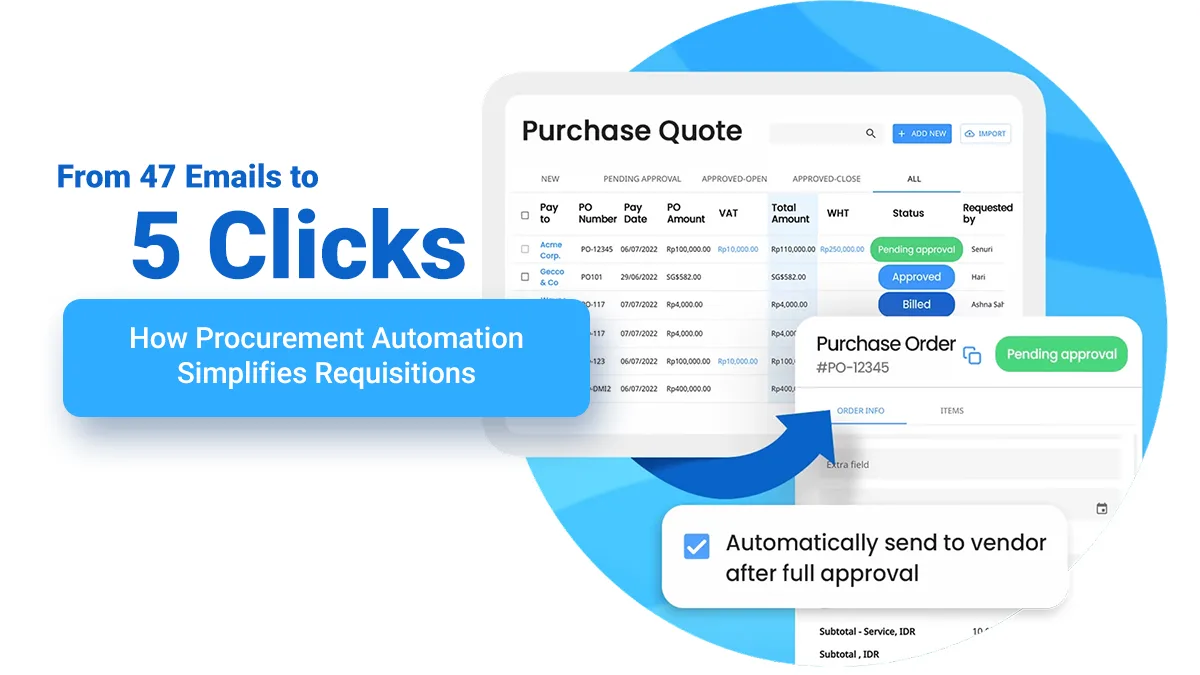
Companies can use purchasing requisition software to automate approvals and standardize their procurement policies across different departments.
Purpose and Importance of Purchase Requisitions
Purchase requisitions help modern businesses control procurement activities at the initial stage. These requisitions can prevent unauthorized purchases, validate requirements, and improve approval transparency. Other benefits of the purchase requisition include- it enables companies to monitor departments' budgets and maintain records. Companies can experience uncontrolled spending and inconsistencies in decisions without a formal requisition.
Overview of Purchase Order
It is an official document. The buyer issues it to a supplier after getting approval for the requisition. A purchase order, in other words, is an official commercial document and an offer for purchasing products or services under agreed-upon terms and conditions. These are external documents that purchasers share with vendors. A typical purchase order includes
Supplier Details
Product Specifications
Pricing Information
Quantity Ordered
Payment Terms
Delivery Address
As and when the supplier accepts the purchase order, it becomes a legally binding agreement for both parties.
Importance of Purchase Order
Enterprises can use customized software to convert their approved requisitions into purchase orders. This purchase order requisition software can reduce manual effort and improve procurement efficiency. Both purchase requisitions and order documents are useful for companies. Here, purchase orders can help suppliers confirm and fulfill these approved requirements. Some businesses skip the requisition process and issue purchase orders directly.
This is, however, a dangerous practice that leads to operational problems and weak control over the procurement cycle. The bypassing of purchase requisitions may result in any of the following issues:
Employees can make unauthorized purchases
Budgets become difficult to monitor
Procurement visibility decreases
Approval accountability reduces
Audit documentation becomes incomplete
It is fair to say that a purchase requisition is the first step for procurement, but a purchase order is also essential for initiating the cycle from the supplier’s end.
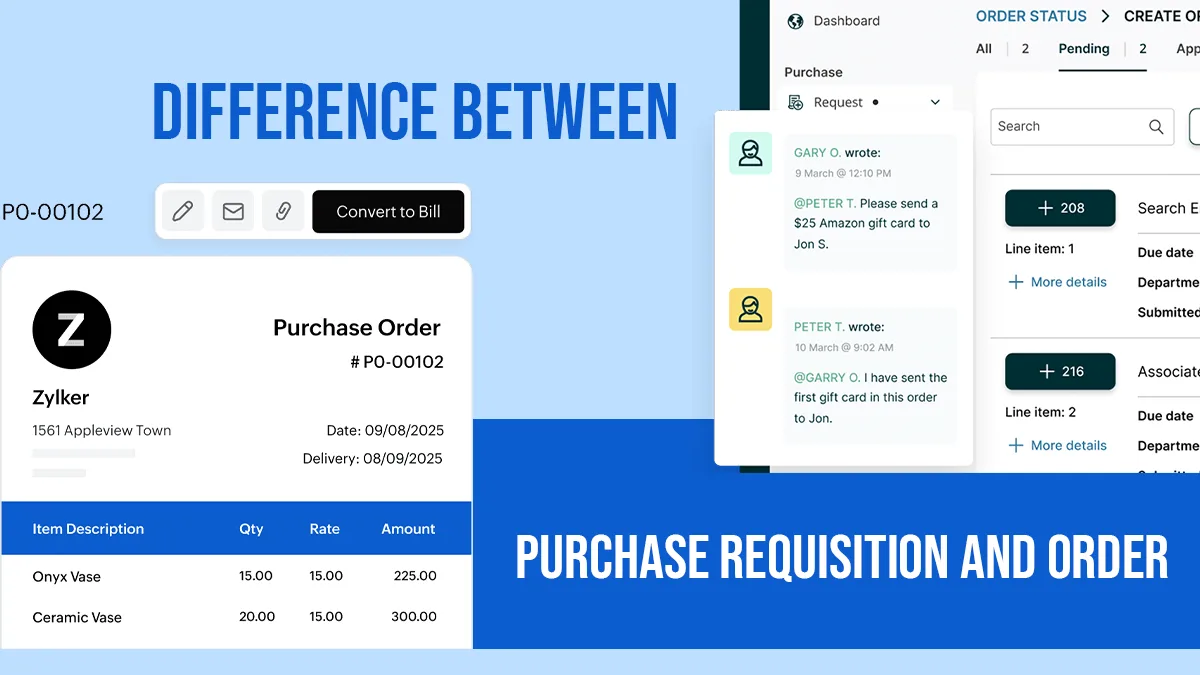
Key Differences- Purchase Requisition vs. Purchase Order
As both these documents have specific scopes, it is better to differentiate them to manage the procurement process more effectively.
Factor | Purchase Requisition | Purchase Order |
|---|---|---|
Purpose | Internal approval request | Official supplier order |
Users | Employees and departments | Procurement teams and suppliers |
Audience | Internal stakeholders | External suppliers |
Procurement Stage | Before approval | After approval |
Legal Status | Non-binding | Legally binding |
Main Objective | Request purchasing approval | Confirm supplier transaction. |
These differences can help companies make a more structured workflow and streamline the entire procurement cycle.
Role of Purchase Requisitions Software
The manual procurement process involves spreadsheets, emails, and paper-based approval. This results in limited control over your budget with reduced visibility. Digital procurement solutions can help companies streamline the workflow and eliminate such issues. Some top benefits of a purchase requisition software are
Quicker Workflows
Automated routing can send a request directly to designated approvers. This saves the team's valuable time to avoid delays.
Better Visibility
Finance teams monitor spending accurately before initiating the process using the purchase order requisition software.
Improved Compliance
The best purchase requisition software standardizes approval rules and policies. This can improve compliance.
Centralized Records
Enterprises can save and access requisitions, approvals, purchase orders, and supplier details on the same platform.
Reduced Errors
A custom online requisition software reduces duplicate entries as well as documentation-related errors.
Efficient Coordination
Procurement teams monitor supplier interactions, order status, and timelines through advanced purchase requisition software. A feature-rich purchasing requisition software can improve operational efficiency and reduce administrative activities. It brings automation to save time and effort.
Top Features of the Right Purchase Requisition Software
Top Features of the Right Purchase Requisition Software
The right purchasing requisition software should have some necessary features with seamless functionality and high scalability.
1. Automated Approval Workflows
This solution should support configurable approval hierarchies. This is irrespective of departments or budgets.
2. Real-Time Activity Tracking
The right purchase requisition tracking software should offer the necessary information about request status and procurement progress.
3. Company Budget Monitoring
The purchase requisition platform should have built-in budget controls. These controls help avoid overspending and save money.
4. Purchase Order Integration
Software should convert approved requisitions into purchase orders automatically to maintain the procurement cycles.
5. Supplier Performance Tracking
The most suitable solution should have a centralized supplier management system. It can improve supplier coordination while monitoring their performance.
6. Analytics and Reporting
The best purchase requisition software has interactive dashboards and a real-time reporting feature. They enable businesses to analyze spending patterns and procurement efficiency.
Apart from these features, this software should offer mobile accessibility to managers. This can further increase approval speed for companies. The best purchase requisition software offers the combination of automation, visibility, and procurement intelligence in the same platform.
How Automation Improves Procurement Efficiency
Procurement automation plays a vital role in managing large purchasing volumes across multiple suppliers. Automated procurement systems can
Reduce cycle time
Improve accuracy of approvals
Eliminate manual paperwork
Increase spending visibility
Strengthen compliance management
Improve supplier collaboration
Advanced purchase order requisition software gives companies high operational control and effective procurement execution.
Closing Remarks
Purchase requisitions and purchase orders seem connected, but are different documents. Purchase requisitions help businesses manage approvals. Companies can control the budget and manage it internally, even before spending occurs. Whereas, purchase orders confirm transactions with suppliers and ensure commitments. Modern purchase requisition software simplifies procurement workflows through automation and real-time monitoring.
Companies can improve efficiency, control overspending, and strengthen relationships with suppliers. They can get high visibility by adopting online requisition software.