Introduction
The longest feature list is not sufficient when you choose the right RFP software for your company. This selection process involves several aspects, including integration capabilities and support for a better decision-making process. The software should adapt to approval workflows, supplier evaluation methods, and procurement goals of your organization. It should simplify sourcing and strengthen supplier collaboration.
Procurement teams, these days, have to manage a subtle balance between supplier participation and competitive sourcing events. This situation makes the rfi rfp rfq process crucial for the company. This process can identify qualified suppliers, compare responses, and help companies select the best supplier. Modern procurement management software transforms this process from a manual task into a digital workflow. When we consider the role of rfp management software, it goes beyond handling several procurement tasks. It can solve several business problems effectively. This blog highlights some useful tips to choose the right RFP software for your company to create long-term procurement value. We will start with the scope of RFP automation software in modern enterprises.
How Best RFP Automation Software Solves Business Issues
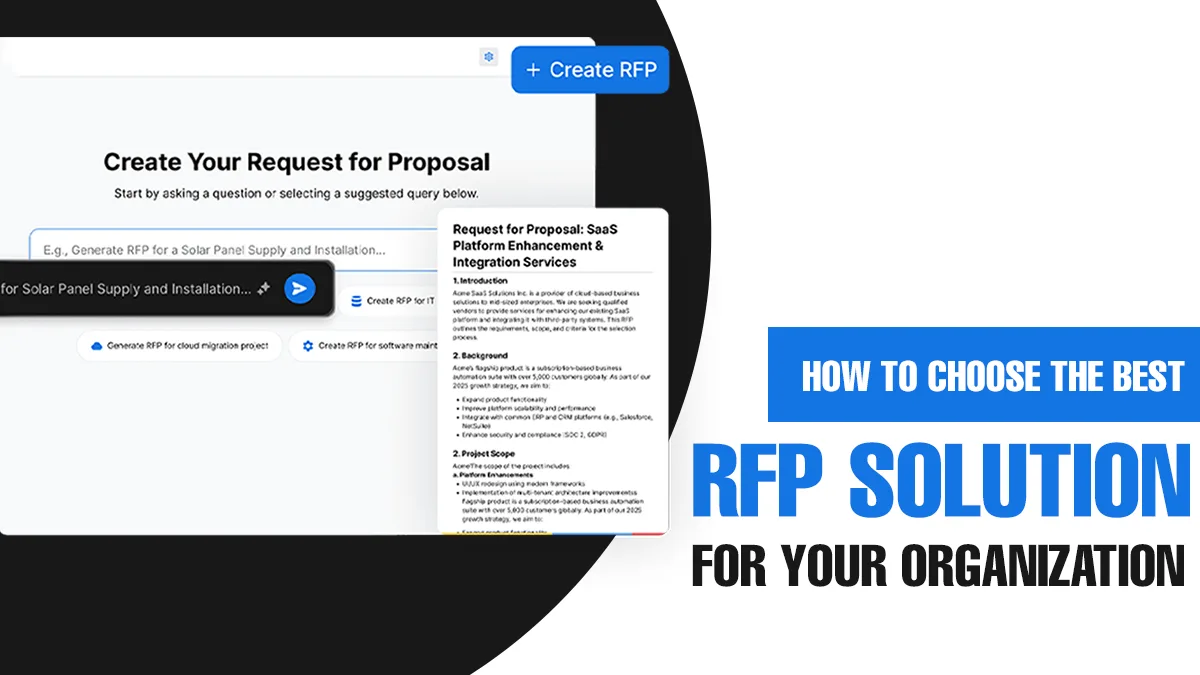
Modern businesses need to make smarter and more consistent sourcing decisions rapidly. Here, the best RFP automation software can be helpful. It shortens procurement cycles, improves cross-functional collaboration, and helps teams compare supplier proposals. It automates RFP creation while ensuring accuracy and speed. Advanced RFP automation software can centralize supplier communication and streamline the proposal process.
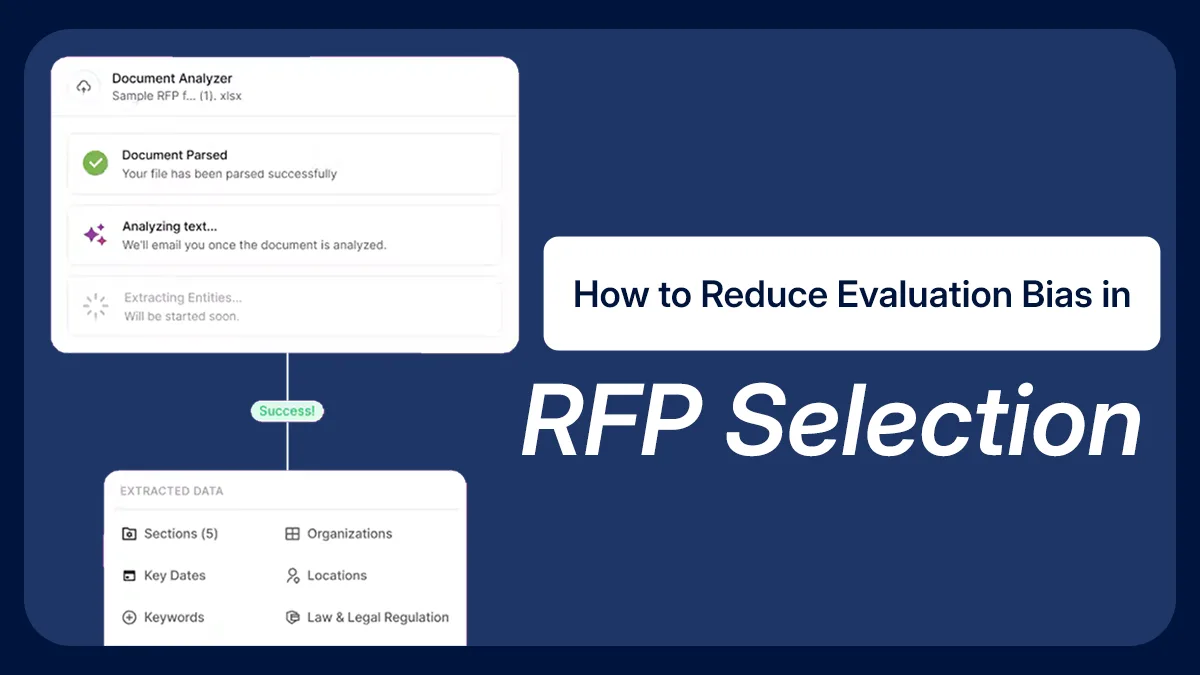
As the RFP management software automates evaluation workflows, decision-makers can get complete, organized information in one place. The right RFP solution evolves with growing business and enables procurement teams to make better decisions. This is essential to address procurement challenges and requirements of tomorrow.
Factors to Consider for Selecting the Right RFP Management Software
Digital RFP management can automate core processes related to supplier evaluation, response comparison, etc. Here are four factors you should keep in mind when choosing the right RFP management solution for your company.
Supporting Decision-Making
The most efficient rfp automation software handles all the repetitive activities such as supplier invitations, reminder emails, and response collection. It organizes information and improves the decision-making process. Procurement teams remain responsible for defining evaluation criteria and assessing commercial risks before negotiating final contracts. This balance between automation and decision-making can bring stronger, optimized outcomes.
Bringing Automation
The right RFP solution brings automation in core processes related to supplier collaboration, including evaluation calculations, approval routing, and deadline notifications. It is, however, necessary for companies to retain procurement professionals who have the necessary business knowledge and commercial understanding to leverage the benefits of automation. In other words, automation supports procurement teams and does not replace them.
Integrating with Systems
Procurement data influences finance, inventory, contract management, and compliance. This is a reason why an e tendering platform should be capable of integrating with ERP systems, supplier databases, contract lifecycle management, and spend analytics. Such integrated procurement platforms maintain data integrity and consistency throughout the lifecycle.
Scaling with Growth
It is essential to select future-ready rfp management software that supports multidepartmental activities, multiple business units, and various segments of suppliers. This solution offers custom evaluation templates and supports category-based sourcing events. Such a solution can contribute to rfi rfp rfq process and scale with the increasing size of an organization.
These capabilities reduce the need to replace RFP management software every few years. As the solution evolves alongside your business, procurement teams can focus on strategic sourcing.
Common Mistakes to Avoid While Selecting RFP Software
The right solution offers many benefits to companies; however, choosing the wrong option leads to implementation failures. Many organizations depend on generic feature comparisons instead of evaluating the RFP software for their procurement processes. Some companies focus on lower implementation costs. It is, however, possible to pay higher operational costs due to limited functionality of such solutions.
Complex interfaces, difficult navigation, and other design-related issues can reduce user adoption. Selection of such RFP platforms can decrease user adoption.
Even excellent RFP management software is not very useful if it lacks integration capabilities. Many companies overlook these capabilities, and as a result, the software cannot improve decision-making across departments. Along with this, selecting software without considering future supplier growth, compliance requirements, and changing business objectives is a mistake. This results in the replacement of software within a few years.
Another big mistake is ignoring implementation assistance, user training, onboarding, and ongoing customer support. It is, therefore, crucial to choose a reliable technology partner who can contribute to rfi rfp rfq process through robust software.
How to Get Optimized Return from RFP Platform
Organizations with standardized sourcing workflows can realize RFP implementation benefits faster. It is because their procurement teams can configure software around their existing practices.
Growing businesses should focus on establishing standardized evaluation frameworks before implementation. We have observed that companies that try to redesign every procurement process at the same time face longer implementation timelines. This can reduce user adoption and returns. It is fair to say that the right RFP management software can accelerate good procurement, but cannot fix inconsistencies in the process.
Role of Procure Suite in RFI RFQ RFP Process
Procure Suite supports companies throughout the rfi rfp rfq process from supplier discovery to award recommendations. It assists procurement professionals in organizing sourcing activities from a centralized platform. Procure Suite contributes to improving supplier collaboration while maintaining governance and compliance in procurement.
Some noteworthy capabilities of Procure Suite for procurement teams include-
Automation of supplier invitations and notifications
Side-by-side comparison of supplier proposals
Configuration of weighted evaluation criteria
Maintaining secure procurement documentation
Generation of real-time reports
Tracking sourcing activities through complete audit
Procure Suite offers centralized data to enable decision-makers to gain quicker access to supplier insights. It handles several activities throughout the procurement lifecycle to save their effort and time. Its advanced reverse auction platform can create long-term value for modern enterprises.
Concluding Remarks
Choosing the right rfp management software is essential for improving supplier collaboration and organizational efficiency. It is better to focus on how the platform supports the complete rfi rfp rfq process and integrates with existing business systems. The right platform should enable consistent supplier evaluation and be capable of meeting future requirements.
Companies can remain in a better position to manage sourcing events confidently by choosing the RFP automation software that aligns with procurement strategy.