Overview
A supplier delivers late, and you only learn about the delay when your production line stops. An SRM platform keeps your supplier information in one place, which helps you catch that problem sooner. A few clicks will bring up a contract, delivery record, or compliance document you need. You spend less time searching by hand.
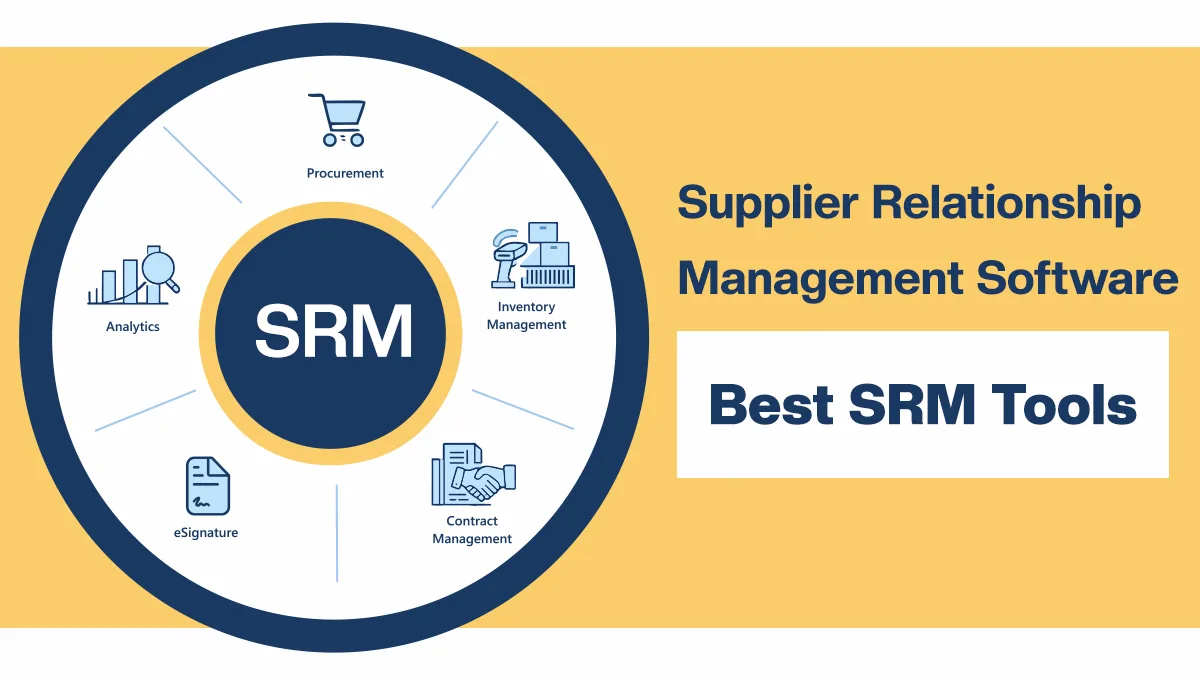
Supplier relationship management software also cuts the effort of working with suppliers. You can see which suppliers deliver on time, share documents, and follow up on open requests. If a supplier falls short of your requirements, you get an early alert.
10 Best Supplier Relationship Management Tools
Supplier relationships affect your cost and quality. Late supplier deliveries also delay what you deliver to customers. Spreadsheets and email stop working well once you track suppliers across several departments or categories.
1. Procure Suite - Built-in reverse auctions
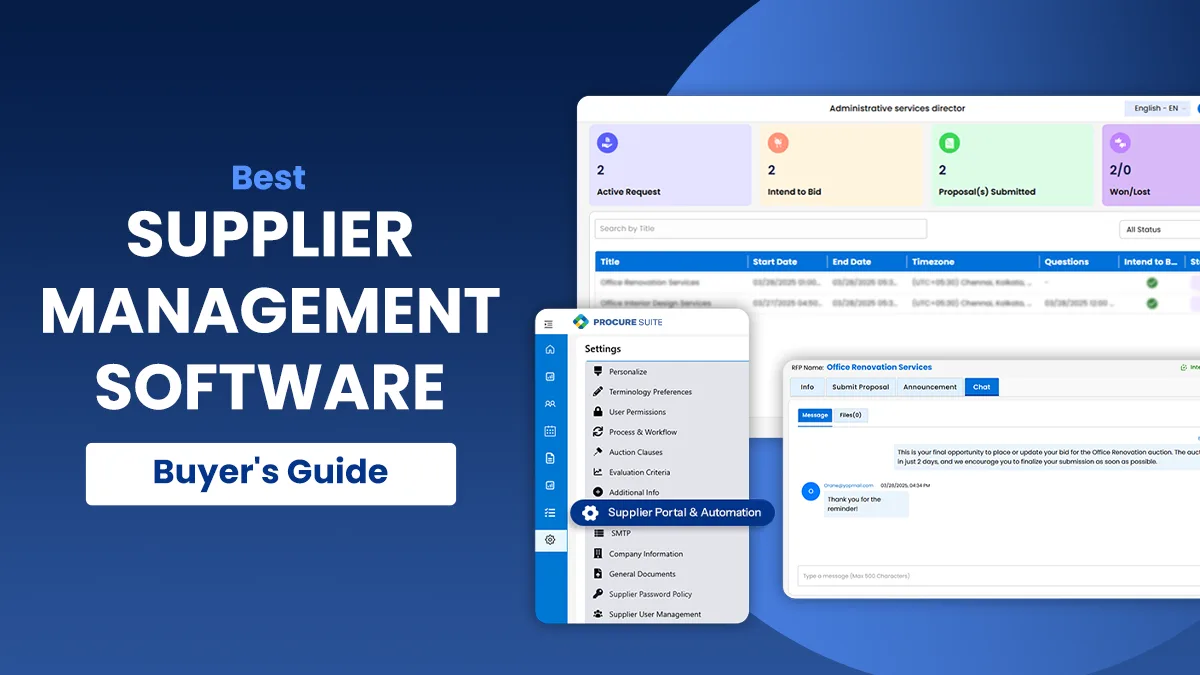
Procure Suite is a cloud-based supplier management software with built-in AI features. It brings supplier management, sourcing, purchasing, and contracts together. Your team can onboard suppliers, store their documents, and message them, all within the platform.
It also handles RFQs, RFIs, RFPs, and contract tracking with renewal alerts. Procure Suite stands out for its built-in reverse auctions, where suppliers bid against each other on price. Supplier records link to purchase orders and invoices; they feed spend analysis too. Your team can run onboarding, sourcing, and contracts from one place.
It is best for procurement teams in industries such as manufacturing, healthcare, and construction that want supplier management and purchasing on one platform.
2. SAP Ariba - Matrix-based Supplier Qualification
SAP Ariba is a cloud procurement platform from SAP. You can register and qualify suppliers, then assess their risk and review how they perform. Suppliers can connect to buyers through the Ariba Network, which handles orders and invoices too.
Ariba works closely with other SAP applications; it suits companies already running SAP. It stands out for its qualification matrix, which lets you segment suppliers by category and location and by business unit.
It is best for large businesses that work with SAP applications or manage complex procurement operations. If your business doesn’t run on SAP, connecting Ariba to your current systems may need extra integration work.
3. Coupa - AI-Powered Supplier Risk Scores
Coupa is a business spend management platform. Along with supplier collaboration software, it includes purchasing, invoicing, and expense tools. That lets you link supplier records to your actual spend.
Coupa onboards suppliers and collects the details you need. You can run compliance checks there too. Because supplier and expense data sit in one system, you can see what you spend with each supplier. Coupa stands out for AI-powered supplier risk scores.
It is best for businesses that want to connect supplier management with purchasing and spend. Its wide spend management features may be more than smaller teams need for basic supplier relationship management.
4. Ivalua - Branded Supplier Portal
Ivalua runs a source-to-pay platform that covers supplier management, sourcing, contracts, and purchasing. Your team works from the same supplier data, from sourcing activities through purchasing.
It helps you onboard and qualify suppliers, check associated risk, and track performance from first bid to agreement. Ivalua stands out for its branded supplier portal, which suppliers can use at no cost. Suppliers add their certifications and financial details there.
It is best for enterprises with complex supplier networks and detailed procurement workflows. Its full source-to-pay features can take a lot of setup and implementation effort.
5. JAGGAER - Supplier 360° Dashboard
JAGGAER is a supplier relationship management system built for organizations with complex sourcing needs. Its supplier tools help you register and qualify suppliers, review their performance, and check risk. You can manage these steps from one place.
It suits organizations that buy across categories like lab equipment, IT services, and facilities. Your team can work with all those suppliers through one shared system. JAGGAER stands out for its Supplier 360° Dashboard. It shows key supplier risks in one real-time view.
It suits large organizations that have formal procurement practices and operate in a broad supplier network.
6. GEP SMART - AI-Powered Supplier Master Data Management
GEP SMART is a cloud platform for procurement and supply chain management. It offers built-in supplier management. You can keep supplier details, risk management data, and performance reviews in one system.
The platform connects supplier records with sourcing, contracts, and purchasing. GEP SMART stands out for its AI-powered supplier master data tool. It gathers, cleans, and standardizes supplier records for you.
It is best for global businesses managing supplier relationships across procurement and supply chain operations. Your team may need time to clean up supplier records before its master data feature give steady results.
7. Oracle Fusion Cloud Procurement - Automated Supplier Qualification
Oracle Fusion Cloud Procurement is part of Oracle’s cloud applications suite. You can register and qualify suppliers and manage their profiles. Suppliers can also update their own details through a supplier portal, which helps you keep records current.
Supplier data connects with purchasing, finance, and other Oracle processes. Your team can enter supplier details once instead of in several systems. This tool also stands out for supplier qualification management, which scores suppliers automatically against predefined criteria.
It is a good choice for companies that already run their business on Oracle Cloud applications.
8. Zycus - Supplier Corrective Action Requests
Zycus sells a source-to-pay suite with built-in supplier management. It lets you onboard and qualify suppliers, identify risks, and track performance.
This tool stands out for Supplier Corrective Action Requests (SCARs). These let you raise a performance issue and track the supplier's corrective measures.
It is best for procurement teams that want supplier management connected to sourcing and purchasing. If you only need supplier relationship management, you may not use its additional source-to-pay features.
9. HICX - Supplier Data Foundation
HICX focuses on supplier data quality and supplier experience. It helps large organizations clean up and centralize their supplier records.
This helps when the same supplier appears in several departments with different details. HICX stands out for its Supplier Data Foundation, a single supplier master record that stays in sync across your ERPs and other systems. HICX helps you onboard suppliers and keep their records current.
It is best for large enterprises managing supplier data across multiple systems. HICX focuses mainly on supplier data and experience. Teams needing strong sourcing and purchasing tools may need another platform.
10. Supplier.io - Tier 2 Spend Reporting
Supplier.io specializes in supplier intelligence and diversity. You can collect all supplier data, analyze your suppliers, and visualize sourcing trends in one place. Supplier.io stands out for Tier 2 spend reporting. Your suppliers report what they spend with small and diverse businesses of their own, and the platform sends the data requests each reporting period.
The diversity tools track and report your diversity programs. It helps most if your company has supplier diversity goals to track and report on.
It is best for businesses that need a clear picture of their supplier base and run supplier diversity programs.
Five Features to Look for in SRM Software
SRM tools can replace scattered spreadsheets and email threads with one shared system. Your team can check supplier details, deliveries, and open orders without switching between files.
1. Supplier Performance Management
Supplier scorecards reflect delivery time, product quality, order accuracy, and response time. Say a packaging supplier’s on-time delivery rate to a food plant drops from 96% to 82% over two quarters. The plant likely needs a corrective action plan to improve weak supplier performance.
2. Supplier Collaboration and Communication
Supplier collaboration software gives you and your suppliers one place to share documents, answer requests, and discuss orders.
3. Supplier Risk Management
Risk assessment, financial health monitoring, compliance tracking, and delivery performance help you identify potential supplier issues.
4. Supplier Classification
Sorting suppliers by importance lets you know how often to review them. This process keeps your attention on suppliers that could stop production.
5. Supplier Development
Supplier development means helping suppliers fix weak areas. Look for tools that let you log performance gaps, assign owners, set deadlines, and track corrective actions.
Four Ways SRM Tools Help Your Procurement Team
SRM software provides clearer supplier information, better communication, and faster solutions. It will help you develop good relationships with suppliers.
1. Clearer Visibility Into Supplier Performance
Scorecards indicate supplier performance in terms of deliveries, quality, and compliance. You can track all recurring problems and solve them during the reviews without any additional analysis.
2. Effective Communication with Your Suppliers
You see all requests, conversations, and pending tasks in one place. It can send deadline reminders to your suppliers as well.
3. Faster Problem Resolution
You can document issues, assign them to someone for resolution, and set the deadline for follow-up. You can review all pending tasks and ensure that suppliers comply with all requirements.
4. More Effective Relationships with Your Suppliers
Periodic reviews allow you and your suppliers to discuss requirements and delivery duration to improve them. A supplier that knows your forecast order volumes for the next quarter can plan stock and staff.
How to Choose The Right SRM Tool
Start with the supplier issue that costs you the most, such as late deliveries or hard-to-find documents. Then look for the SRM software that solves it. Setting up a new system takes time and some technical help. The software works better when your supplier details are accurate and up to date.
Your procurement, finance, and IT teams should all sit in on the demos. Procurement tests daily use. Finance checks spend links, and IT reviews security and integration. Before you decide, test features such as onboarding, performance reviews, and follow-up with a few key suppliers.