Overview
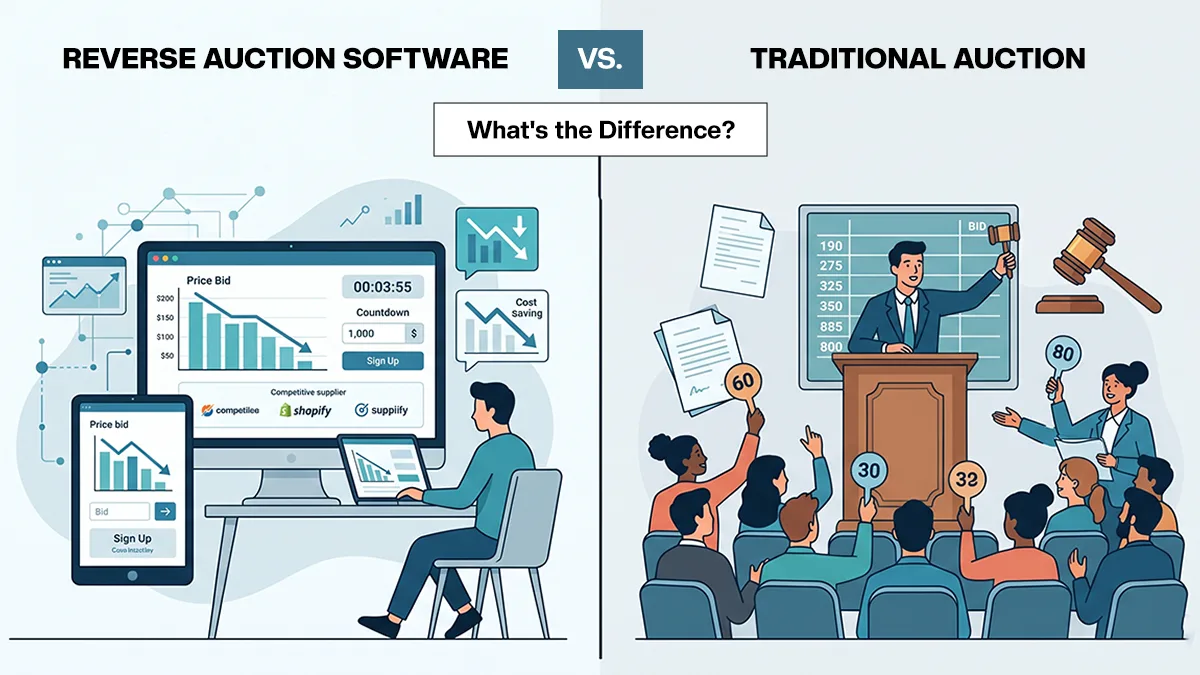
A supplier may offer the lowest price, but the actual cost can add up once buyers consider shipping, duties, and the risk of late deliveries. The format still matters, because it decides who competes and which way the price moves. In a traditional auction, buyers compete against each other and purchase a product or service, and the price increases. In a reverse auction, the direction flips: buyers issue invitations to sellers for bids, and the price falls.
For procurement teams, this makes a difference since it influences the supplier selection and negotiation process, and the final purchase price. An efficiently managed reverse auction platform leads suppliers to an event with clear rules, bid deadlines, and bidding history.
Traditional auctions stay relevant for the sale of assets, excess stock, and scarce commodities. Reverse auctions are most appropriate when buyers have clear specifications, and at least three to four qualified suppliers compete for the same business.
Traditional Auction vs. Reverse Auction: A Side-by-Side Comparison
Comparison criteria | Traditional auction | Reverse auction using software |
Primary purpose | Sell an item to the highest bidder | Buy goods or services at a competitive price |
Who places bids? | Prospective buyers | Suppliers or vendors |
Price movement | Increases | Decreases |
Event organizer | Seller or auctioneer | Buyer or procurement team |
Main objective | Maximize the selling price | Secure competitive supplier offers |
Competition model | Buyers compete to purchase | Suppliers compete to win business |
Typical applications | Art, collectibles, surplus assets | Raw materials, packaging, freight, MRO supplies |
Bid management | Auctioneer-led or online auction tools | Online reverse auction software with configured rules |
Evaluation criteria | Usually the highest eligible bid | Price plus quality, compliance, delivery, and other requirements |
Records and reporting | Depends on the auction method | Digital bid history and event reports, depending on the platform |
The practical distinction is straightforward: a traditional auction helps a seller find the highest price a buyer will pay, while a reverse auction helps a procurement team test how competitively qualified suppliers will price a purchase.
How Reverse Auction Software Works in Procurement
A reverse auction follows a defined sourcing process. The procurement team prepares the requirements, defines the suppliers' list to invite, and sets the rules before the suppliers compete.
Define the requirements. Specify quantities, technical standards, delivery dates, payment terms, and other contract conditions.
Qualify suppliers. Check supplier capabilities, required certifications, capacity, and compliance before inviting bids.
Configure the auction. Set the opening price, minimum bid decrement, event duration, visibility rules, and any time-extension conditions.
Run competitive bidding. Suppliers submit lower bids through the platform during the scheduled event, subject to its rules.
Evaluate and award. Review the final prices in addition to quality, delivery, risk, and compliance before supplier selection.
Procurement auction software tracks every bid, so teams no longer have to coordinate each price change by email or phone. Some platforms also convert RFQ responses into an auction event, rank suppliers automatically, and generate event reports; buyers should confirm which of these a vendor includes before choosing one.
For example, a manufacturing company sourcing 20,000 standardized fasteners could invite four qualified suppliers to a timed auction. Suppliers would compete on the same specification and delivery terms; the buyer could then assess the final bids against quality requirements and total landed cost.
The lowest bid is a starting point for the award decision, not an automatic winner.
When Should Procurement Teams Use a Reverse Auction Platform?
A reverse auction platform can work best when suppliers bid against the same product specifications and price is an important determinant.
Standardized categories such as industrial components, packaging, office supplies, and maintenance, repair, and operations (MRO) are ideal for reverse auctions. These areas permit buyers to compare offers without any need to change the scope.
An eSourcing auction software solution is less suitable when the purchase depends heavily on original ideas, specialist expertise, or a long-term working relationship. Consulting engagements, research and development, and complex construction projects may require detailed technical evaluation and negotiation before price competition makes sense.
There is another limitation: an auction cannot create competition where the supplier market lacks it. If there is only one qualified vendor, executing a live event can increase the administrative workload without getting improvements in the offer.
The procurement team must also consider the total cost that includes freight, duty, service, payment terms, and any quality risks involved. A lower unit price can be costly if it causes delays or increases operational costs.
How Supplier Bidding Software Improves Auction Management
Supplier bidding software replaces multiple email iterations with one shared bidding process and a single bid record. The most valuable features of the bidding software include:
Live bid monitoring: Follow price changes and supplier participation while the auction runs.
Configurable auction rules: Set bid increments, event duration, supplier access, and time extensions before bidding starts.
Audit trails: Retain bid records and event activity to support internal reviews.
Supplier qualification: Restrict participation to vendors who meet the buyer's requirements.
Reporting and bid analysis: Compare the final results with starting prices, previous quotes, and award criteria.
Reverse auction software allows buyers to set bidding rules and share them with suppliers before the auction begins. This ensures that there is no confusion on increments, deadlines, and qualifications.
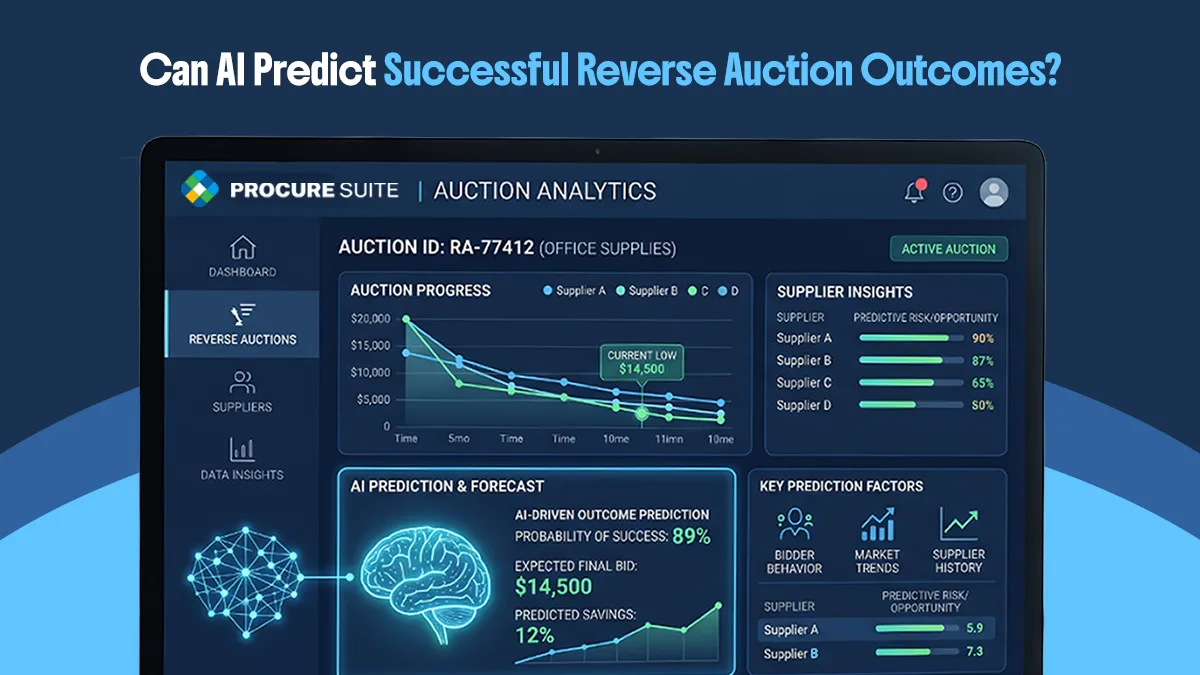
Procure Suite's reverse auction software supports live bidding, configurable auction rules, supplier participation tracking, and bid records. Its RFQ management software can support the earlier stage of collecting and comparing supplier quotations.
Reverse Auction Procurement Requires More Than Lower Prices
Low bidding is valuable only when the supplier can fulfill the contract. Before initiating an online procurement auction, procurement personnel must ensure that the specifications are complete, there is a valid reason for the qualified suppliers to join the auction, and the award criteria are known.
Suppliers' preparation is also crucial to successfully run the auction. It is necessary to clarify the rules of the event, test suppliers' access, and give suppliers enough time to comprehend the bidding process. Lack of preparation can make suppliers refrain from bidding or bid inaccurately.
Decide what suppliers can see during the event: the leading bid, their own rank, or whether their bid is competitive. The correct choice will depend upon the category, market conditions, and the purchasing policy of the organization.
Treat the auction as one stage of auction-based sourcing, supported by supplier assessment and contract controls. A well-priced bid still needs to pass the buyer's commercial and technical checks.
Test One Sourcing Event Before Choosing a Platform
Review one sourcing event including at least four qualified suppliers before choosing a reverse auction platform. Test if the specifications are set, the bids are ready for fair comparison, and anticipated savings are worth running an auction.
Then compare software against those requirements. Look into Procure Suite's reverse auction capabilities or request a product demonstration to understand how auction rules, supplier bidding, and sourcing workflows suit the procurement process.