Introduction
Good supplier selection, cost reduction, and buying process decisions are key to achieving supply chain efficiency. As businesses start dealing with multiple suppliers, it becomes increasingly difficult to implement manual purchasing procedures. It can create many procurement challenges and affect the business operations and profitability as well.
Companies can integrate a robust reverse auction management software in procurement to conduct online bidding. The business does not need to spend too much time negotiating prices with every supplier. Rather, they can invite qualified suppliers to bid lower rates in live reverse auctions.
Overview of Reverse Auction Software
Reverse auction software is a digital procurement method that allows suppliers to compete by reducing prices in an online bidding process. While traditional auctions involve competition among buyers bidding higher, reverse auctions focus on reducing the buying prices.
The reverse auction software manages the entire process, starting from inviting suppliers to evaluating and awarding the bid. Software helps the procurement department organize bidding, interact with suppliers, and maintain records.
Modern organizations utilize this software when it comes to direct and indirect procurement, services, and contract renewals.
Knowing how software works will help you understand the importance of a reverse auction system.
Role of Reverse Auctions in Supply Chain Management
Supply chain management is more than just purchasing goods at reduced prices. Businesses also seek reliable suppliers, prompt delivery, regulatory compliance, and quality goods.
Reverse auction management software enables all this through the following means -
Invite qualified suppliers
Define bidding rules and timelines
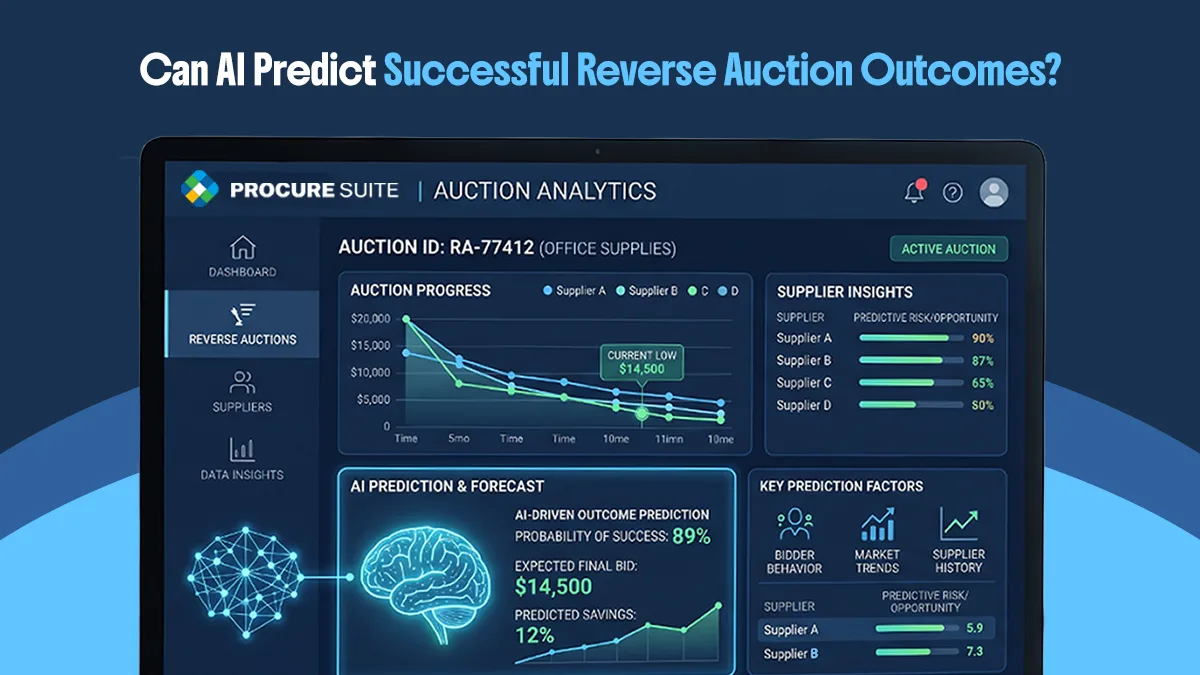
Monitor bids in real time
Compare supplier responses automatically
Award contract based on predetermined evaluation criteria
It makes procurement more effective without compromising transparency.
These capabilities bring many measurable benefits to the procurement process.
Benefits of Reverse Auctions
Reduces Procurement Costs
Cost savings are one of the most essential advantages of reverse auctions. In this method, suppliers compete through bidding and offer lower prices.
Unlike negotiations, where it takes significant time to reach a competitive price, buyers get multiple price revisions in a very short period.
Organizations can make considerable savings in recurring large-volume procurement.
Improves Procurement Speed
Traditional supplier negotiations may take several days or weeks. Procurement teams exchange emails and compare spreadsheets before making a decision.
A reverse auction streamlines all these activities in a single interface.
Administrative burden is lessened with automated workflow. It allows procurement teams to concentrate on evaluating suppliers rather than filling out documents.
Fosters Healthy Competition among Suppliers
Companies generally get better prices when there are many qualified suppliers for their business.
Suppliers can bid their prices in the reverse auction through software.
Enhances Pricing Visibility
All the bidders adhere to the same rules during bidding.
Purchasing officers can track bidding activities, timestamps, and bids through a single dashboard.
It creates transparency and ensures fairness during the supplier selection process.
Organizations can keep detailed information for future auditing purposes.
Assists in Supplier Selection
Lowest cost should not be the only consideration during the evaluation.
Several companies also consider delivery capabilities, certifications, quality standards, supplier performance, and compliance requirements.
Software enables buyers to evaluate suppliers on various aspects before concluding their purchase decisions.
Reverse auctions enable cost reduction and also enhance operational efficiency.
Streamlining Reverse Auction Process Management
Effective reverse auction process management involves careful planning before the bidding event begins.
The procurement teams begin by stating product specifications, eligibility criteria, bid submission rules, price format, and bidding process period. When the auction is in progress, suppliers then make competitive bids.
The system records supplier responses during the bidding process for evaluation.
The automation process simplifies activities, such as -
Inviting suppliers
Bidding
Comparing the prices
Monitoring the auction process
Bid ranking
Audit documentation
Teams can carry out procurement activities more easily.
Better processes lead to better relationships.
Improves Supplier Relationships
Competitive bidding does not prevent any organization from building good partnerships with its suppliers.
Software creates a fair process where every qualified supplier receives equal participation opportunities. Clear bidding guidelines remove confusion and promote good communication in the sourcing process.
For suppliers, it leads to the following -
Transparent bidding guidelines
Simple procurement process
Standardized communication
Less paperwork
Fair competition
This process creates trust between the buyer and the supplier.
Good cooperation between suppliers increases the efficiency of the supply chain.
Increases Data Accuracy and Visibility
Manually driven procurement relies on multiple spreadsheets, emails, and scattered information.
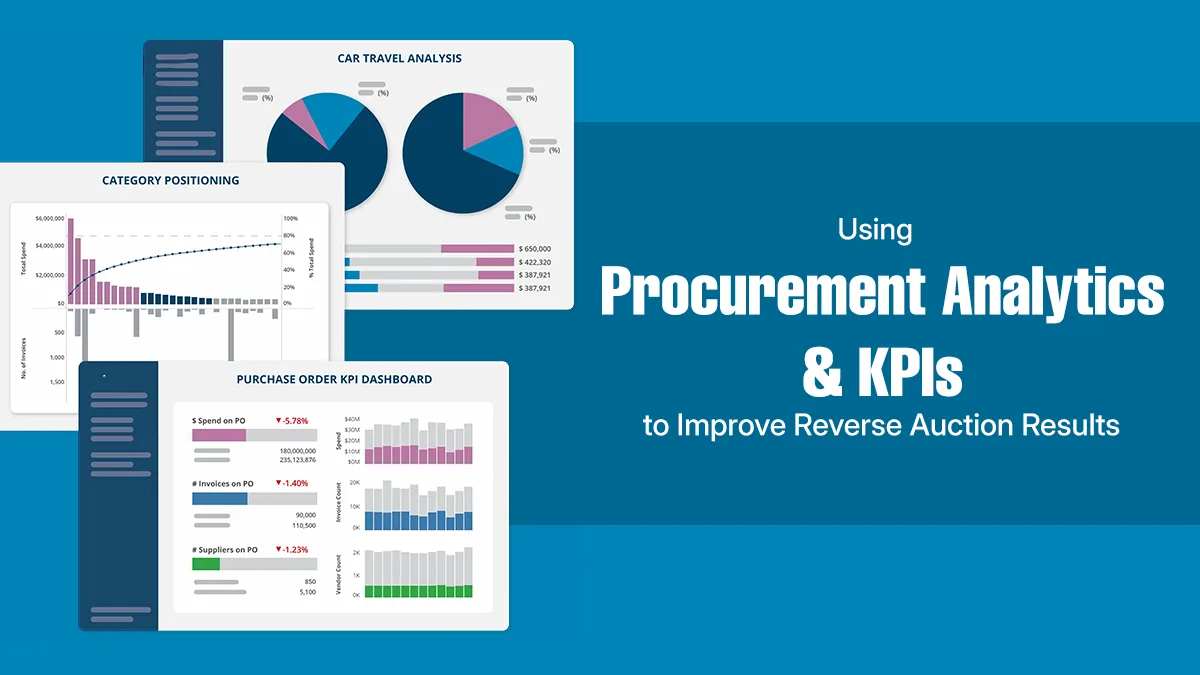
A reverse auction platform allows centralization for all procurement-related information. The buyers have easy access to their past auctions, supplier performance, prices, and bids.
With better visibility, the company is able to -
Evaluate its procurement
Measure supplier activity
Detect spending patterns
Compare prices
Conduct strategic sourcing
This information is useful in forecasting and budgeting.
Accurate information makes it easier for organizations to tackle procurement risks.
Helps with Compliance and Audit Readiness
There are various industry-specific regulations that a company must adhere to in procurement.
A reverse auction platform maintains a record of all the bids.
The procurement teams do not need to manually record anything, since the digital process already maintains the documentation.
Documentation includes -
Record of supplier participation
Bidding time stamps
Auction rules
Changes in pricing
Award decisions
Complete documentation makes processes easier.
Compliance becomes even more valuable as the procurement projects grow.
Scales With Business Growth
Growing businesses deal with an increasing number of suppliers, higher purchase volumes, and more complicated procurement processes.
Manual procurement handling becomes less effective in this case.
Reverse auction software helps businesses grow by managing multiple sourcing processes using the standard workflow. Scalable procurement processes ensure consistency between departments and locations.
A business can experience these benefits when they choose software that matches their business requirements.
Choosing the Best Online Auction Software
Rather than finding an affordable reverse auction solution, companies should focus on other important aspects as well. They should consider features that enhance procurement efficiency and facilitate future needs.
Some of these features are -
Intuitive user interface
Real-time bidding facility
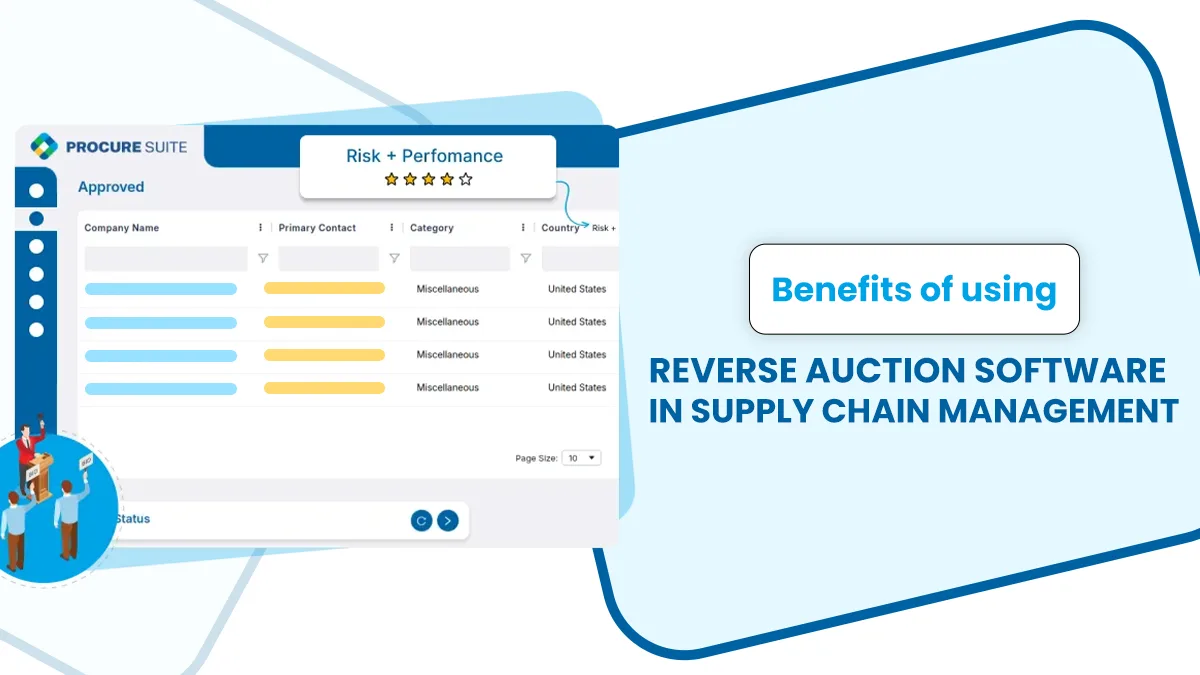
Supplier management capabilities
Bid comparison through automation
Reports & analytics
Support for compliance issues
Procurement/ERP system integration
Security and access controls
Flexible auction format options
Customer support service
The right solution simplifies existing procurement and also supports organizational growth.
Businesses should also know when reverse auctions provide the maximum benefit.
When Should Businesses Use Reverse Auctions
The reverse auction process works best with well-defined goods and services and qualified suppliers.
They include -
Raw materials
Manufacturing components
Office supplies
Transportation services
Maintenance contracts
IT equipment
Packaging materials
Special goods that are only available with limited suppliers might require a traditional negotiation process.
Understanding situations where reverse auctions are not the right choice improves the procurement process.
Reverse Auction in Procurement: Long-Term Business Benefits
Beyond just noticeable cost savings, a robust reverse auction management software offers numerous long-term advantages.
It allows teams to understand their suppliers, speed up sourcing processes, maintain records, and gain better procurement control. It frees procurement officers from performing repetitive manual tasks. They can concentrate on strategic sourcing.
As the supply chain becomes increasingly complex, digital procurement provides all the required flexibility and visibility for decision-making.
Conclusion
Reverse auction software helps companies manage supply chains efficiently. This software allows organizations to enhance their sourcing practices, promote healthy competition, reduce procurement expenses, and increase transparency.
Companies implementing reverse auction management software can create efficient procurement practices, build strong supplier relationships, and achieve sustainable development. Choosing the right software will help procurement managers make better purchasing decisions.