Introduction
Manufacturing companies manage multiple large-scale projects. Each project involves many procurement processes every year. Whenever manufacturers purchase raw materials, spare parts, packaging materials, and manufacturing equipment, they evaluate suppliers for quality purposes. It is, however, time-consuming for procurement teams to manage quotations using emails and spreadsheets.
Request for Quotation software makes it easier for manufacturers to automate the bidding process and follow up on the supplier responses. This enables the team to make procurement decisions with enhanced visibility. Manufacturing companies are increasingly adopting digital procurement systems.
How Request for Quotation Software Helps Manufacturing Businesses
It is necessary for businesses to receive procurement materials on time for uninterrupted operations. Procurement delays impact production, dispatch, and even revenue of the organization. The request for quotation software helps the procurement department with the complete sourcing process. This software facilitates an integrated system that manages everything. It eliminates the need for multiple spreadsheets and emails.
The software allows the organization to:
Send the RFQs to various suppliers
Receive quotations in a single format
Compare prices, delivery timelines, and supplier capabilities
Track procurement process activities
Maintain records of all purchases
Businesses invest significant time to coordinate with suppliers. Software helps teams save time and choose the most suitable supplier.
An organized procurement process helps businesses take quicker action in changing production requirements.
Understanding RFI RFP RFQ Process
Organizations utilize supplier sourcing documentation for multiple purposes. However, all these documents have their own purpose. A thorough understanding of the RFI RFP RFQ process enables businesses to choose the best approach in each sourcing activity.
Request for Information (RFI)
The RFI document is used at the very beginning of the supplier evaluation process. Businesses can receive supplier information using an RFI. It contains information about qualifications and experiences of suppliers as well as product details. This step enables businesses to choose eligible suppliers before requesting a quote.
Request for Proposal (RFP)
RFP is useful, especially when businesses require more detailed information about a product or a service. It provides companies with technical specifications, implementation approaches, and delivery timelines.
Request for Quotation (RFQ)
The RFQ primarily focuses on the cost of items or services.
Suppliers offer quotations for their products or services. It allows businesses to compare the offers and choose the best one.
Along with RFI RFP RFQ process management, procurement software enables businesses to effectively manage their supplier information.
Managing supplier information with RFI management software
Manufacturers must identify supplier capabilities to meet their specific requirements. The RFI management software enables teams to collect supplier profiles, certificates, financial details, production capacity, compliance documents, and quality standards.
In traditional procurement management, the documents were stored in various systems. Modern request for information software allows organizations to build a centralized supplier database that improves future purchasing.
Procurement teams can invite qualified suppliers to participate in RFQs. A well-organized supplier database also eliminates frequent onboarding for each procurement project.
It is necessary for businesses to consider some beneficial features that can simplify their everyday procurement.
Features to Look for in Request for Quotation Software
Manufacturing firms must select RFQ software that meets the present as well as future needs of the business. Choosing the right software provides efficiency, supplier management, and purchase decision-making.
RFQ Generation
The software should be capable of creating RFQs using custom templates. It makes the process more efficient and consistent.
Easy RFQ generation enables procurement teams to manage their purchases effectively.
Supplier Portal
The supplier portal is a secure platform where suppliers can receive the RFP and send quotations. It also allows them to communicate with the buyer. Businesses can store all supplier activities in one place.
It promotes collaboration, reduces email communications, and allows businesses to monitor supplier actions.
Automated Notifications
Suppliers receive notifications for RFQ due dates, quotations, and approvals. It is useful for ensuring the continuity of the purchasing process.
These notifications ensure deadlines are not missed. It helps the procurement process to run according to the schedule.
Quotation Comparison Tools
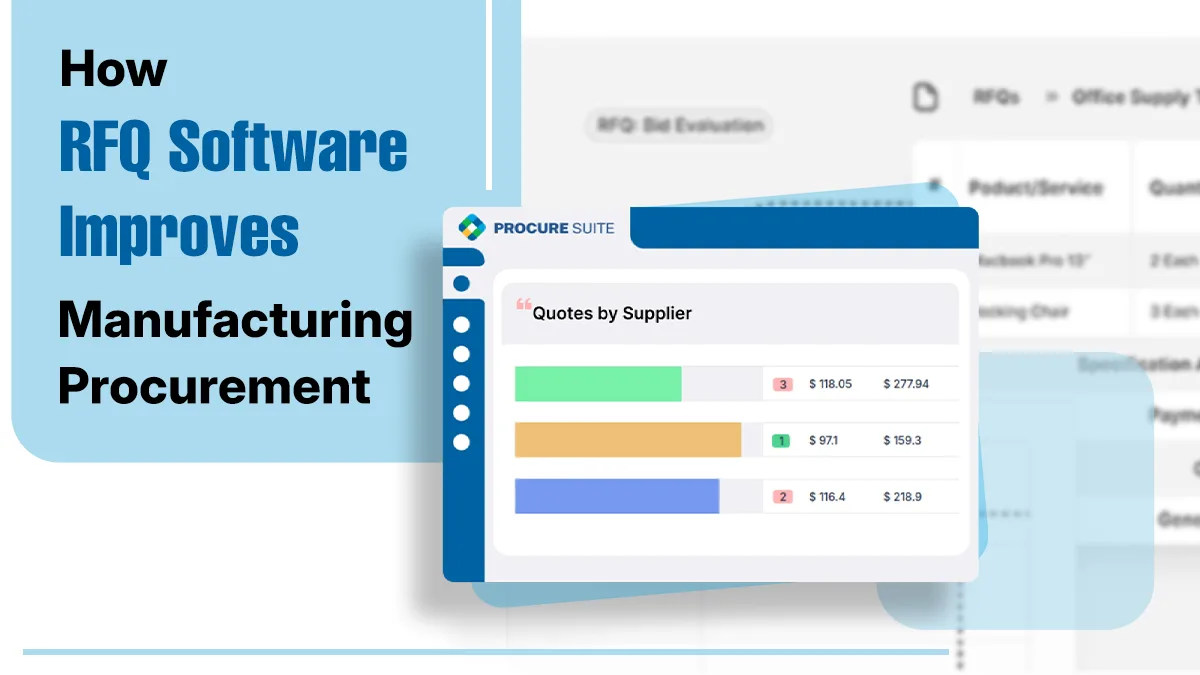
Buyers can compare the responses of suppliers in terms of cost, delivery time, and other aspects. It makes the whole process of selecting the supplier easy.
Standardized quotations help procurement teams to make sound purchasing decisions.
Approval Workflows
Approval workflows enable purchase requests to flow through the predefined order before any decision is made. It enhances governance and accountability.
Approval workflows also make it easier for an organization to comply with its internal purchasing policies.
Document Management
All the above-mentioned documentation is stored using a centralized document management system. It ensures that you do not have to check emails or multiple folders to find your documents.
Centralized procurement documentation enables audits and compliance. It also serves as future references.
Reporting Dashboards
Procurement dashboards help understand the process, supplier performance, and sourcing trends. The business can monitor key performance indicators (KPIs) through these dashboards.
Visibility in procurement facilitates better decision-making.
ERP Integration
ERP integration links procurement with other business systems such as financial accounting and inventory management. It eliminates the need to enter the same data multiple times.
Integrated systems offer increased visibility of the procurement process.
Mobile Availability
A mobile-first strategy allows procurement officers to evaluate RFQs, authorize requests, and control supplier activities irrespective of their location. It enables quick decisions.
This is helpful to maintain business continuity in ongoing procurement activities.
User Role Management
Businesses can enable role-based permissions for employees in accordance with their responsibilities. It protects procurement information and collaborative activity.
It also facilitates efficient task execution with required system functionality.
Businesses that consider these features in their procurement solutions witness measurable benefits that support long-term growth.
RFI Management System Benefits
A good RFI management system allows the procurement team to assess suppliers and make effective sourcing decisions. It enables quick supplier capability assessment through the procurement system.
Quick Supplier Evaluation: Fast supplier capability assessment saves time and manual work in the evaluation process.
Supplier Information Collection: Collect supplier information in a consistent format to make comparison easier.
Pre-qualify Suppliers: Pre-qualify suppliers before sending them RFQ and tender requests.
Easier Compliance Management: Store certificates and compliance information in one place.
Save Time: Supplier information management becomes easier with the software. It saves procurement teams time.
Procurement Process Improvement: Establish a transparent supplier evaluation process.
It helps manufacturers create a solid supplier base and makes procurement easier and more efficient.
Conclusion
Request for quotation software has become a practical way to enhance the complex procurement processes for manufacturing organizations. Procurement digitalization helps make quotation management easier and increases transparency in purchasing decisions.
Implementing good RFI management software in your procurement operations will help you optimize your entire RFI RFP and RFQ process. As a result, your procurement teams can effectively carry out all stages from supplier evaluation to final supplier selection with confidence.