Introduction
Your supplier decisions depend largely on RFI and RFQ processes. Negotiations come second, even if procurement teams focus heavily on them. Many sourcing problems have their roots in different processes, including incomplete information gathering, poorly structured supplier requirements, and inconsistencies in bid evaluations. These issues lead organizations toward the wrong suppliers.
Modern companies rely on a request for quotation software solution for addressing these issues. This solution digitizes documents and creates a sourcing environment where companies can manage supplier information, quotations, approvals, and decisions. It offers a structured, auditable process on a unified platform. Organizations leverage the benefits of selecting quality suppliers by investing in advanced sourcing capabilities.
Many procurement teams still handle sourcing events using spreadsheets, emails, shared folders, and manually consolidate responses from suppliers. These traditional RFI and RFQ processes seem manageable when dealing with a few suppliers participating in the sourcing process. Complexity, however, increases quickly when these teams manage multiple sourcing events at the same time. Sourcing high-value categories needs extensive evaluation as well.
This process becomes more challenging when suppliers submit responses in different formats. Their documents are revised repeatedly, and the evaluation criteria are changed continuously. This situation leads to delays in decision-making, inconsistencies in assessments, and reduced participation of suppliers. An advanced rfi management system can address these challenges effectively by offering a structured framework.
Essential Features and FunctionaDifference Between RFI, RFP, and RFQ
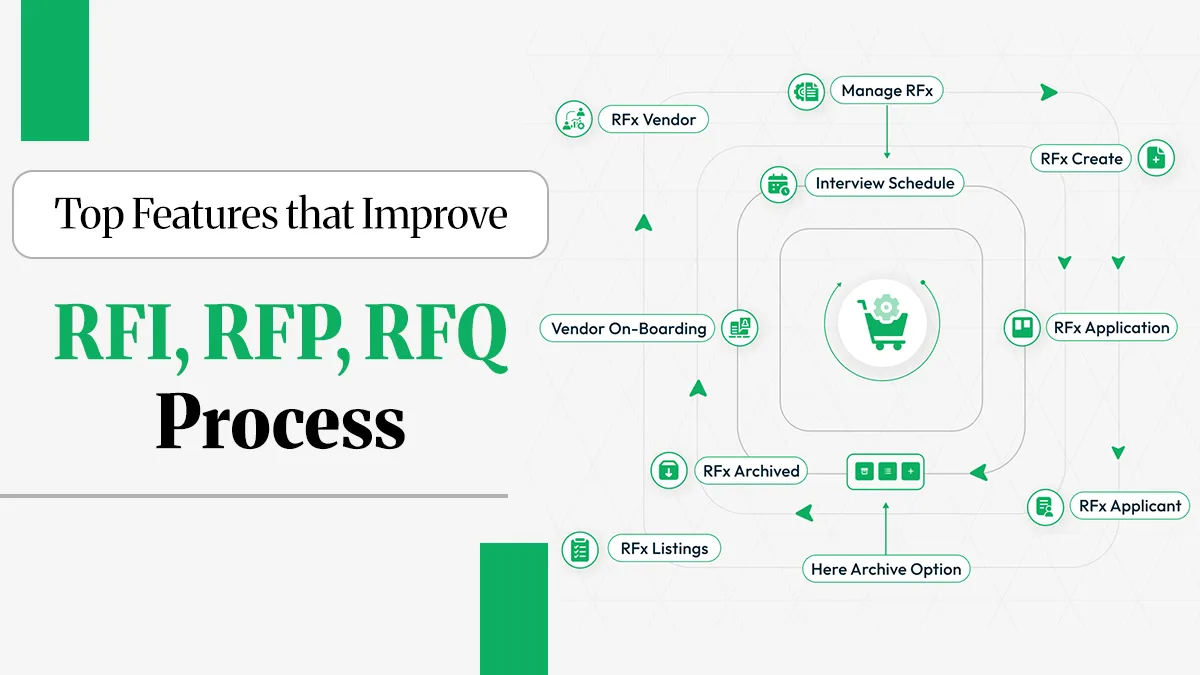
Procurement leaders discuss sourcing events because every supplier engagement follows the same process. The rfi rfp rfq process serves different purposes at various stages of supplier selection. Companies rely on RFIs during
Exploring new markets and suppliers
Understanding supplier qualifications
Assessing technical capabilities
Identifying potential sourcing partners
The Request for Proposal (RFP) is the next step after RFI. It is about evaluating suppliers to solve a business issue. Organizations use RFPs when
Requirements are complex
Multiple solution approaches are possible
Service quality matters as much as pricing
Innovation and methodology require evaluation
A Request for Quote (RFQ) focuses on pricing. It works perfectly if the following information is available.
Clearly defined specifications
Standardized requirements
Validated supplier capabilities
Capability of RFI/RFQ System
A robust and reliable RFI/RFQ system should have some essential features and capabilities. We mention these features to assist you in choosing the right system for your business.
Structured Supplier Information Collection
This is the most important feature of an RFI management system. Many procurement teams underestimate the impact of inconsistencies in supplier responses. When suppliers submit information through emails, spreadsheets, PDFs, and presentations, comparisons become difficult for procurement executives. They can interpret information differently, skipping important details. A robust rfi management software standardizes supplier responses. It handles configurable questionnaires, predefined templates, and document requirements. It brings consistency in the process while handling supplier participation as well. This results in a transparent and proper evaluation of every supplier against the predefined criteria.
Intelligent Workflow Automation
This feature helps procurement teams reduce administrative burden and address coordination-related issues. Approvals, clarifications, supplier communications, evaluation assignments, and document reviews require a significant chunk of their effort. Intelligent workflow automation addresses this issue effectively. It defines clear responsibilities throughout the sourcing lifecycle.
An advanced rfi management system should support-
Event creation workflows
Supplier invitation management
Evaluation assignments
Clarification tracking
Internal approval
This feature enables procurement professionals to focus on supplier assessment.
Supplier Collaboration Capabilities
More participation of suppliers can improve sourcing outcomes. The quality of responses depends on the way suppliers can engage with the sourcing process. Complicated submission requirements discourage participation. A reliable sourcing platform offers a centralized collaboration environment for suppliers. They can submit their responses, access sourcing documents, and track submission deadlines securely.
This creates a more professional experience for suppliers while improving response quality.
Built-In Supplier Evaluation and Scoring
Many sourcing initiatives fail because of inconsistencies in evaluation methods. It is because different stakeholders prioritize different criteria. Supplier selection is, therefore, subjective without a structured scoring framework. An effective request for quotation software enables procurement teams to establish weighted evaluation criteria. It assists them in getting rid of reviewing supplier responses.
Some inbuilt evaluation categories include
Commercial compliance
Supplier experience
Service capability
Financial stability
Technical compliance
This approach creates consistency and supports decision-making.
Advanced Analytics and Integration Capabilities
Many organizations collect supplier information without fetching meaningful insights from it. Modern sourcing platforms have, however, analytics functionality. It facilitates procurement teams to understand
Supplier participation rates
Bid competitiveness
Response completion levels
Historical supplier performance
Category-specific sourcing trends
These actionable insights can improve future sourcing events and support more informed decisions related to supplier selection. Integration capabilities are also essential to determine the long-term success of procurement lifecycles. These capabilities should include
ERP systems
Supplier management platforms
Contract management solutions
Purchase requisition systems
Supplier master databases
When companies use independent sourcing systems, they need to transfer supplier information between platforms. This, however, creates inefficiencies and increases inconsistencies.
Security and Compliance Functionality
Sourcing events involve sensitive information related to suppliers and companies. Some of these details include commercial pricing, intellectual property information, technical specifications, and financial data of suppliers. It is, therefore, essential to protect this information. Here, a robust and reliable sourcing solution can remain helpful by providing features and functionality like
Role-based access controls
Data encryption
Audit logs
Supplier confidentiality safeguards
Regulatory compliance support
It is fair to say that security becomes more important, especially when sourcing high-value categories.
E-Tendring Capabilities
Organizations require sourcing platforms that can manage formal tendering activities alongside RFIs, RFPs, and RFQs. A modern e tendering platform extends sourcing capabilities by supporting-
Reverse auctions
Public tenders
Bidding events
Tender-related workflows
Multi-stage evaluations
These capabilities can enhance the efficiency of the procurement process while increasing supplier participation. Advanced sourcing platforms function as comprehensive supplier engagement environments in line with accelerating procurement digitization.
It is essential to choose the right platform and design a proper procurement strategy to leverage the benefits of rfi rfp rfq process management software.
Choosing the Right Platform
Every organization should consider two aspects while opting for a new request for quotation software. One, incomplete specifications, unclear evaluation criteria, and disagreement of stakeholders over objectives can lead to failure even after using the most sophisticated sourcing platform. Two, even if all information is proper and accurate, the lack of the most suitable solution or platform can fail the sourcing project.
These two aspects show the importance of selecting the right platform for managing supplier-related activities effectively. Companies seeking long-term procurement maturity should select the platforms that support the entire rfi rfp rfq process instead of merely quotation collection. A robust request for quotation software combines supplier information management, evaluation frameworks, analytics, and compliance controls with e-tendering capabilities.
As supplier ecosystems become more complex and sourcing decisions carry greater strategic importance, procurement leaders need an advanced platform. Such a platform can help them manage sourcing processes effectively every time.