Introduction
The procurement process has become fast and effective with the help of technological advancements. Organizations have started utilizing smart tools to experience smooth and more cost-effective procurement.
Reverse auction process management is one of the most popular tools among modern businesses. Reverse auctions provide an opportunity for suppliers to participate in bidding by offering the lowest prices. Using such techniques allows businesses to save costs, increase efficiency, and select better suppliers. Here are the sectors where reverse auctions work the best.
Overview of Reverse Auction
In a reverse auction, suppliers participate in bidding activity and offer prices for the buyer's requirements. In regular auctions, bidders offer increased prices for the items they want to purchase. A reverse auction is the complete opposite process, where suppliers bid the lowest prices to win the contract.
The buyer provides information such as product specifications, delivery expectations, terms and conditions, and bidding criteria. Then the qualified suppliers get invited to an online bidding session. Price is an important consideration. Businesses also focus on quality, compliance, deliverability, and supplier performance while selecting a supplier.
With the digital revolution, companies have implemented a reverse auction system to automate the bidding, supplier communication, and bid evaluation processes.
Why Reverse Auctions Continue to Grow
Reverse auctions are now widely used in businesses. They provide an environment where buyers and suppliers get an advantage. Buyers secure better pricing, while suppliers can get an opportunity to compete for the business.
Moreover, digital procurement software has become more popular for its simple reverse auction process management. Businesses do not need to handle multiple emails and spreadsheets. They can manage everything from a centralized place.
It creates an audit trail in each auction process.
Industries That Use Reverse Auctions the Most
Manufacturing
Manufacturing companies purchase raw materials, production equipment, industrial components, packaging materials, and maintenance supplies throughout the year. Since many suppliers offer similar products, competition naturally brings prices down.
Manufacturers use reverse auctions for managing their procurement process. This ensures that procurement is managed without affecting production schedules. Also, reverse auction process management helps compare suppliers by tracking delivery records, certification, and production capability, rather than just cost.
For larger manufacturers operating from different locations, reverse auctions add consistency to the buying process.
Construction
Construction projects involve thousands of procurement decisions before completion. Materials like steel, cement, electrical components, plumbing parts, and safety gear comprise an important share of total project expenses.
A reverse auction enables the contractor to get quotes from many different but equally competent suppliers for the materials. It maintains quality and cost control.
Many construction companies use reverse auction management software to coordinate procurement activities for multiple projects simultaneously.
Government and Public Sector
The government needs to maintain transparency and fairness in its procurement processes. Reverse auctions help achieve it through a transparent and documented bidding process.
The public sector often buys items such as office supplies, IT equipment, medicines, transport, and infrastructural items. Through reverse auction process management, the government can acquire competitive pricing for these items.
A reverse auction platform saves all bid data. It makes auditing easy compared to normal procurement processes.
Healthcare
These institutions have huge purchasing budgets annually. Hospitals purchase pharmaceuticals, surgical tools, laboratory equipment, hospital furniture, disposables, and other products.
Procurement in health care helps reduce expenses and ensure purchased products do not affect patients. Reverse auctions ensure that the companies competing for business meet the predefined standards.
Conducting procurement through the reverse auction platform is easier for healthcare organizations than doing manual negotiations with different suppliers.
Retail
Retail businesses constantly restock the inventory to meet customer demand. They also purchase packaging materials, store fixtures, logistics services, and promotional products.
Reverse auction in procurement allows retailers to get competitive bids from their suppliers in a short period of time. It assists them in managing inventory well.
Many large retail companies conduct hundreds of procurement processes in a year using digital procurement systems.
Automotive
The automotive industry relies on an extensive supply chain to source its engines, electronics, tires, metal parts, glass, plastics, and machinery.
As there are usually several qualified suppliers for standard parts, reverse auctions help create healthy competition without compromising on quality.
The procurement process allows companies to consider price, supplier performance, and production capabilities while awarding contracts.
Energy and Utilities
Energy firms operate complex infrastructure projects that require special equipment and maintenance services. The procurement department buys electrical items, industrial valves, transformers, protective gear, and construction materials.
These purchases may involve huge amounts of money. Saving even a small percentage can yield considerable gains for several projects.
The use of reverse auctions helps promote competition among suppliers and transparency in procurement processes.
Telecommunications
Network expansion and maintenance are an ongoing process for telecommunication service providers. These entities often purchase fiber optic cables, networking devices, installation services, power supplies, and server hardware.
The competitive bidding process enables such companies to manage infrastructure cost issues without compromising network quality. Reverse auction process management can make supplier selection easy for large projects.
A digital procurement system enhances the coordination between procurement and technical departments.
Information Technology
Technology companies purchase servers, laptops, networking devices, software licenses, cloud services, cybersecurity solutions, and consulting services.
As technologies upgrade, the sourcing process must adapt accordingly. Auctioning makes it possible to make quicker purchasing decisions and encourage price competition among suppliers.
Most organizations prefer built-in reverse auction management in the enterprise procurement system.
Logistics and Transportation
Transportation companies regularly purchase vehicles, fuel, warehouse equipment, maintenance services, tires, and freight contracts.
Growing technologies allow them to make their procurement process flexible. Reverse auctions enable faster purchasing decisions and encourage supplier competition.
Companies prefer reverse auction management software to speed up their procurement with a live bidding process.
How Technology Improves Reverse Auctions
Modern procurement teams rarely conduct auctions manually. They trust technology that enables automation of all these procedures, such as inviting suppliers, bidding, evaluation, approval, and reporting.
Best reverse auction platforms enable procurement teams to create a secure bidding atmosphere with a transparent supplier selection process. Suppliers can receive automated notifications, place their bids, and participate in reverse auctions by following the guidelines.
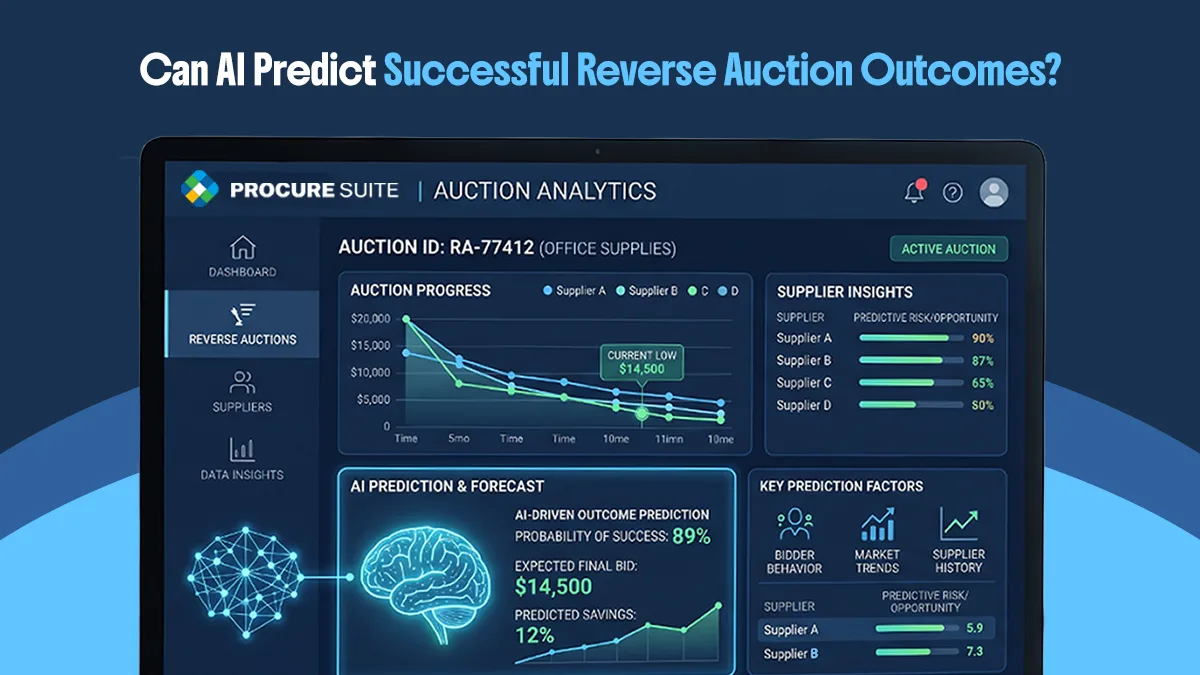
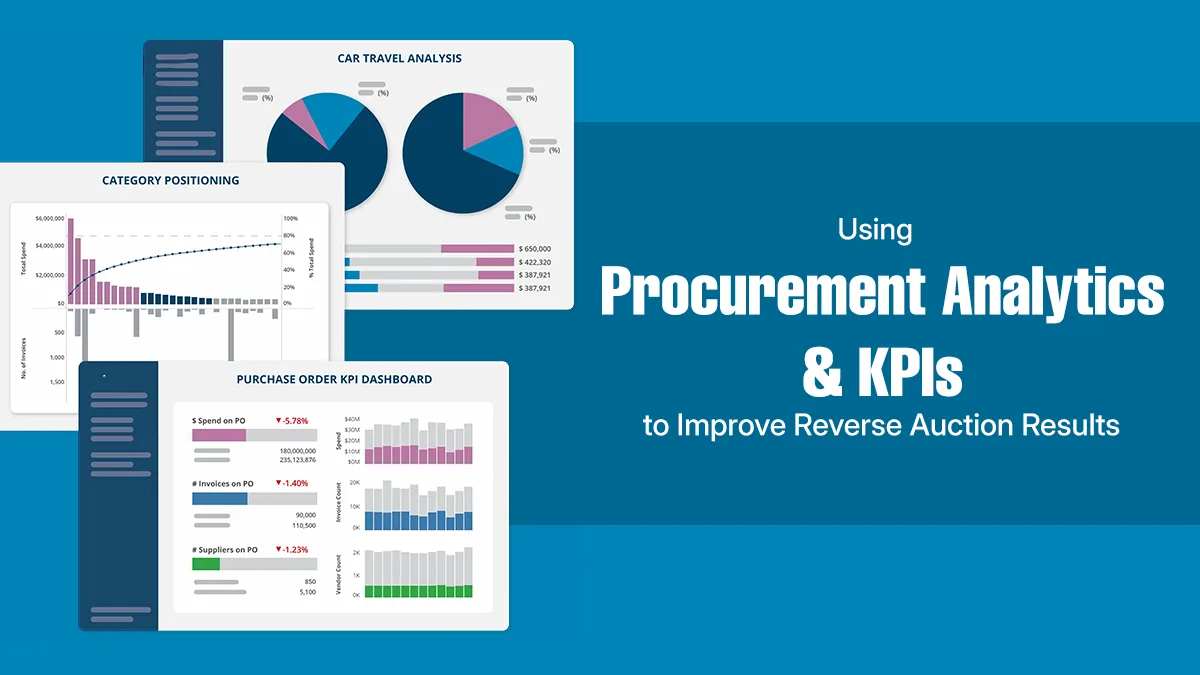
Analytics in reverse auction software provide insights into supplier performance evaluation and expenditure.
Choosing the Right Reverse Auction Solution
The choice of technology is crucial when it comes to achieving procurement efficiency. Good technology should have elements such as supplier qualification, real-time bidding, reporting, compliance, and easy integration with existing applications.
A well-designed on-demand reverse auction application records a detailed audit trail. It also provides customizable workflows and performance dashboards to facilitate procurement processes across different industries.
Scalable software helps you handle increased demand for procurement with the expansion of your business.
Final Thoughts
Procurement software with useful features ensures better decision-making and stronger supplier relationships at the same time. Modern companies are increasingly utilizing reverse auctions, supplier management, contract management, spend analysis, and reverse auction contract management in their procurement processes.
Reverse auction process management assists organizations in making significant savings and increasing transparent supplier selection. The popularity of reverse auctions in procurement will keep growing as businesses strive for better transparency and efficiency in operations.