Introduction
Reverse auctions can improve supplier competition, shorten sourcing cycles, and offer measurable savings. These are some of the reasons why the best procurement teams prefer reverse auctions. Unlike forward auctions, this method promotes competitive bidding and emphasizes supplier relationships. It is, however, essential to utilize an advanced solution to manage reverse auctions effectively.
Reverse auctions are not limited to price reduction in this competitive market. Modern reverse auction management software enables companies to evaluate suppliers against multiple criteria and strengthen the decision-making process. It automates sourcing workflows and ensures that the team can make procurement decisions on the basis of structured data. It is fair to say that the best online auction software can execute the entire process efficiently.
Such a well-executed reverse auction creates a controlled competitive environment for qualified suppliers. They can bid against one another easily, while buyers can maintain full control over specifications, compliance requirements, etc. This blog talks about the way the reverse auction platform works and manages several aspects of the process. We will dig deeper into the role of reverse auctions at the beginning of this blog.
How Reverse Auctions Change the Direction of Traditional Bidding
Traditional auctions remain seller-oriented, which means that they encourage buyers to increase their bids. Reverse auctions take a completely different approach. The reverse auction process compels suppliers to offer increasingly competitive prices for the buyer’s requirements. Unlike traditional bidding, in reverse auctions, buyers bid upward, and suppliers bid downward.
This competitive scenario creates a structured marketplace. Procurement teams evaluate supplier offers. They can handle the reverse auction in procurement using an advanced tool. A robust reverse auction platform enables them to retain control over event rules and the participation of suppliers. This results in fair competition among qualified suppliers.
Step-by-Step Working of Reverse Auction Management Software
This software follows a structured sourcing workflow. The following stages of an online auction software contribute to the effectiveness of the event.
Step 1. Defining Requirement
The reverse auction process begins with the clarity of specifications. The procurement team must identify the needs for the products or services, volume, delivery expectations, compliance issues, and technical specifications. The commercial terms need to be established prior to executing the process. Unclear specifications can confuse the suppliers and lead to issues in the bidding process.
Step 2. Supplier Identification
This is a crucial step that involves the evaluation of suppliers. Some of the factors useful for evaluating suppliers are financial stability, industry certificates, past deliveries, compliance issues, and contract preparation. Technical abilities can be another noteworthy factor. This stage prevents unqualified suppliers from entering the process and causing harm in auction outcomes.
Step 3. Auction Event Creation
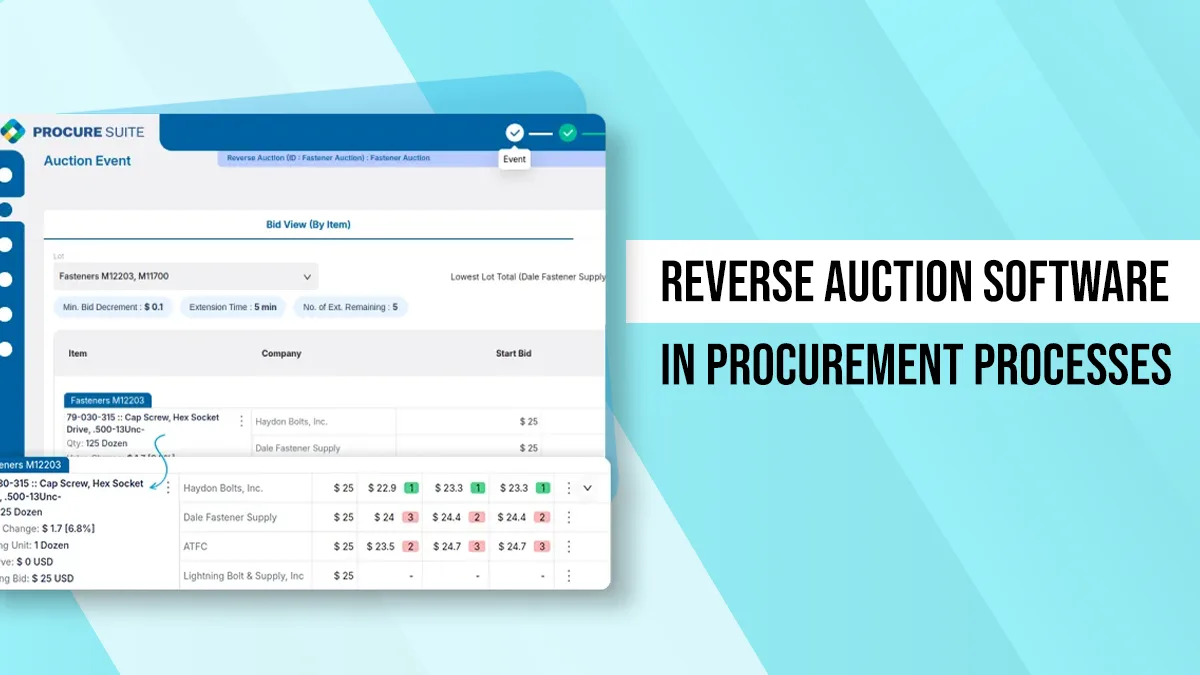
A reliable reverse auction management software enables procurement teams to define auction duration, extension policies, ranking criteria, and bid decrement rules. Teams can utilize supplier visibility settings. This is beneficial for establishing an award methodology to ensure transparency in the process. This brings consistency as well to reduce disputes and improve supplier confidence in the process.
Step 4. Supplier Participation
In this step, qualified suppliers receive event invitations and access the auction portal. Once the event starts, suppliers can submit bids, revise pricing, monitor rankings, and respond to procurement requirements. The reverse auction process management software records the supplier’s activities automatically. This leads to stronger governance with easier audit support for procurement teams and companies.
Step 5. Bid Analysis
Leading procurement teams evaluate bids as per multiple criteria, including total landed cost, delivery capability, quality performance, contract compliance, and risk factors. They also go through the supplier’s performance history. This enables them to get the long-term supplier value for the strongest sourcing outcomes. A supplier offering a marginally lower price may not represent the best outcome if their delivery reliability is inconsistent.
Step 6. Supplier Award
This is the last step of the sourcing process. The reverse auction platform generates a complete audit history that includes event timelines, award decisions, bid progression history, and supporting documentation. It strengthens procurement governance and simplifies internal reviews for the team. As a result, companies can select the right suppliers and finalize their contracts effectively.
A reverse auction in procurement brings many benefits for the company. An advanced reverse auction management system is, however, necessary to leverage these benefits.
Key Benefits of Reverse Auction Technology for Procurement Teams
Companies focus on price reductions frequently. The broader operational benefits, however, remain in creating equal or greater value. A reliable reverse auction process management approach enables procurement teams to
Accelerate sourcing cycles
Increase supplier participation
Standardize sourcing procedures
Improve audit readiness
Reduce manual administration
Strengthen procurement governance
Reverse auctions gain popularity in companies because of these benefits. They expand beyond direct material sourcing into indirect procurement categories, logistics services, and even professional services engagements.
Where Reverse Auctions Deliver Strongest Results
Every sourcing category does not get the same benefits from reverse auction technology. It performs well when the company has well-defined specifications and multiple qualified suppliers are available. Reverse auctions are highly beneficial when the market has healthy competition and pricing remains a significant factor. It is also necessary to standardize contract terms to leverage the benefits of reverse auctions.
Some of the common use cases of reverse auctions are-
Raw materials
Industrial components
Transportation services
Packaging materials
Maintenance supplies
Office procurement categories
Logistics, manufacturing, IT services, and other core industry sectors are great beneficiaries of reverse auctions. A logistics company, for example, may conduct reverse auctions among pre-qualified carriers. Companies should, however, choose the right reverse auction solution.
Why Procure Suite is a Preferred Reverse Auction Management Software
As an advanced procurement software, Procure Suite offers seamless managed reverse auction services. This advanced platform offers tangible results for reverse auction processes for goods or services. Procure Suite is a customized software for addressing E-Sourcing requirements. It assists companies in saving costs in multiple ways across office supplies, logistics, packaging, and indirect categories, etc.
Procure Suite is a trusted e-Auction service provider that handles every aspect of a reverse auction event effectively.
Concluding Remarks
Reverse auctions have evolved beyond price competition. Modern reverse auction management software helps procurement teams create structured sourcing events, improve governance, and achieve stronger outcomes. Whether companies are sourcing direct materials, transportation services, or indirect procurement categories, a reliable reverse auction platform is always beneficial. Organizations, however, should focus on selecting the right solution.
The best online auction software supports supplier qualification, bid analysis, and audit documentation for seamless handling of the process. Reverse auction in procurement becomes a strategic advantage when implemented correctly.