Overview
Procurement managers today are under more pressure than ever to reduce costs without sacrificing quality or efficiency. Thankfully, with reverse auctions, managers can make effective strategies in procurement
However, the right digital tools help make the most of reverse auctions. That’s where reverse auction management software comes in. By automating and optimizing the auction process, the software helps save time, minimize errors, and derive the best possible results.
This post takes a closer look at how reverse auctions in procurement really work, shows how much they can save, and shares practical tips to help businesses make the most of this strategy. Let’s move further.
How Reverse Auctions Save Procurement Costs
Reverse auctions serve as strategic tools to save costs. This is how they help cut costs in procurement.
Increased Supplier Competition
In reverse auctions, suppliers outbid each other by offering their lowest prices, or you can say they offer their competitive offers. In other words, this makes prices go down profoundly. When multiple suppliers participate, there is healthy competition between them, which naturally reduces procurement costs. This makes reverse auctions one of the most effective tools for reducing the final cost of goods or services.
Efficiency Gains
A reverse auction platform helps in saving time and resources significantly. As the bidding process is automated, teams no longer have to make lengthy negotiations or constant back-and-forth communication with suppliers. In turn, the procurement cycles become faster. Automation also lightens the administrative load of teams.
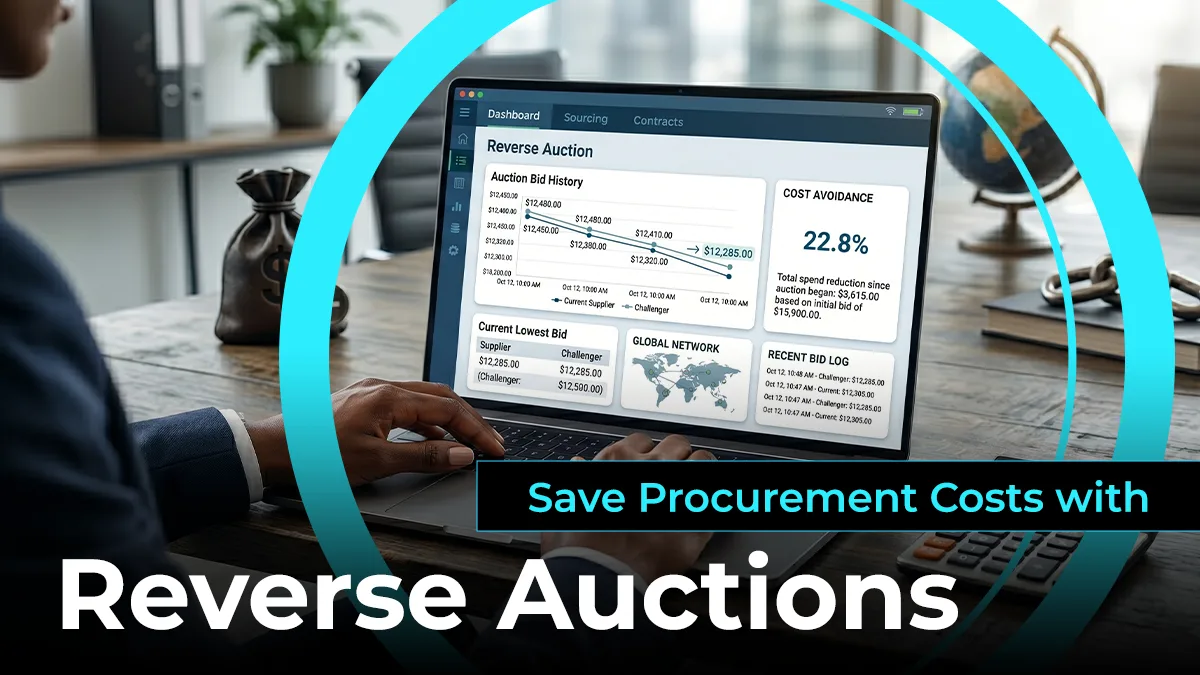
By using the reverse auction management software, teams can keep an eye on bids in real-time. The software also enables them to manage supplier communications and choose the best bids effectively. In short, the software streamlines the entire process, from start to finish.
Reduction in Administrative Overhead
Being a structured and transparent process, reverse auctions remove the lengthy negotiations and frequent back-and-forth communication. This saves both time and money significantly. Let us take an example. For businesses that use reverse auction systems, there is no need to use resource-intensive processes. They can concentrate on strategic tasks rather than routine administrative work.
Next, let’s explore the best practices for maximizing procurement savings through reverse auctions.
Best Practices for Saving Procurement Costs Up To 40% Using Reverse Auctions
Though reverse auctions can bring in cost savings, it is necessary to follow certain best practices to make the most of this strategy. This is how you can get started to maximize savings by up to 40%.
Choose Right Categories
Every procurement category is not suitable for reverse auctions. They work best for standardized products or services, high-spend, repeat categories, where the price is the determining factor. For complex or relationship-based purchases, like custom projects or services that need special expertise, reverse auctions are not the best choice. In those cases, things like the supplier’s experience, quality, and service matter more than just the price.
Pre-Qualify Suppliers Thoroughly
Savings does not just mean acquiring the lowest bid. They are about getting the lowest bid right. To make an auction competitive and efficient, pre-qualification of suppliers is an important step. For assessing them, you need to look at their technical skills, track record, and financial health. When suppliers meet these standards, you create stronger competition and increase the chances of maximizing cost savings.
Create Clear and Detailed RFQs
It is very important to include product details, delivery timelines, any tax requirements, like GST, and what you expect in terms of service in an RFQ. In this way, suppliers come to know precisely what you need. Otherwise, an RFQ that is unclear confuses suppliers, which can affect their bids, and make you miss out on potential savings.
A complete and detailed RFQ, on the other hand, makes it easier for suppliers to provide accurate and competitive offers. It also helps you secure the best price without sacrificing quality.
Standardize Pricing Format
When suppliers submit their bids in the same format, it becomes much easier to compare them fairly. The format shows the base price (without taxes), taxes, and total cost. This standardized format removes confusion and also makes sure that a bid that seems cheap at first doesn’t end up being more expensive once you add all costs.
Drive Healthy Competition
While competition is key to driving down costs, it’s important to manage it effectively. You should aim to invite a sufficient number of qualified suppliers to the auction—usually between 4 and 8, as too few suppliers cannot compete. In contrast, if there are too many suppliers, then it becomes difficult to manage as chaos occurs.
Using features like staggered entry or bid visibility rules of reverse auction process management can help create healthy competition among suppliers. At the same time, it is easier to manage the process without overwhelming anyone.
Use Smart Auction Rules
To make your auction better, you need to structure it by taking past data or market rates. You can start with a reasonable price. By setting small bid steps, you can keep the auction moving. Also, adding extra time for last-minute bids will give everyone a fair chance to take part.
These simple rules will keep the auction fair and active. Simply put, it will become easier to get the best price and maximize savings.
Leverage Historical and Market Data
It is important to keep in mind to use past data and market information before running a reverse auction. For setting realistic goals, you need to look at what you paid before, current market prices, and supplier price trends. If you do not consider this information, there are chances of overpaying or expecting prices that are extremely low.
The best online auction software provides data with which you can make more informed auction parameters.
Focus on Total Cost, Not Just Price
In a reverse auction, the lowest bid might seem attractive. But the lowest bid is not the sole factor. It’s important to take the total cost. Shipping, delivery, payment terms, the value of any warranties or services, taxes, and whether you can claim credits such as ITC- all these comprise the total cost.
Taking into account the full cost ensures that your purchasing decisions save money and support overall business goals as well.
Provide Real-Time Visibility and Control
Technological advancements have made it easier to monitor bids in real-time. By leveraging reverse auction management software, you can see how suppliers are bidding, spot any unusual patterns, and make quicker decisions during the auction.
In other words, the software helps in running the bidding process fairly and smoothly.
Analyze Post-Auction Performance
Once an auction closes, it’s not the end. There is an important step yet, i.e., to assess the success of the auction. You need to review the results by comparing the expected savings with actual outcomes. Moreover, it is essential to evaluate supplier performance and find out areas for improvement in future auctions.
These insights enable you to optimize your strategy. Here’s your first time reverse auction guide to bring in savings.
Concluding Remarks
Reverse auctions serve as an effective way for cutting procurement costs, often by 18–40%. It encourages competition and increases price transparency. The reverse auction management software comes as a game-changer for businesses in streamlining the auction process. As procurement keeps evolving, reverse auctions will become even more important for improving cost efficiency.