What is Accounts Payable Automation?
It is a technology-driven process that streamlines and digitizes the management of supplier invoices by automatically obtaining all required information for account processing.
Accounts Payable Automation Workflow
- Analysing Invoice Data: Comprehensive accounts payable automation starts with digitally capturing invoice data, usually through scanning technologies such as optical character recognition (OCR).
- Digital Workflow: Based on predefined rules within the company’s accounts payable automation system, the software automatically codes and routes invoices through the digital workflow.
- Insight & Reporting: Accounts Payable automation delivers exceptional visibility and reporting capabilities, enabling management and AP teams to monitor invoice and transaction flows more effectively and minimize the risk of fraud.
- Cost Reductions: Besides cost savings from reduced manual processes, AP automation helps businesses capitalize on early payment discounts, optimize their supplier base, and eliminate duplicate or erroneous payments.
Benefits of Accounts Payable Automation
AP automation benefits not only the finance team but the entire organization by streamlining data management. Some key advantages include:
- There is no need to store paper invoices or shipping receipts, reducing physical storage requirements.
- There is lower manual effort, as fewer employees are required to investigate invoice discrepancies or handle vendor inquiries.
- Simplified auditing and improved compliance management.
- Built-in security and accountability features that can flag suspicious activity, helping to detect potential invoice fraud.
- Strengthened supplier relationships through timely payments.
- Employees can be redeployed from manual data entry tasks to more value-driven activities, such as analysing payment data for insights.
Top Accounts Payable Processes to Automate
Accounts Payable automation enhances workflows by reducing processing times, improving invoice accuracy, and lowering costs. The following processes benefit most from AP automation compared to manual methods:
- Invoice Data Entry: Automatically capturing invoice data from various sources is faster and more accurate than manual entry, minimizing errors.
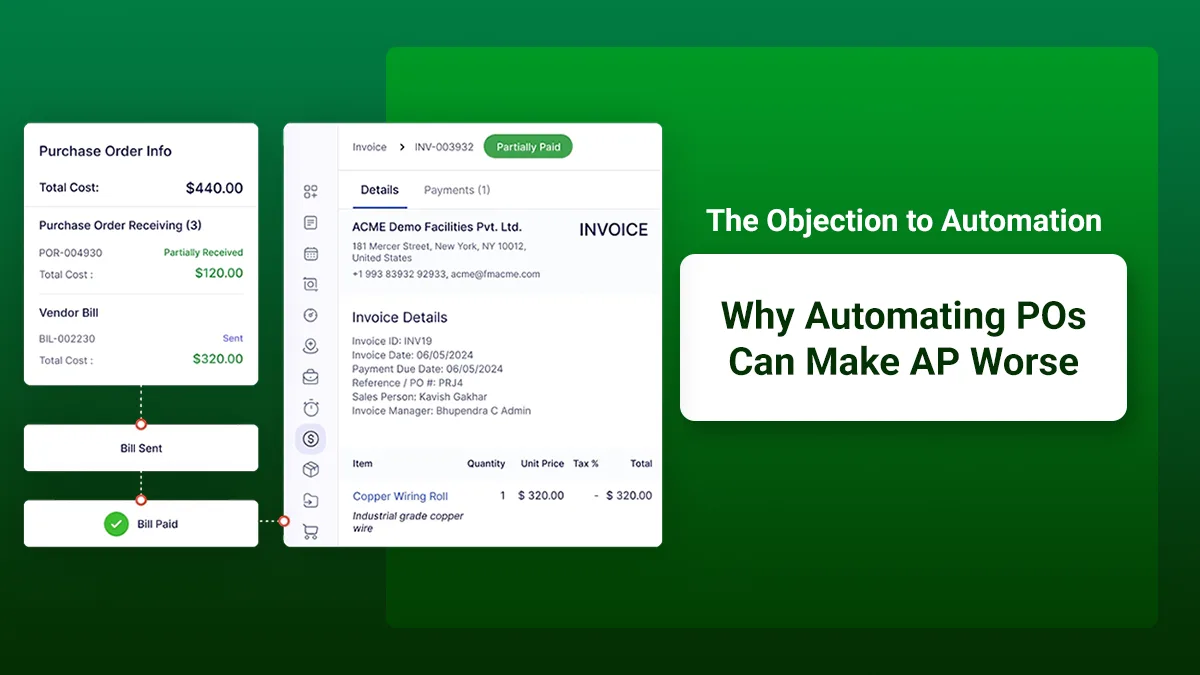
- Invoice Matching: It can automatically match invoices with associated documents, such as purchase orders and receipts (three-way matching).
- Invoice Coding: Automation eliminates the time and errors associated with manual coding by applying rules that assign the correct general ledger codes to each invoice.
- Invoice Approval Routing: Electronic routing of invoices for approval is faster and simpler than manually emailing documents. It also improves accountability across the board.