What is E-Billing?
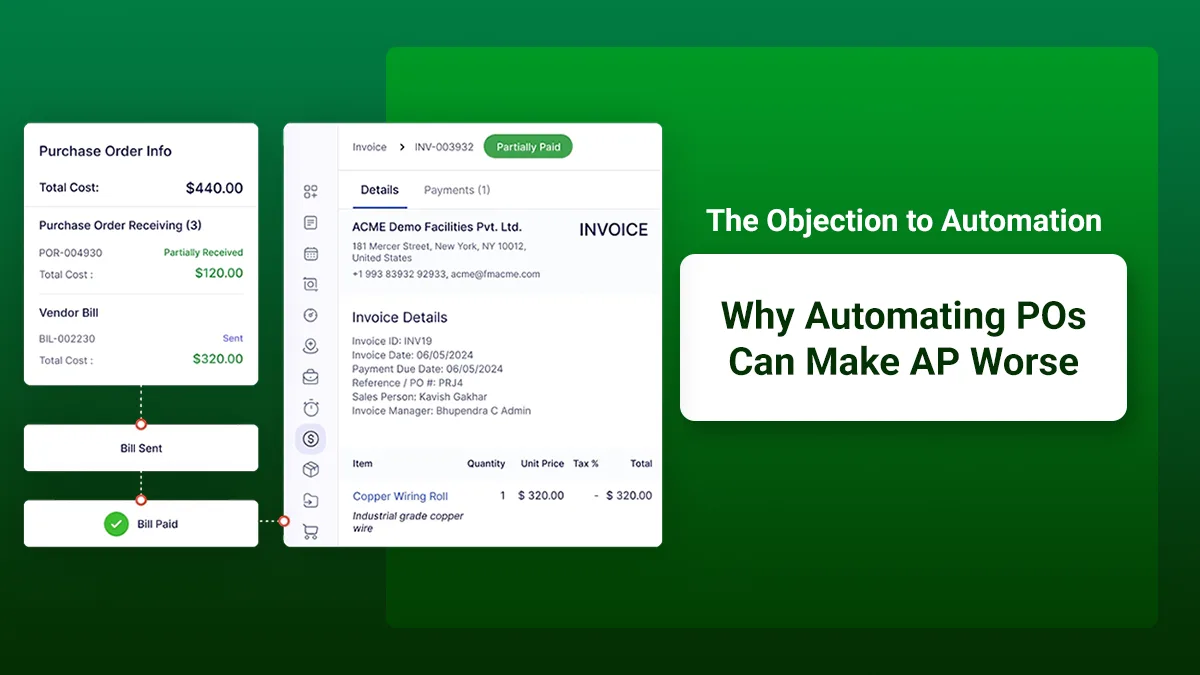
E-billing, also known as electronic billing, is the process of receiving and paying bills online. Typically, an accounting or financial software system produces an e-bill and gives it to the payer by email or a web portal. Customers and businesses can exchange invoices and payments digitally through the electronic billing system, which provides visibility to each party.
An electronic bill is just a digital representation of a paper bill, commonly displayed in PDF format. All relevant information on the payment, including the date, sum, due date, and payment terms, is included in e-bills. They have a link or instructions to access a payment site where the bill can be seen and paid in a fully electronic billing system.
E-billing improves business productivity across the board, from accounting to customer service. Accounting staff can balance and reconcile the books, and customer care agents can access electronic data and address concerns easily. Typically, the AP department, or the payer, creates the e-bills and pays them. The AR department serves as the payee.
Benefits of E-Billing
Electronic billing reduces errors, enhances efficiency, and saves time. Bills have traditionally been sent through the mail. Much time and effort is wasted entering data, creating invoices, stuffing bills into envelopes, mailing those envelopes, and then waiting for the receipt.
E-billing frees up finance employees’ time. They can devote more time to strategic pursuits, even though time savings is a significant advantage. Switching from paper-based to electronic bills improves overall efficiency.
To sum up, here are the advantages of electronic billing:
- Increased efficiency and time savings
- Staff can concentrate more on strategic tasks
- Error mitigation
- Provides a record-keeping system (SOR)
- Network integration
Difference between E-Billing and E-Invoicing
Although e-invoicing and e-billing are connected, they are not the same thing. E-invoicing, often known as electronic invoicing, is a specific use case or definition of e-billing. The AP department uses e-invoicing to electronically generate invoices and submit them to the system of record, which authorizes and processes supplier payments (generally a bookkeeping or financial solution such as an ERP or accounting software). E-invoicing is a part of the AP workflow, whereas e-billing includes creating the bill, submitting it, and receiving payment.