Overview
Procurement teams that track suppliers in spreadsheets see problems on paper before they show up as late deliveries: a lapsed insurance certificate, an expired quality certification, a credit downgrade. Such information sits in separate inboxes and spreadsheets, so nobody sees it until a shipment is late or an auditor asks for it.
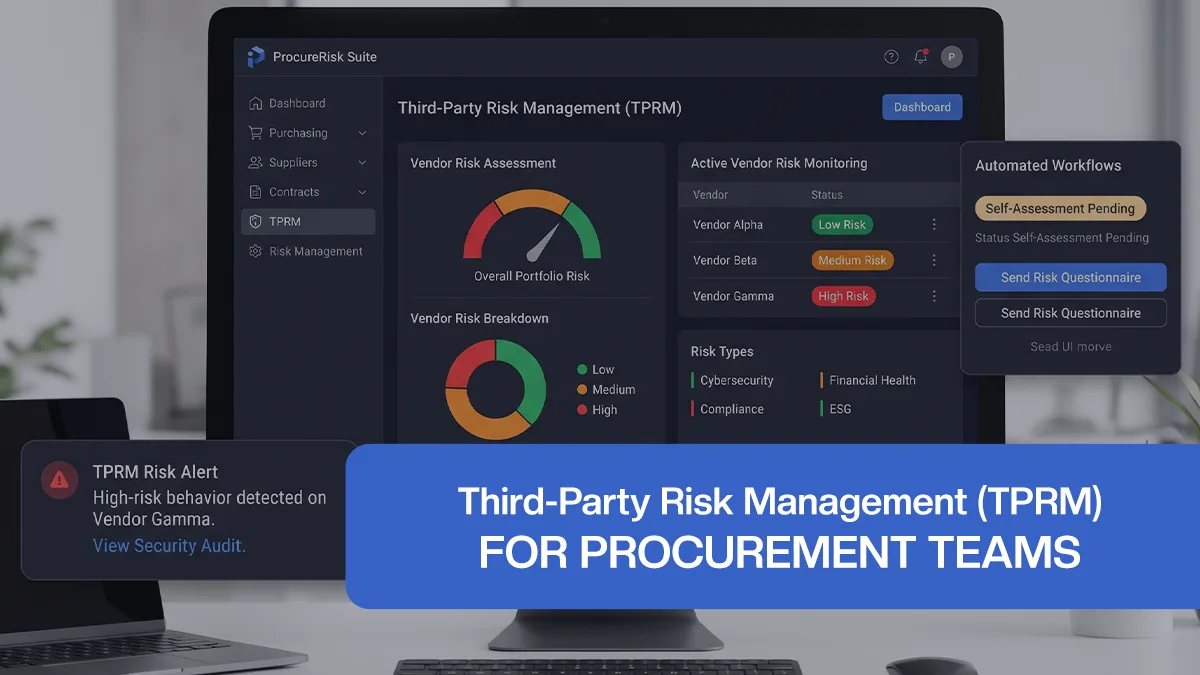
It is essential for you, as a procurement team member, to identify and assess supplier risks before awarding a contract and monitor them throughout the process. Third-party risk management software handles it by helping you collect supplier information, conduct assessments, track compliance, and manage identified risks.
Consider a buyer at a 400-person food manufacturer who approves a packaging supplier on price and lead time. The supplier’s food-safety certification lapsed two months earlier, and nobody noticed until an auditor asks for the certificate.
A structured supplier risk management process ties supplier qualification to purchasing decisions, so you look at more than price and delivery commitments.
What Should You Assess in a Third-party Risk Assessment?
A practical third-party risk assessment covers all the factors that affect reliability and regulatory requirements during the delivery process.
Risk category | What to check |
Financial risk | Credit position, outstanding liabilities, financial stability |
Operational risk | Production capacity, delivery history, business continuity plans |
Cybersecurity risk | Data protection, access controls, security certifications |
Compliance risk | Regulatory licenses, insurance, industry certifications |
Geopolitical risk | Country exposure, trade restrictions, regional instability |
The National Institute of Standards and Technology (NIST) publishes SP 800-161 Revision 1, which gives guidance on identifying and managing cybersecurity risks across an organization’s supply chain. It covers supplier assessment and risk mitigation practices.
You can set your assessment criteria by the supplier’s role. A supplier that handles customer data needs a closer cybersecurity review than one that supplies office stationery.
Next, sort suppliers into high, medium, and low-risk groups based on spend, the data they handle, and how hard they would be to replace. A sole-source supplier of a key component belongs in the top group even when its annual spend is small, because losing it would stop production. Each group then gets its own assessment depth and review schedule.
How Third-party Risk Management Software Helps You
The software gives you a clearer view of supplier status, outstanding risks, and pending actions. Buyers can check current supplier information, identify gaps before approval, and follow up on issues during a contract instead of chasing documents across emails and spreadsheets.
1. Centralized Supplier Records and Onboarding
Buyers get a complete supplier profile before making an onboarding or sourcing decision. They can review qualification details, check which documents are missing, and see whether a supplier meets the requirements for its category.
Supplier onboarding software collects business registration details, tax and banking records, certifications, insurance documents, and other qualification details.
Supplier management software keeps these documents in one central profile. Standardized onboarding forms also ensure that suppliers in the same category submit the same required information. This reduces repeated follow-ups and gives you a consistent basis for supplier evaluation.
2. Supplier Risk Assessment and Scoring
Buyers can compare suppliers against defined risk criteria before committing to a contract. A structured assessment helps them identify concerns early, request additional evidence, and involve the right reviewers before approval.
A supplier risk assessment assigns a specific level based on criteria such as financial position, delivery performance, compliance status, and cybersecurity controls.
For example, before signing a three-year steel coil contract, a mid-sized automotive parts manufacturer might review the supplier’s annual production capacity, IATF 16949 quality certification, latest financial statements, and on-time delivery rate over the past 12 months.
Third-party risk assessment software supports this review by automating questionnaires, collecting supporting documents, assigning review tasks, and recording approval decisions. Buyers get a documented assessment that they can refer to during supplier selection and contract reviews.
3. Supplier Compliance Management
Buyers can see which suppliers have valid documents and which need to renew or submit again. This helps you address documentation gaps before they delay an approval, contract review, or audit.
An expired license or missing insurance certificate can hold up a contract review or create an audit issue.
Supplier compliance management helps teams track document validity, renewal dates, and approval status. Automated alerts notify the relevant team when a supplier needs to submit an updated document. Buyers can follow up before an expiry date rather than discovering the gap during a review.
4. Ongoing Third-party Risk Monitoring
Buyers can respond to supplier risks effectively while a contract is active. They can review updated information, investigate performance declines, and decide whether a supplier needs corrective action or a fresh assessment.
Supplier approval is only one stage of risk management. A supplier’s financial position, ownership, cybersecurity practices, and operating capacity can change during an ongoing contract.
Third-party risk monitoring helps you review supplier performance and updated risk information throughout the relationship. For example, a decline in delivery performance or an expired quality certificate can prompt a review before the next sourcing event. This gives buyers time to discuss corrective action, assess alternatives, or reconsider the supplier’s status.
The NIST SP 1326 Due Diligence Assessment Quick-Start Guide, published in July 2026, provides further guidance on researching supplier-related information. For ICT suppliers, it covers areas such as ownership and control, provenance, resilience, cybersecurity practices, and supply chain tiers.
Manual Supplier Risk Management vs. TPRM Software
Under manual risk management, you gather data, validate documents, and update supplier records yourself. With TPRM software, all these tasks run within a workflow system, such as document reviews and renewal reminders.
Procurement activity | Manual risk management | Software-supported TPRM |
Supplier onboarding | Email forms and spreadsheets | Standardized digital onboarding |
Document verification | Manual checks by procurement staff | Centralized document review and renewal alerts |
Risk assessment | Individual spreadsheets and checklists | Structured questionnaires and risk scoring |
Compliance tracking | Periodic manual reviews | Document status tracking and automated reminders |
Supplier monitoring | Separate performance reports | Centralized supplier records and review workflows |
Audit preparation | Collecting records from multiple sources | Accessible assessment and approval history |
The table illustrates typical workflow differences, not measured performance results. Software cuts repetitive administrative work. You still need to verify supplier declarations, investigate unusual findings, and decide whether a risk calls for corrective action or a new supplier.
How to Choose the Right TPRM Software for Procurement
The right TPRM software should fit your procurement policies and existing supplier management processes. It should do these five things well:
Configurable risk assessments: Check whether you can set assessment criteria by supplier category, contract value, and business exposure.
Document management: Look for centralized storage, expiry tracking, and supplier document submission workflows.
Supplier performance tracking: Confirm the system records delivery, quality, and compliance information.
Approval workflows: Check whether high-risk suppliers route to the right procurement, finance, legal, or IT reviewers.
Integration capabilities: Review connections to your ERP, sourcing, contract management, and purchasing systems.
You can ask for demos of these features with your own supplier categories instead of a generic script. Bring finance and legal into the evaluation early, and add IT if cybersecurity reviews will run through the platform.
Giving every supplier the same questionnaire is one of the most common mistakes. A strategic IT service provider and a low-value packaging supplier carry different risks, so your assessment process should be different for them.
How Procure Suite Supports Supplier Risk Management
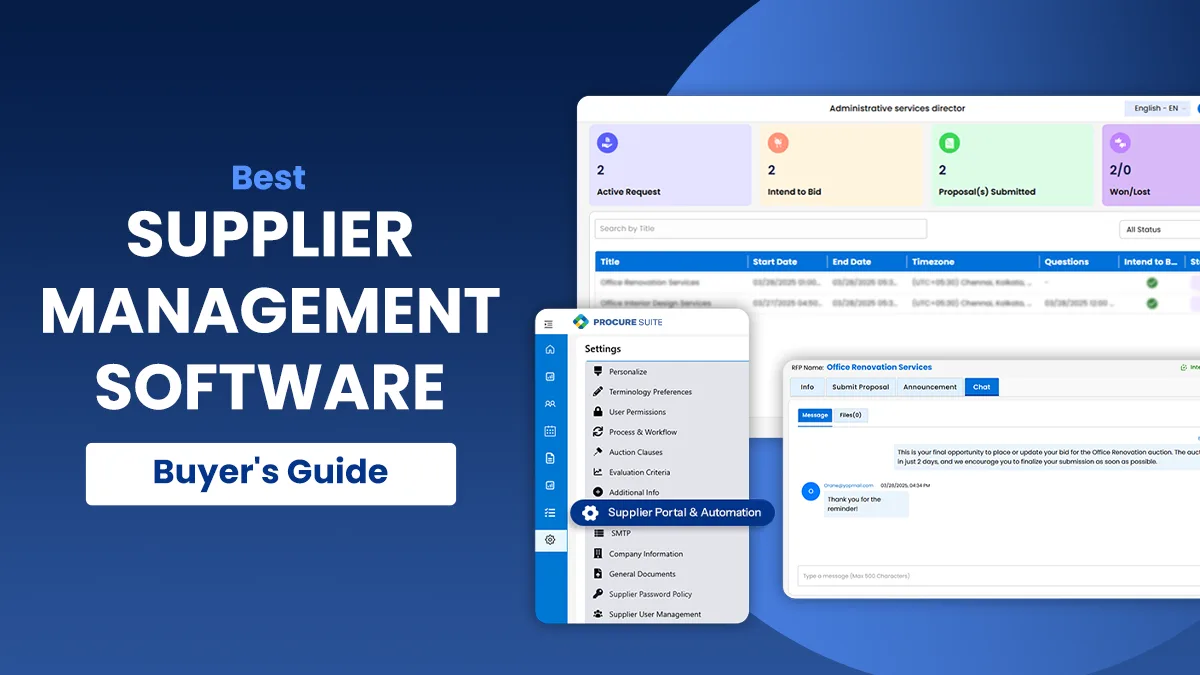
Procure Suite brings supplier onboarding, supplier records, performance tracking, and procurement workflows together on one platform.
Its supplier management module helps you create supplier profiles, collect and maintain qualification documents, manage onboarding, track compliance records, and review performance. You can also connect this information with RFx, contract management, and procure-to-pay activities.
Procure Suite gives buyers access to supplier details across qualification, sourcing, and purchasing. Before awarding a contract or processing a purchase, they can review supplier documents alongside quotation details, contract information, and performance history. This makes it easier to identify missing records, review past performance, and make informed sourcing decisions.
How to Start a TPRM Project with Your Highest-risk Suppliers
Start by classifying your active suppliers by business impact and risk exposure. Pick a small group of high-risk suppliers for a pilot assessment, define the documents, and measure how well your current process captures and reviews that information.
Track a few simple numbers during the pilot process, such as how long onboarding takes and how many documents were expired or missing when you checked. Compare them with your current process after one review cycle, then decide whether to extend the pilot to the next supplier group.
Procure Suite’s supplier management capabilities include centralized data & repository, automated onboarding, performance monitoring, risk management and compliance, and contract & document management. These capabilities help you centralize records, track compliance, and manage supplier relationships.