Overview
Imagine that you manage a growing company. Customers place orders, make payments, and your teams process invoices. In such a scenario, it can be quite stressful to keep track of everything manually, and teams are prone to making mistakes.
Enter procure to pay software solutions. It automates and streamlines the entire process, from purchase requisition to final payment, forming the foundation of financial control. Procure to pay (P2P) software provides real-time data and streamlined workflows, enabling you to track every expense, reduce errors, and eliminate inefficiencies.
This blog discusses how procure to pay solutions help organizations take control of their finances. First things first. Let's explore why financial control is crucial for modern businesses.
Importance of Financial Control in Businesses
Financial management is essential for effective fund allocation. Moreover, it is useful to maintain accurate reports and keep spending in control as per the company’s goals. Any business can optimize resources and remain resilient during challenging economic times.
In the modern scenario, the need for strict financial control is highly important for the following reasons.
Prevent Overspending
Without proper oversight, companies may exceed their budgets. This leads to cash flow problems or funding mismanagement.
Accurate Financial Reporting
Strong financial control makes sure that all the records are accurate and up-to-date. This provides stakeholders with reliable data for informed decision-making.
Optimize Cash Flow
Businesses can manage their expenses and revenue effectively with proper financial control. It ensures they maintain enough cash flow to cover day-to-day operations.
Looking after financial control manually can be a challenge. Many businesses still use outdated methods that are vulnerable to mistakes and fraud. These systems often lack transparency, which makes tracking expenses and making informed decisions much harder.
Here, procure to pay management software comes into the picture.
How Procure to Pay Software Supports Financial Control
Procure to pay solutions automate and streamline the procurement cycle. It enhances efficiency by reducing mistakes and delays, offering real-time insights. As a result, businesses gain more control and clarity over their financial processes. Here's how these solutions improve financial control.
Procurement Task Automation
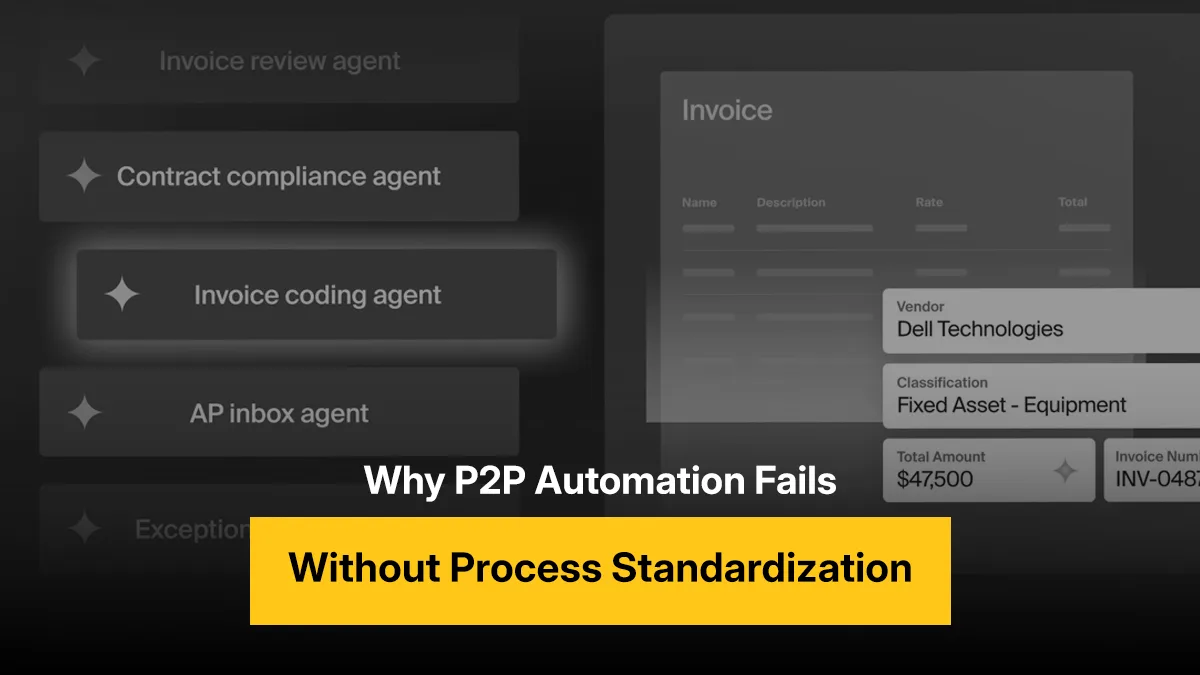
P2P systems streamline various stages of the procurement process. These stages are the generation of purchase orders, matching invoices, and managing approval workflows. This automation reduces manual errors and increases accuracy in financial data.
Real-Time Data
P2P software provides real-time updates on activities. With real-time data, procurement teams can make well-informed decisions.
Payment Automation
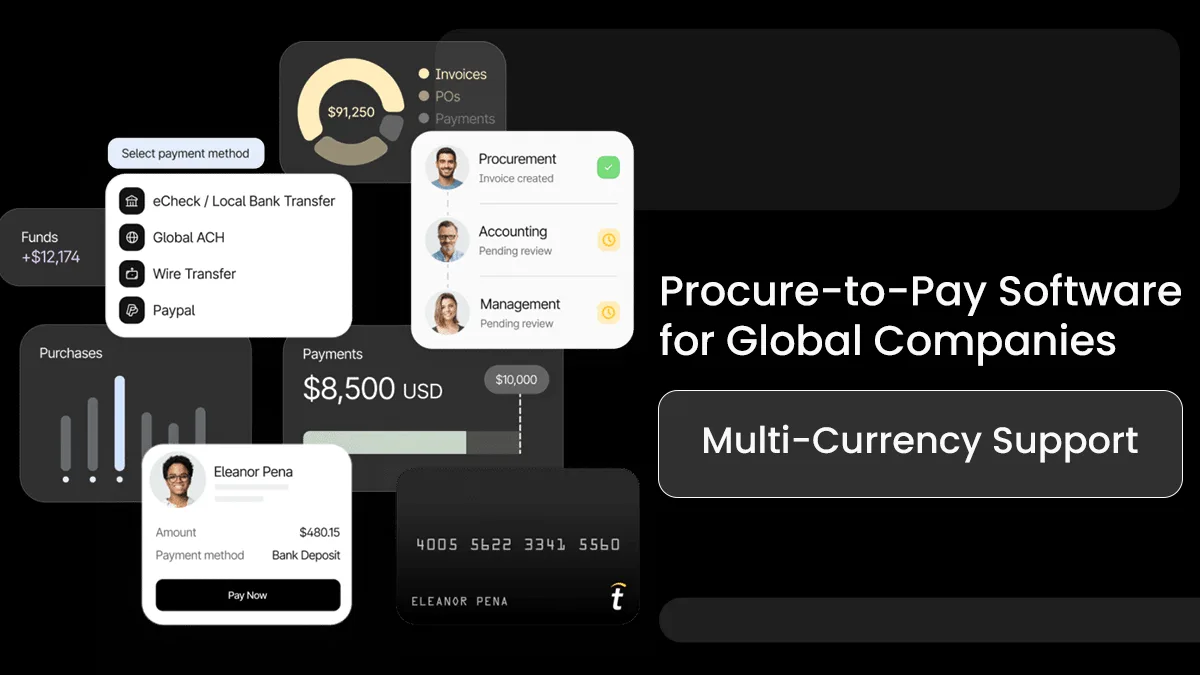
Automation matches invoices to purchase orders. So, businesses pay only for the goods or services they have ordered or received. It prevents the risks of overpayments and fraud.
Approval Workflows
Streamlined approval workflows ensure that the right stakeholders review and authorize all procurement and payment decisions. This minimizes the risk of unauthorized spending.
P2P platforms improve visibility, reduce compliance risks, and provide businesses with greater control over their spending. As a result, overall efficiency and transparency increase in the financial management systems.
Next, let's find out how procure to pay software solutions help companies maintain financial control.
Key Benefits of Procure to Pay Software for Financial Control
P2P software offers several advantages by strengthening financial control. Let's dig deeper into a few major benefits.
Enhanced Accuracy and Fewer Mistakes
Automation reduces the risk of human errors in payments. Take invoice matching, for example. Manual checks may lead to mistakes. However, automation ensures accurate matching of invoices before making payments.
Cost Savings and Budget Control
P2P systems enable businesses to monitor spending in real-time. They help them maintain the budget. Moreover, comprehensive reports and analytics reveal high spending areas. Organizations can make adjustments in such areas to save money.
Instant Access to Real-Time Data
P2P software monitors procurement activities in real time. This offers decision-makers a transparent view of financial transactions. This transparency empowers businesses to make quicker decisions and optimize resource allocation.
Stronger Supplier Relationships
P2P systems facilitate timely payments to maintain better relationships with suppliers. As a result, companies can build trust and result in favorable pricing or terms. This can benefit the business in the long run.
Streamlined Audits and Reporting
P2P software simplifies audit processes by maintaining a clear, accessible record of transactions. Companies can
- conduct internal and external audits
- ensure compliance and
- reduce the risk of financial discrepancies
by using P2P solutions.
A company’s financial strategy improves by incorporating these benefits. It also keeps the business on track and prevents issues like overspending or fraud.
It’s time to look at how p2p procurement systems integrate with the broader financial ecosystem.
How Procure to Pay Platforms Integrate into Financial Systems
P2P platforms can be one of the key components of an organization’s financial system. It is, therefore, necessary to understand how they connect with other systems, such as ERP and accounting software.
ERP Integration
P2P systems connect to ERP software seamlessly. This combination offers smooth data flow from procurement to financial records. It enhances cash flow management and forecasting accuracy. This leads to an improved decision-making process.
Accounting Software Connection
P2P software integrates with accounting platforms and records every transaction correctly. This connection simplifies the reconciliation process and ensures precise financial reporting. It makes it easier for businesses to keep track of their financial standing.
Scalability
P2P systems can scale along with the business. Whether your company is a small startup or a large enterprise, procure to pay software enterprise solutions can handle increasing transaction volumes. They can do so without compromising effectiveness in managing finances.
P2P solutions streamline the process by connecting procurement, accounts payable, and financial reporting systems. This integration improves operational efficiency and gives the organization better control over its finances.
Finally, we will take a closer look at what the future holds in store for P2P systems.
Emerging Trends in Procure to Pay Software Solutions
Advancements in machine learning, AI, and blockchain will shape the future of procure to pay platforms. These developments are expected to improve financial control by automating decision-making, increasing data accuracy, and providing more detailed insights into procurement activities.
Machine learning will help forecast trends, spot irregularities, and optimize spending. At the same time, blockchain technology will offer stronger security and transparency, reducing the risk of fraud.
Concluding Remarks
Procure to pay software solutions are essential for improving financial control and streamlining business operations. These solutions help businesses reduce costs, enhance supplier relationships, and streamline audits. We expect that P2P solutions will remain more prevalent. Organizations should consider opting for these solutions for gaining long-term efficiency and success.