Overview
Procurement acts as the backbone of the modern manufacturing sector. As this sector evolves toward smart manufacturing, some challenges, including supply chain volatility and real-time production demands, need to be addressed. Moreover, cost pressures and compliance risks loom large globally. In such a scenario, a traditional procurement method may not be sufficient. Here, manufacturers need decision engines that connect suppliers and operations in real time.
This blog talks about the role of advanced procure to pay software solutions in addressing these challenges effectively. Unlike fragmented tools or outdated software, feature-rich procure to pay management software can help manufacturing companies gain greater visibility and real-time insights. As a result, smart manufacturing companies can get rid of unnecessary delays and missed opportunities. Let’s discuss this in detail.
Scope of Procure-to-Pay Platform in Smart Manufacturing
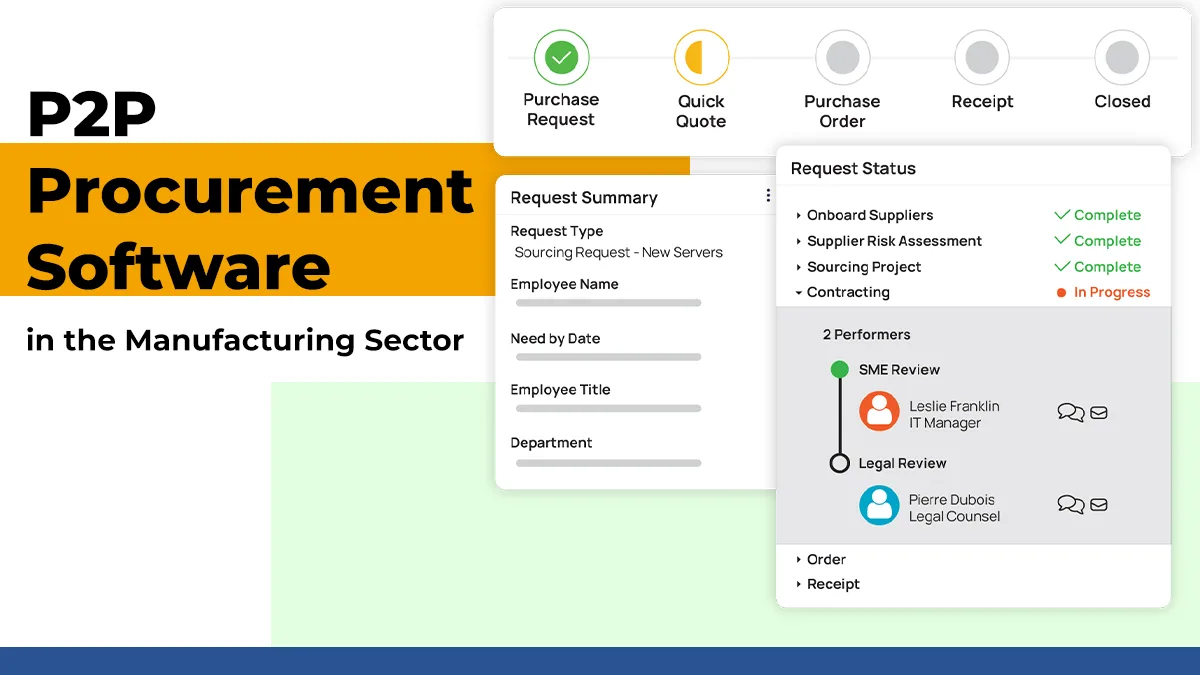
A p2p procurement system is an automated and data-driven tool that manufacturing companies can integrate into their production ecosystem. An advanced procure-to-pay platform connects the entire purchasing lifecycle from requisition to payment. It is fair to say that the P2P platform is the operational backbone of the procurement process.
This platform should be real-time, automated, and data-driven in the smart manufacturing setup. Moreover, it should have advanced integration capabilities for ERP and production systems. It can address the challenges of traditional procurement systems effectively.
Let’s go through a quick comparison between P2P procurement software vs. traditional systems.
P2P Procurement Software vs Traditional Systems
A feature-rich P2P procurement software is more useful for handling the purchasing requirements of smart manufacturing. Here is a quick comparison between traditional systems and P2P procurement software.
Feature | Traditional Procurement | Modern P2P Procurement Software |
|---|---|---|
Data Flow | Fragmented and siloed | Real-time, connected |
Decision-Making | Reactive | Predictive, AI-driven |
Supplier Collaboration | Limited | Digital & transparent |
Invoice Processing | Slow | Automated |
Visibility | Delayed | End-to-end |
Scalability | Rigid | Cloud-based |
A modern p2p procurement system can improve outcomes while executing tasks effectively.
Top Ways Procure-to-Pay Solutions Redefine Smart Manufacturing
Let’s connect the dots. Smart manufacturing operates on IoT-enabled production lines and real-time demand planning. Here procure to pay software solutions can lend a helping hand through offering fast and deep integrations with the system. Here is how they redefine smart manufacturing.
Predictive Procurement
These systems can predict demand. As a result, companies can take a proactive approach. AI analyzes consumption patterns and triggers purchase requests automatically. As a result, companies can maintain the material's availability more effectively. This is useful for preventing downtime and maintaining operational consistency.
Autonomous Workflows
Automation is here to handle routine tasks. Modern P2P procurement systems can automate approval workflows, smart invoice matching, and exception-based management. Human intervention is necessary during anomalies only. This paradigm shift enables your procurement team to focus on strategic activities that impact business outcomes.
Supplier Intelligence
Advanced procure to pay management software provides companies with deep insights into supplier performance and related risks. You can evaluate the reliability of suppliers by monitoring key performance metrics and identifying potential disruptions. This high visibility is necessary for establishing stronger and more strategic partnerships.
Real-Time Financial Visibility
Finance has become a part of the process in real time. Instant budget monitoring, accurate cash flow forecasting, and detailed spend analytics can give full control over financial decisions. Such high financial visibility transforms procurement from a transactional tool into a strategic growth strategy for any organization.
Here, it is fair to say that effective implementation is essential to leverage the benefits of P2P procurement software.
How To Implement P2P Procurement System Effectively
Implementing the right P2P procurement software is a complex process, and many businesses find it difficult. Here are the useful steps for implementing this system successfully-
1. Clean Your Data
This is the first step to consider. Bad data will bring irrelevant insights, and therefore, it is better to start by standardizing supplier information. This can ensure consistency in names, formats, and details across the system. It is also important to remove duplicates that create confusion. Finally, you can define clear categories for suppliers, spend, and materials. This leads to a clean structure useful for the P2P system.
2. Map Your Workflows
This is a crucial step that involves your existing procurement process. You need to determine the way it works and changes for the future. Many businesses opt for automation without fixing inefficiencies. However, this can be a costly mistake. It is, therefore, better to remove unnecessary layers of approval that reduce the speed of things. You can simplify the process before implementing the procurement tool into the system.
3. Choose the Right Platform
Selecting the right procurement platform is crucial. The platform should have robust integration capabilities to ensure seamless data flows. A cloud-based platform can support scalability as businesses grow. Moreover, a user-friendly interface and powerful analytics are essential features for the most suitable procurement management software. Such software offers high visibility and improves performance.
4. Focus on Adoption
This is a crucial step that can make or break the process. It is essential to deploy the best P2P procurement software; however, if your team cannot use it properly, it is of no use. Therefore, companies should focus on training their procurement teams so that they can understand the workflow of the system. In other words, companies should align the system with business objectives and procurement cycles according to the roles of different team members.
These are some useful steps for the effective implementation of the P2P procurement software. Let’s have a glimpse of its future in smart manufacturing.
Future of Procure to Pay Solutions in Smart Manufacturing
Intelligent and predictive procure to pay software solutions will shape the future of smart manufacturing. These days, factories adopt IoT-enabled systems and real-time production planning. This adoption has made procurement a part of the operational process. Modern systems will use AI to predict demand, automate purchasing decisions, and ensure the availability of materials. This results in reduced downtime, improved efficiency, and enhanced production cycles.
At the same time, p2p procurement software acts as a strategic decision engine. Businesses can gain complete visibility into spend and supplier performance with real-time data and analytics. Automation will eliminate manual tasks like approvals and invoice comparison. As a result, teams will focus on value-driven activities like supplier collaboration. Moreover, P2P solutions will drive growth, resilience, and competitive advantage as smart manufacturing scales.
Concluding Remarks
Effective implementation of the right procure to pay solutions is necessary for thriving in a smart manufacturing environment. These solutions make the procurement ecosystem agile and transparent. It is, however, necessary to choose the most suitable P2P solution that can turn the technical benefits into a competitive advantage.