Overview
A purchase request can move through an automated workflow in minutes and still arrive at finance with the wrong approver, incomplete supplier information, or no usable purchase order behind it. The problem in that situation isn't automation speed. It's the process the automation was asked to follow.
At Procure Suite, we believe automation works well when the underlying process itself is clear and coherent. While P2P automation can integrate requisitions, purchase orders, approvals, invoices, and payments, it cannot determine what conflicting purchasing procedure is the right one to follow. Process Standardization creates a structure for your Procure-to-Pay process, enabling automation to provide better controls, data, and procurement processes. That’s why procurement and finance need to get all of those in order before automation configuration.
Automation Cannot Correct an Unclear Purchasing Process
Automation works according to the rules you configure. If those rules are unclear, the automated process can remain inconsistent.
Procure Suite’s Procure-to-Pay software supports purchase requisitions, purchase order issuance, invoice processing, payments, and automated approvals. It also enables companies to design their own workflow for purchase requests.
Before designing these workflows, the procurement staff has to address issues that are related to the workflow: What information should a requester provide before submitting a purchase request?
Which approver owns a request at each spending threshold? When should an additional approval level be triggered? And what happens when a request falls outside the normal purchasing policy?
Without process standardization, one department might be using a structured requisition process, and one might be using email. Automating both approaches does not make the difference go away. It doesn't establish one controlled process, but two competing ways of purchasing.
Approval Automation Needs Clear and Consistent Rules
Unclear approval hierarchies, manual emails, and inconsistent data can slow the P2P approval process. Procure Suite identifies these issues among the causes of delayed approvals.
Before it can automate the purchase-to-pay process, the procurement team has to figure out who will approve each type of requisition and when higher-level approvals are needed based on dollar amounts.
Procure Suite offers customized and tiered approval processes.
Once the approval hierarchy is defined, these capabilities can route requests to the right reviewers, and help ensure purchases remain in line with budget and policy requirements.
Invoice Automation Depends on Earlier Purchasing Steps
Invoice processing depends on information created much earlier in the purchasing cycle. If there is a missing supplier record, purchase order, approval or matching detail upstream, it adds to the workload of accounts payable when the invoice arrives.
Procure Suite lists manual invoice processing, inconsistent supplier and payment information, payment delays and invoice related errors as problems in the procure to pay process. Its P2P solution includes invoice matching and centralized supplier information to connect invoice review with the purchasing records that support it.
That dependency matters for AP teams. When procurement and finance maintain supplier or purchase information differently, an automated invoice workflow may still stop for manual verification.
A standardized purchasing process gives invoice processing clearer inputs and creates a more controlled path from request through payment.
Standardization Helps Procurement Compliance Work Consistently
A purchasing policy is more useful when the same rules are followed across the Procurement Workflow.
Procure Suite's P2P solution supports automated approvals, identification of non-compliant transactions, audit trails, spend analysis, and reporting. These capabilities become more useful when purchasing policies have already been translated into clear workflow rules.
Procurement compliance is easier to manage when similar purchases are made using consistent requisition, approval, supplier and invoice processes. The resulting purchasing records also provide procurement and finance teams with more reliable information for spend analysis and operational review.
What Should You Standardize Before P2P Automation?
Start with the handoffs most likely to create delays or rework between requesters, procurement, finance, approvers, and suppliers.
Outline what information is required in all purchase requisitions and where these requisitions have to be made. Outline what the thresholds for approval are and how any escalations will occur. Determine who owns the supplier files and how they are maintained. Next outline the relationships between purchase orders and payments.
You should also review where email, spreadsheets, disconnected systems, or different working methods are still shaping procurement operations. Removing unnecessary variations before workflow configuration helps automation simplify purchasing rather than reproduce fragmented practices inside a new system.
This is one of the most practical Procurement Best Practices to address before a digital procurement rollout.
Unstandardized P2P process Example
Let’s take an example of a medium-sized manufacturing firm with procurement, maintenance and operations departments sourcing from the same supplier list. The procurement department issues requisitions and purchase orders.
Maintenance sends urgent requests by email and obtains manager approval afterward. Operations sometimes sends supplier quotations directly to finance and asks for payment once goods have arrived.
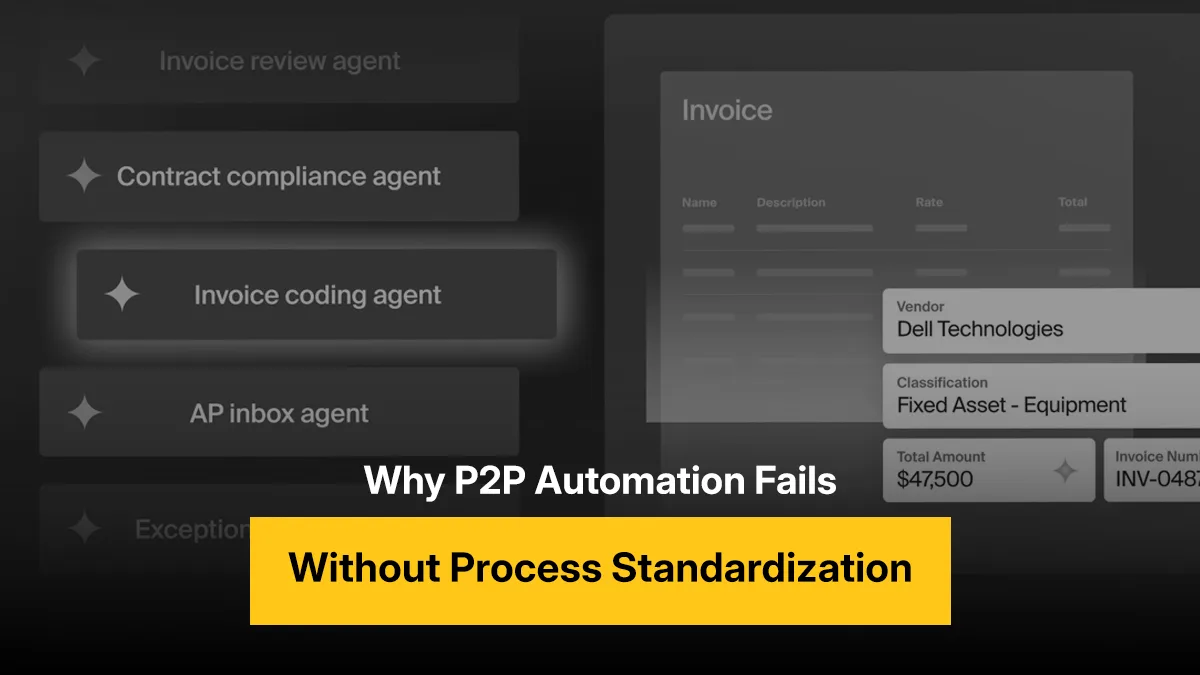
If the manufacturer automates invoice processing first, accounts payable can still receive an invoice without a matching purchase order, documented approval, or consistently maintained supplier record. The invoice may be digital, but someone still has to investigate the missing purchasing information before payment can proceed.
Standardizing the upstream process changes that outcome. The company can mandate that purchases be initiated with a proper requisition, specify when purchase orders are necessary, set levels for approvals, and determine the owner of the supplier data.
After establishing common requisition, approval, supplier, and purchase order policies, the company can set up workflow automation for this process.
Automation now has defined rules to execute, while genuine exceptions such as an approved emergency maintenance purchase can follow a separate controlled workflow instead of an informal workaround.
How P2P Software Supports Workflow Standardization?
P2P software brings requisitioning, purchase order creation, invoice processing, automated approvals, spend analysis, supplier catalogs, reporting, and audit capabilities into a connected procurement environment.
Teams can first define request and approval rules, configure custom or multi-tiered approval workflows, automate repeatable purchasing activities, and then use spend analysis and reporting to review how the process is performing.
However, there is a trade-off that must be taken into account. Workflow standardization does not imply that each purchase has to go through an identical process flow.
Genuine business differences may require different approval routes. A high-value capital purchase, for example, may legitimately require more approval levels than a routine low-value request. Standardization means defining those variations deliberately instead of allowing departments to create their own informal routes.
Conclusion
Successful P2P Automation needs more than automated tasks. You first need clear request requirements, approval rules, supplier records, invoice matching processes, policy controls, and agreed exceptions.
Once these rules have been established, certain features of P2P can be used to enforce them: customized workflow, multi-level workflow can be used for approvals, invoice matching links the invoice with the procurement process, supplier information management will minimize data fragmentation, and audit and reporting features will help to analyze the purchases.
At Procure Suite, we offer our customers Procure-to-Pay software that covers requisitioning, purchase orders, automated approvals, invoicing, payments, supplier management, spend analysis, and integration with current business applications. The bottom line is clear: establish standardized rules of decision-making, and then automate their implementation in the procurement process.
Are You Ready for a Consistent Procure-to-Pay Process?
If holdups from approvals, manual invoice verifications, or uncoordinated purchasing data are causing bottlenecks in your P2P process, find the one workflow that is plagued by inconsistencies due to inconsistent guidelines and map out its request requirements, approval flow, supplier data management, and purchase order guidelines before automating.
In case you would like to explore how your workflow might be automated through Procure Suite, contact a procurement specialist at Procure Suite and ask for a P2P process review or a product demonstration.