Introduction
The organization must control contracts effectively in this fast-paced environment. Controlling contracts effectively can help them spend less time managing risk and more time creating value. Most procurement leaders, however, assume there are problems with contracts when a supplier fails to deliver or misses a renewal date. The reality is that contract-related issues originate much earlier than their assumption.
These issues may originate during drafting, negotiation, or obligation tracking. By the time these issues emerge, the root cause for them has existed for months in the system. Modern contract management software enables companies to manage every stage of a contract’s journey. Whether creation, negotiation, execution, renewal, or performance monitoring, this software is always useful to address various issues.
Procurement teams utilize contracts to define supplier commitments, service-level agreements, compliance obligations, payment terms, and risk exposure. When they manage contracts through emails, spreadsheets, and shared folders, it becomes difficult to track valuable information. It is, therefore, necessary to adopt advanced procurement contract management software. It can offer teams greater control over supplier relationships and spending.
Importance of Contract Lifecycle Management
Contracts influence every procurement decision these days. Whether procurement teams engage in sourcing raw materials, outsourcing services, or negotiating long-term supplier agreements, contracts establish the necessary frameworks for relationships. The challenge here is ever-increasing contract volume.
Procurement departments manage supplier agreements, service contracts, maintenance contracts, supplier onboarding contracts, framework agreements, etc. Each contract has deadlines, obligations, pricing terms, and compliance request data. It is quite challenging to get critical information from these contracts without a structured approach. This leads to financial losses, compliance failures, and supplier disputes over the period.
Real Cost of Manual Contract Management
It is essential to discuss a common misconception about contract management before determining the cost of manual contract management for your organization. Many enterprises believe contract management is exclusively useful for legal teams. This is not the case in reality. All teams, including procurement, operations, compliance, and supplier management rely on contract information. This information can help them perform their responsibilities effectively.
When we consider manual contract processing, it appears manageable until volume increases. A combination of spreadsheets, email threads, and shared folders may look sufficient, but it creates problems with the increasing complexity of supplier relationships. This can bring several issues, including
Approval Delays
Contract approvals involve multiple stakeholders. When management handles approval through email, bottlenecks become difficult to find. Documents may remain pending for approvals without clear ownership or escalation procedures.
Version Confusion
Multiple stakeholders edit contracts frequently during negotiations. The lack of version control can make teams struggle to determine which document reflects the latest approved terms and conditions.
Compliance Issues
Many contracts have several obligations that extend beyond signature. Such obligations are insurance requirements, supplier certifications, audit provisions, and performance benchmarks. These issues can remain undetected without systematic monitoring in place.
Renewal Skip
Missed renewal deadlines result in missed opportunities to renegotiate better commercial terms. Companies may renew unfavorable agreements unintentionally as well. Both these outcomes are risky for modern businesses.
Limited Intelligence
Manual systems may not answer some important questions related to contract expirations, negotiated prices, automated renewal provisions, and financially risky contracts. When this information is not quickly accessible, it can make the decision-making process slow. Manual contract management proves costly to modern organizations for these reasons.
How Contract Management Software Transforms Operations
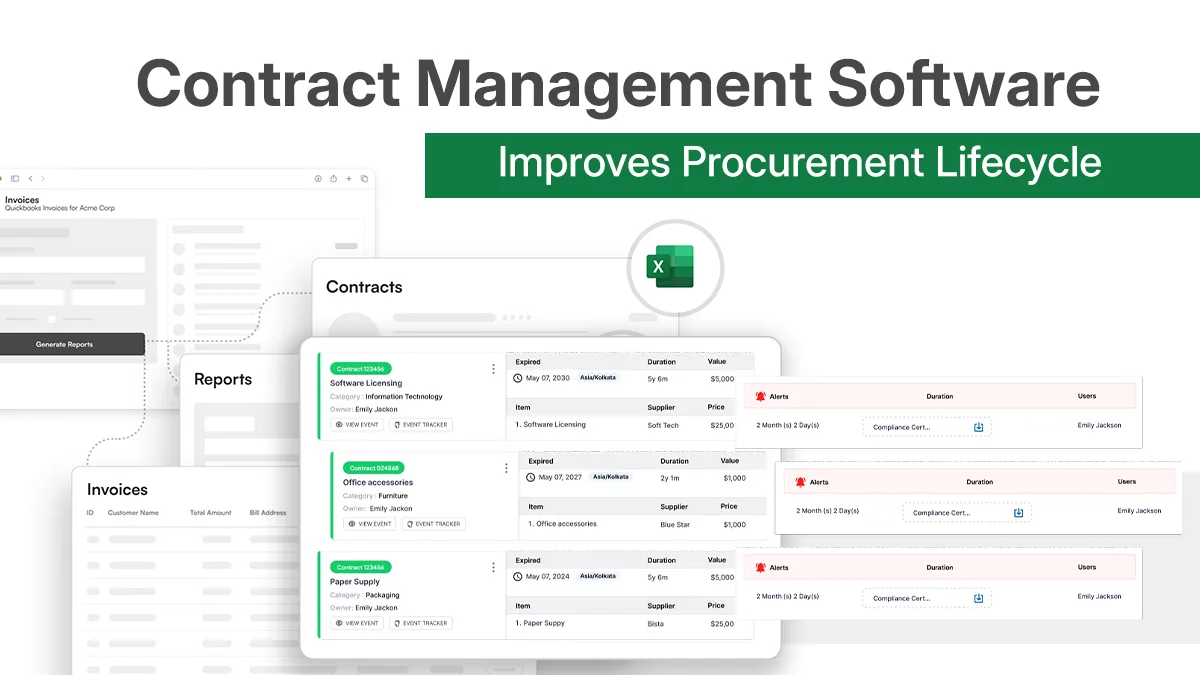
The right contract management software creates the necessary structure for ensuring effective contract governance. It transforms the procurement lifecycle in multiple ways. This software has a centralized contract repository for storing contracts in a searchable, secure, and accessible manner. Procurement teams can locate agreements instantly using this repository.
Automated workflow management can eliminate delays related to manual approvals effectively. Companies can configure approval routing as per contract value, contract type, business unit, and risk level. This ultimately improves operational efficiency, and teams can spend more time managing supplier relationships.
Automated notification is one of the most valuable capabilities within a contract tracking software solution. Companies can get alerts for contract expirations, compliance obligations, performance reviews, and compliance obligations. These real-time alerts reduce the chance of missing obligations. Companies can improve contract governance.
A centralized contract management system can simplify the process of auditing by enabling seamless access to contract records and approval histories. It assists organizations in accessing complete contract histories using a single interface rather than gathering documents from multiple sources or locations.
Necessary Capabilities of the Right Contract Management Service
When evaluating the contract management software solution, procurement leaders should consider the availability of some major functionality, including
Contract lifecycle automation
Centralized contract storage
Version control
Renewal management
Reporting & Analytics
Supplier contract integration
Audit support
Approval workflow management
Security and access controls
It is better to keep in mind that the objective of an advanced contract management system is not limited to digitizing contracts. The real purpose of this system is to create a framework that enables procurement, legal, and finance teams to work from the same contract insights.
Role of Contract Lifecycle Management on Procurement Performance
A trusted contract management service provider can help your company improve procurement outcomes. Supplier negotiations can create value when you enforce negotiated terms consistently. For example, a procurement team may negotiate favorable pricing terms with a strategic supplier. When companies do not monitor these terms, it is possible that invoice discrepancies can erode expected savings gradually.
Service-level agreements (SLAs), on the other hand, provide limited value if you do not measure the supplier’s performance against contractual commitments. Modern procurement contract management software helps companies ensure that contract terms can remain connected to operations. This combination can strengthen supplier accountability and improve the performance of procurement over time.
Closing Remarks
Contract lifecycle management is a business discipline that influences procurement performance, supplier accountability, and compliance management directly. Modern contract management software can address challenges related to manual processes. It connects every stage of the lifecycle, from drafting to negotiation and performance monitoring to renewal.
As procurement processes become more complex and supplier ecosystems expand, companies need to adopt a contract management solution. It is necessary to reduce risk, save time, and protect negotiated value for strengthening long-term supplier relationships. This can drive growth for businesses with cost savings through the proper execution of a contract lifecycle.