Overview
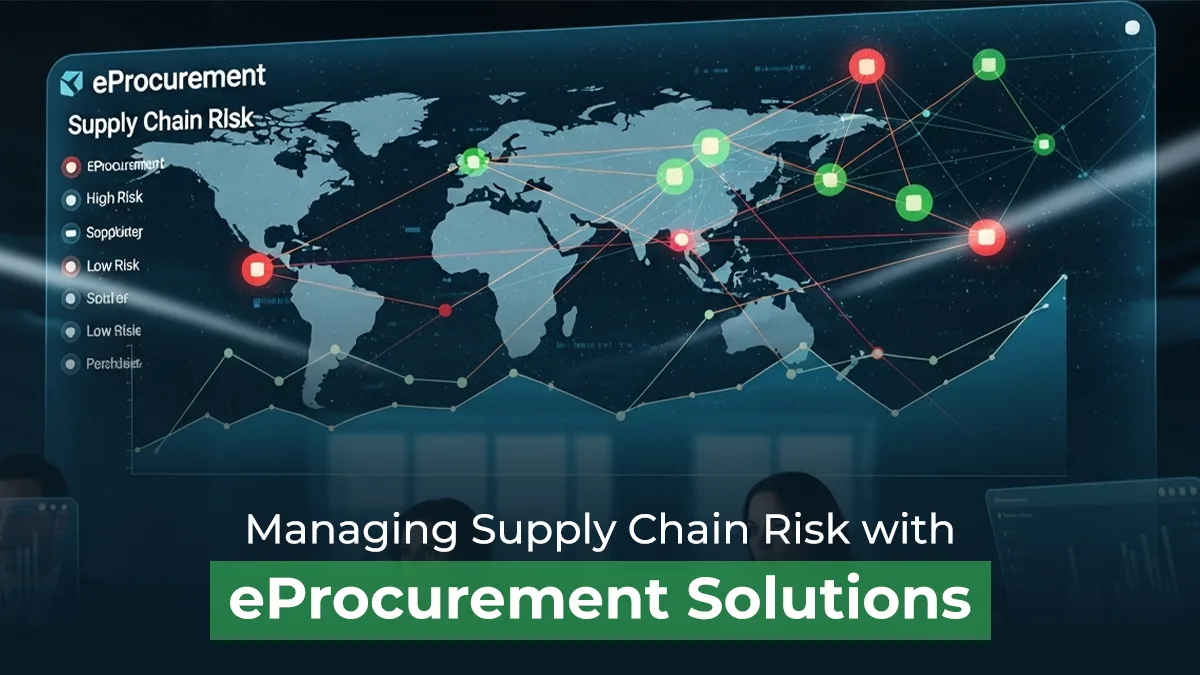
Supply chains are getting more and more complex day by day. A single delay, an unreliable supplier, or missed information can quickly turn into a serious operational issue. And in most cases, such problems happen due to a lack of visibility.
A robust procurement management system can help businesses operate supply chains with accuracy.
These e-procurement solutions offer businesses better control over their procurement processes. With its help, teams can identify risks early and take action in time.
In this blog, we will understand how digital procurement platforms help reduce supply chain risk. Additionally, we will explore how businesses can use them to build more stable and efficient operations.
Why Supply Chain Risk Is Difficult to Manage
In many organizations, procurement still relies on a mix of spreadsheets, emails, and disconnected tools. It might work when a business is small. But as its operations grow, the need for a management tool arises for better visibility and control.
Once a business starts to scale, teams can notice:
Supplier data scattered across systems
Delays due to a lack of real-time updates
Inconsistent communication between teams
Risks identified only after they impact operations
For example, a supplier might be consistently late. But without proper tracking, the issue goes unnoticed until it affects delivery timelines.
This lack of visibility makes risk management reactive instead of proactive.
That’s why businesses are moving toward procurement management software that centralizes information and improves control.
What Is a Digital Procurement Platform?
A digital procurement platform is a system that manages the entire procurement lifecycle in one place.
An e-procurement platform typically allows you to:
manage suppliers
create and track purchase orders
store and monitor contracts
track spending
analyze procurement data
Instead of switching between multiple tools, everything is connected.
A modern enterprise procurement software acts as a central hub where procurement teams can access accurate, up-to-date information at any time.
Traditional Procurement vs Digital Procurement Platforms
The shift from traditional to digital procurement is not just about efficiency. The selection of a platform directly impacts how risk is managed in a business.
Area | Traditional Procurement | Digital Procurement Platform |
|---|---|---|
Visibility | Limited and delayed | Real-time insights |
Supplier Tracking | Manual | Continuous and automated |
Risk Detection | Reactive | Proactive |
Communication | Scattered | Centralized |
Decision Making | Based on assumptions | Data-driven |
In traditional systems, teams often respond after problems occur.
With a procurement management system, teams can identify risks early and respond before they escalate.
How Digital Procurement Platforms Reduce Supply Chain Risk
1. Real-Time Visibility
One of the biggest advantages of a procurement management system is the ability to see what’s happening in real time.
You can track orders, monitor supplier performance, and stay updated on delivery timelines. If something is delayed, you know immediately rather than finding out later.
The data visibility helps teams stay informed and respond quickly when required.
2. Better Supplier Management
Suppliers play a major role in supply chain management. A digital platform helps businesses track supplier performance. It provides insights for delivery consistency, quality, and reliability. Instead of relying on assumptions, teams can make smart decisions with real data insights.
Top procurement software solutions make it easier to identify dependable suppliers and reduce reliance on those that create risk.
3. Early Risk Detection with Alerts
In manually operated supply chain systems, issues are often identified late. A modern e-procurement platform sends alerts when something suspicious happens in operations. It sends updates of shipments, spending patterns, or expiring contracts.
It allows teams to solve problems early instead of facing last-minute hurdles.
4. Accurate and Consistent eData
Manual procurement data handling can cause errors. Duplicate entries, incorrect numbers, or missing details can affect decisions to a small or large extent.
A procurement management software keeps data structured and updated. Hence, teams can rely on it with confidence.
5. Clear and Centralized Communication
Delays in the supply chain mainly happen due to misalignment of teams and the suppliers. Sometimes, information is missed in the mailbox or spread across multiple platforms.
An e-procurement platform brings all kinds of communication into one place. It allows teams to work with the same accurate data.
Hence, it reduces confusion and helps manufacturing processes move faster.
6. Stronger Contract Control
Teams often do not pay attention to ongoing contracts. If a renewal date is missed, it can create unnecessary delays in supply chains.
A sufficient procurement management system allows teams to access and manage contracts easily.
The software sends reminders to the teammates for important deadlines. It helps them stay on track with supply chain plans.
7. Data-Driven Decisions
Business-related decisions cannot rely on guesswork. A digital procurement platform provides insights into spending patterns, supplier performance, and demand trends.
It helps procurement teams make informed decisions. A robust system for supply chain management helps businesses reduce uncertainty over time.
Real-Life Scenarios Where Digital Procurement Reduces Risk
Here are some real-life scenarios where businesses can implement a digital procurement system to manage their supply chains.
Manufacturing Companies
Manufacturing processes in businesses highly depend on the timely delivery of materials. A small delay in material supply has the potential to affect the entire production line.
Here, a procurement management system helps businesses monitor supplier performance and identify potential delays early.
Retail Businesses
Retailers deal with demand fluctuations and inventory challenges every day.
e-Procurement solutions help them make purchasing decisions faster. Furthermore, it avoids stock shortages or overstocking, which allows for smart financing for procurement.
Large Enterprises
Enterprises working with multiple suppliers across regions need better visibility.
An enterprise procurement software gives a centralized view. It makes risk management easier for these enterprises across supply chains.
Implement a Procurement Management System In Existing Business
1. Identify Risk Areas
Start by analyzing the areas where there are high chances of risks occurring in the procurement process.
2. Choose a Procurement Software
Select a solution that fits your business needs. Furthermore, it should be easy to integrate with your existing systems.
3. Centralize Entire Procurement Data
Bring all procurement-related data into one system for better visibility.
4. Automate Key Processes
Focus on automating approvals, supplier tracking, and order management.
5. Train Your Team
Ensure your team understands how to use the platform effectively.
The Future of Digital Procurement and Risk Management
In recent years, supply chains have become more dynamic. Thus, modern businesses do need smarter tools to keep up with the changing scenario.
In the upcoming years, we can expect the following trends in supply chains:
AI-driven risk predictions
more advanced supplier analytics
deeper automation across procurement processes
Modern top procurement software solutions are more than just supply chain management. They help businesses predict and prevent potential risks and improve overall efficiency.
Conclusion
Risks in a supply chain are hard to avoid. But your risk management defines how efficiently your supply chain will perform. Traditional procurement methods often lack visibility and control. These methods are not sufficient to handle modern challenges.
A digital procurement management system gives real-time insights for better communication and smarter decision-making.
By adopting the right eProcurement solutions, businesses can build more resilient supply chains.