Summary
A production line can depend on a single purchasing decision made weeks earlier. Where the procurement of a strategic material does not consider the relevant supplier, the correct contract terms, and approval, the issue can easily escalate from being a procurement issue to a production scheduling one.
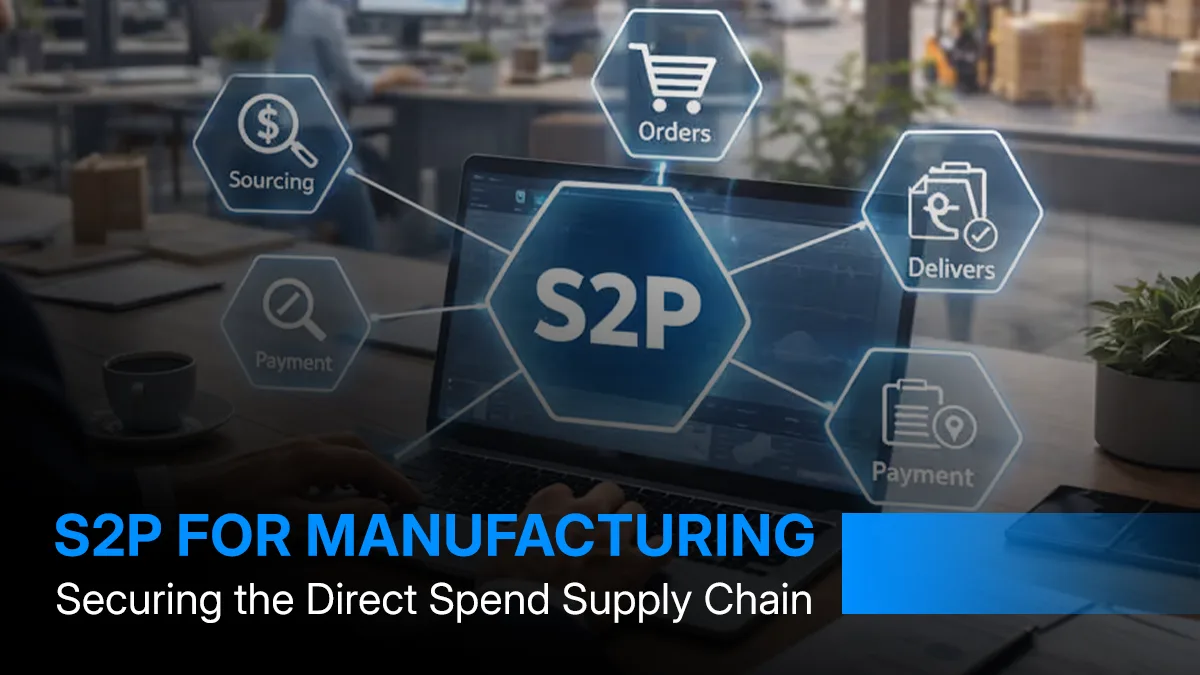
The Source-to-Pay (S2P) process allows manufacturers to integrate such decisions in order to avoid treating them in isolation. Sourcing, supplier management, contracts, requisitions, purchase orders, invoicing, and payments become an integrated procurement process for procurement and finance teams.
Why Direct Spend Needs a Connected Procurement Process?
Direct spend affects the purchasing activities that support manufacturing operations. When sourcing, supplier information, contracts, approvals, and purchasing activities are handled separately, teams can find it harder to maintain consistent control.
A Source-to-Pay Solution integrates sourcing and payment activities within procurement. The system facilitates sourcing, supplier management, spend analysis, workflow approvals, contract management, purchasing, and payment activities. It may also be integrated with ERP systems so procurement data can work alongside resource planning activities.
For a Manufacturing Supply Chain, that connection matters because purchasing decisions should not be isolated from supplier records, contractual obligations, spending data, or approval requirements.
How S2P Supports Direct Materials Sourcing?
Direct materials sourcing needs a defined process to make a request for supplier information, evaluate responses, handle bid management and facilitate sourcing decisions into purchasing.
Procure Suite allows handling the RFP, RFI and RFQ process, conversion of RFQ into eAuction, scheduling of sourcing events and use of RFx/auction templates. Procurement teams can obtain quotations from suppliers via the RFQ process, transfer selected quotations to an eAuction process if competitive bidding is required and schedule sourcing events.
Reusable templates with adjustable parameters can also reduce setup work for recurring sourcing requirements, while the connected workflow allows an approved sourcing decision to move into contracting and purchasing rather than being re-entered in separate systems.
That makes strategic sourcing easier to manage as part of the wider purchasing process instead of treating supplier selection as a standalone activity.
Supplier Management Helps Reduce Procurement Risk
Supplier information is a key part of Procurement Risk management. Price-only sourcing is not enough because procurement personnel should also be aware of who is behind the quote.
Supplier Management is where all supplier information will be centralized, enabling processes such as onboarding, communication, audit, contracting, monitoring, and risk management. This will also enable suppliers to sign up using a simple e-mail onboarding system.
Real-time supplier performance insights can help procurement teams monitor activity against defined measures. Centralized documentation also gives teams a consistent place to access supplier records instead of maintaining important information across separate systems.
For direct-material purchasing, these capabilities help teams assess more than the quoted price. Supplier information, supplier performance data, risk assessments, and contractual information provide the buyer with more information to help make the decision on whether to keep the supplier in their current sourcing strategy.
Contracts and Approvals Keep Purchasing Under Control
Securing a direct-spend supply chain also requires control after a supplier has been selected.
Procure Suite's Contract Lifecycle Management capability supports the contract process from creation and approval through renewal and payment, including version control. Its configurable multi-level approval workflows can then apply defined procurement policies as sourcing decisions move into purchasing.
This gives teams a clearer path between an agreed supplier arrangement and the purchase that follows.
For example, an approved sourcing event can move into contract management, followed by a purchase request that goes through the required approval process. Connecting these stages can make it easier to keep purchasing aligned with established processes instead of treating sourcing, contracts, and buying as separate activities.
Spend Data Makes Direct Spend Easier to Manage
Direct material costs are more difficult to manage when procurement teams do not have visibility into their current purchases and past spending and sourcing history.
This tool gives companies a way to stay visible with regard to their spending through dashboarding, spend management, reporting, and procurement analytics.
Its spend analysis capabilities are designed to help teams identify purchasing patterns, monitor procurement activity, and make sourcing decisions with clearer data.
For Direct Spend Procurement, this can support better procurement planning. Procurement teams can review spend and sourcing information while decisions are being made rather than reconstructing the picture later from disconnected records.
For manufacturing teams, historical purchasing information can also provide a more useful foundation for planning upcoming sourcing activity and reviewing recurring material requirements.
Automation in Procurement Saves Time on Repetitive Tasks
Procurement in manufacturing is frequently repetitive – creation of RFx, approval workflow management, sourcing event preparation, communication with suppliers, and conversion of approval requests to purchase. Manual execution of these tasks would take away time that procurement staff could spend assessing suppliers and negotiating deals or even thinking about future sourcing requirements.
Sourcing event scheduling, reusable RFx and auction templates, RFQ to eAuction conversion, and configurable multi-level approval workflows help to solve specific aspects of this problem.
For instance, procurement staff doesn’t have to create from scratch each recurring RFQ or auction event. Sourcing event template serves as a basis for creation, while scheduling and approval workflow define timing of the event and people who should approve the next stage.
The practical benefit is a repeatable sourcing and approval process: fewer manual handoffs, clearer ownership of each step, and procurement records that remain connected as a requirement moves from supplier sourcing toward purchasing.
A Practical Manufacturing S2P Example
Let’s take the example of a mid-sized automotive parts manufacturing firm that buys steel coils to manufacture stamped parts in its factory. The purchasing department must identify three potential vendors of such material before the current supply contract expires.
The team can issue an RFQ containing the required grade, quantity, delivery schedule, and commercial requirements. After reviewing the submitted quotations, suitable supplier quotes can be converted into bids for an eAuction when additional price competition is appropriate.
Supplier information can be reviewed through the centralized Supplier Management process, while contracts can be created and monitored within the connected workflow.
Once a supplier is selected, the contract can move through approval and version control. A material requisition can then follow the manufacturer's defined approval workflow before the purchase order is issued. Spend analytics can be used to review the resulting purchasing activity, while supplier performance records remain available for future sourcing decisions.
This is a hypothetical manufacturing scenario, not a reported Procure Suite customer result. Its purpose is to show how specific S2P capabilities can connect supplier sourcing, evaluation, contracting, approvals, purchasing, and spend analysis within one direct-material procurement cycle.
Connect S2P With a Manufacturing ERP
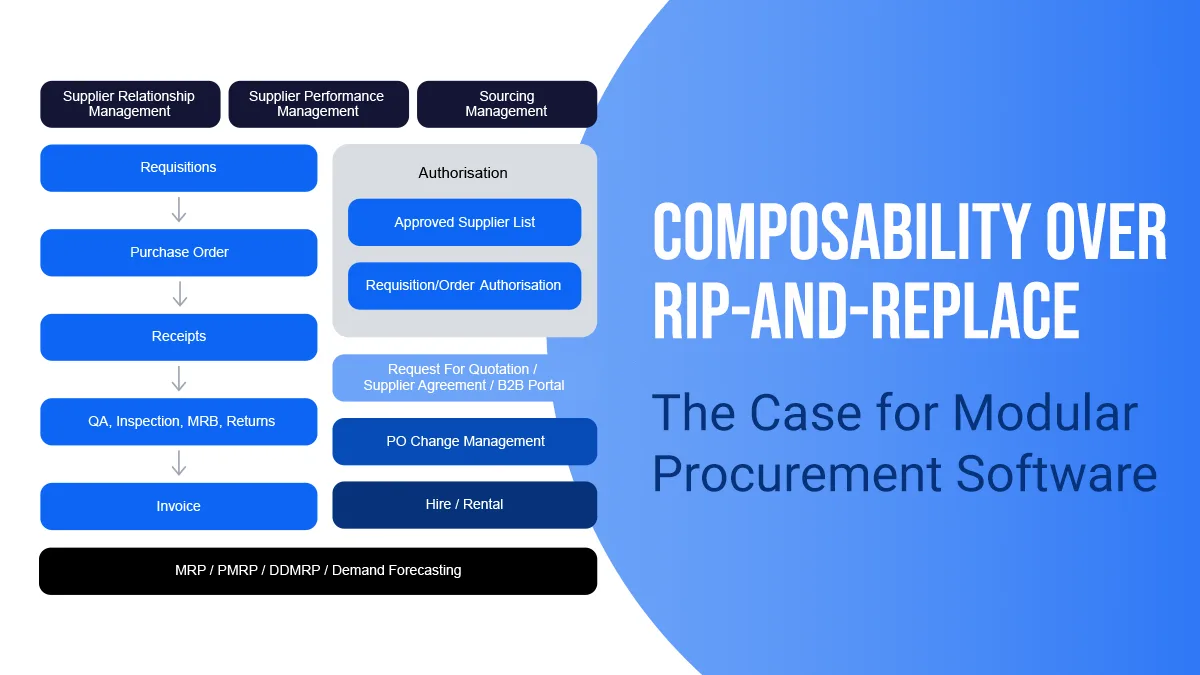
S2P does not have to replace an existing ERP to improve procurement control.
The platform is designed to integrate with ERP solutions, allowing businesses to combine S2P procurement capabilities with ERP functions such as resource planning and supplier tracking.
For manufacturers, the implementation question is therefore not simply whether the two systems can connect.It is necessary for procurement and IT to determine what supplier files, contract data, approval details, requisitions, purchase orders, and other procurement data will be transferred from S2P and ERP systems.
A practical first step is to map one existing procurement cycle from sourcing a material through issuing its purchase order and identify where information currently has to be re-entered, transferred manually, or retrieved from another system. Those handoff points provide concrete candidates for integration.
Avoid Automating an Unclear Procurement Process
Another common error is to assume that the software implementation is the first step and not to assess the procurement process.
Automation is more effective when there is an underlying process in place to automate. Before setting up the workflow for approvals and sourcing activities, it is important to determine who can trigger the sourcing event, what supplier data is needed, who will approve the contract/requisition, and at what point a purchase is ready for the next step.
Supplier master data deserves the same attention. Duplicate, outdated, or incomplete supplier records can carry existing process problems into a new system rather than solving them.
Before expanding automation, define approval paths, supplier information requirements, sourcing processes, and contract responsibilities. Procurement Software can then support a process the organization understands instead of digitizing inconsistent practices.
Build a More Controlled Direct Spend Process
The benefit of the S2P system for manufacturing procurement is its ability to link together various decisions that would otherwise be disconnected: what suppliers are in competition, which one is qualified, what contract applies to the transaction, who approves it, and how the incurred spend will be analyzed.
When manufacturers look at the potential of implementing a Source-to-Pay Manufacturing process, their first step must be to create a map of the one direct-material category and see how the processes of sourcing, suppliers, contracts, approval, purchasing, and ERP systems are disconnected from each other.
Contact Procure Suite for an S2P Demo
Manufacturers analyzing S2P should now proceed to schedule a Procure Suite demo and come prepared with one existing direct materials procurement process workflow. This will allow them to analyze how sourcing events, suppliers management, contracts, approvals, spending analytics, and ERP integration might be leveraged to facilitate this particular process.