Overview
According to a report by Deloitte, well-performing procurement organizations are investing up to 24% of their budgets in procurement technology, which is almost twice the level reported in 2023. The change shows the increasingly evident need for companies to deal with growing procurement complexity as efficiently as possible with minimal manual work involved.
As organizations manage more suppliers and transactions, dealing with conventional procurement processes becomes complicated. Source-to-Pay deals with the situation by combining sourcing, purchasing, invoice processing and approvals into one streamlined process.
By connecting these processes, organizations can automate routine procurement activities and ensure due control of the approval process.
Why Do Procurement Approvals Become Complex?
1. Multiple approval levels: Putting in multiple approval levels for every purchase immediately slows down daily transactions.
2. Unclear approval ownership: Lack of upfront ownership definition leads to back-and-forth and constant delays.
3. Different approval rules for different purchases: Different approvals based on spend, department or category can complicate the approval workflow.
4. Lack of visibility: The lack of a centralised system makes it almost impossible for the procurement department to figure out the location of delays.
Procurement automation can simplify the process here because it helps form a unified workflow so that approvals can occur with limited manual effort.
How Source-to-Pay Improves Procurement and Simplifies Approvals
The objective of S2P software is not to provide an additional level of approvals but to simplify the existing process and make it more efficient.
Here are some of the ways that S2P simplifies the process and makes the approval matrix more efficient:-
1. Automates the approval process
In traditional procurement, the purchase approval process requires manual intervention. This creates unnecessary delays while making it difficult to determine who is responsible for the next stage.
S2P uses workflow automation to send requests to the person concerned by means of pre-set rules. This reduces the dependency on manual approvals and eliminates the need for constant follow-ups.
2. Approvals based on rules Not every purchase requires the same level of scrutiny
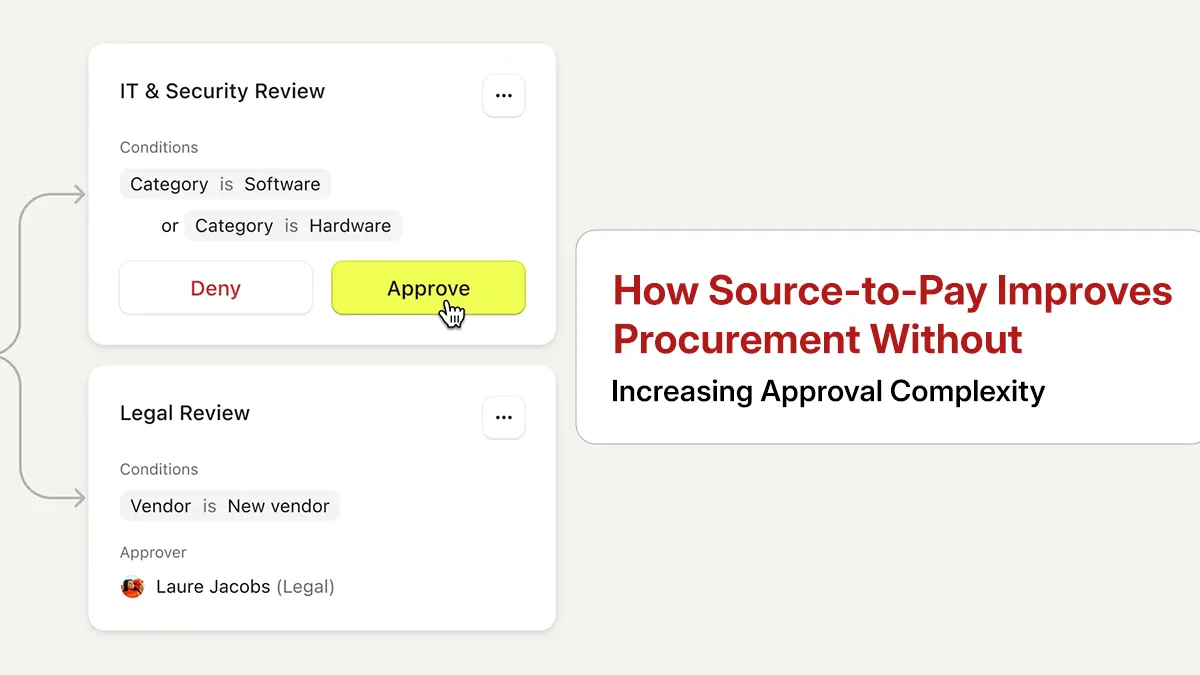
For instance, a $500 office supply request may only need a manager’s approval. On the other hand, a $50,000 technology purchase might require the department head, finance, and procurement team’s consideration and approvals. It is because the latter's operational and financial impact is higher.
S2P allows organizations to have an approval layer based on the spend thresholds. This boosts spend control without hindering the everyday procurement work.
3. Enables parallel approvals
Some purchases need approvals from multiple stakeholders. In such situations, each of the approval requests needs to be completed before the request moves forward, causing bottlenecks and delays.
Source-to-pay makes it easier by allowing multiple stakeholders to view and approve the requests where appropriate. This enables procurement efficiency that makes the whole process agile.”
4. Sets up a formal approval matrix Procurement digitization with S2P clarifies who owns which kind of purchase
For example, IT procurement tasks are routed to the IT department while department-specific purchases are sent to the concerned department. This process removes the chances of confusion and reduces constant delays.
5. Strengthens procurement compliance
Delays in approvals are not the only concern in organizations. Companies also have to ensure they adhere to the policies and controls that are in place. S2P integrates these rules into the purchasing process, making it easier to spot requests that don't meet the criteria.
For example, any purchase that exceeds the budget limit can be flagged for another review round. This supports process optimisation by promoting routine purchases while ensuring only those that are exceptions get extra checks.
Together, these capabilities transform the entire procurement operations, where routine tasks get automated, and exceptions receive the attention they essentially need.
Common Mistakes When Implementing Source-to-Pay
Implementing source-to-pay is not only about introducing new software. The internal procurement process must also work in sync.
Avoiding the following common mistakes can help businesses get the desired results:-
1. Automating an inefficient process
Organizations should first proofread their internal workflow before implementing automation. For example, if there are unnecessary steps or delays in a purchase requisition, automation will only replicate them in a digital format.”
Companies should therefore identify bottlenecks first and then introduce automation.
2. Keeping too many approval layers
Better control does not come from multiple approval layers. A clear procurement governance structure should be kept in place. This can help define which purchases need more attention than others.
3. Not giving attention to sourcing workflow
The S2P process begins even before the purchase is made, but a lot of times, organizations remain stuck in purchase and orders without giving attention to the sourcing workflow. Companies should first ensure that supplier selection and purchasing activities remain connected in the first place to reap end-to-end benefits.
4. Spend controls cannot be defined
Without clear spending guidelines and preferred suppliers, organizations risk making unauthorized or unnecessary purchases. Clear rules of spend control keep the procurement process on track.
Each of these errors is small by itself, but they can cause interruptions in the overall S2P process. Organizations should first focus on process misalignment before adopting automation, as automating a flawed workflow will only add to the mistakes, not lessen them.
How to Measure Whether S2P Is Actually Reducing Approval Complexity?
As procurement operations increase, simpler approvals do not happen only by implementing S2P. Below are a few metrics that organizations should track to ensure that the laid-out process is actually reducing delays.
Keep track of how long it takes to go from purchase to approval. If the time is reduced, then it means faster decision making.
Compare the pre and post-approval stages after the S2P implementation stage to see if unnecessary layers have been removed.
Check the rate of automated approval and the number of routine purchases that are passing through it without manual intervention.
Identify whether the approval bottlenecks have been removed or reduced post source-to-pay implementation.
Measure how many purchases require additional review. Seamless S2P implementation with an extra review layer only for true exceptions, not every routine purchase.
By assessing the above metrics companies can find out whether S2P process is easing their work or simply digitizing a complicated process.
Limitations of S2P to Keep In Mind
While procurement approvals are simplified by S2P, it has its limitations too:-
Complex or unique purchases may still need manual intervention and approvals.
Poor workflows can still create bottlenecks even when S2P is implemented and automation is applied.
Organizations may require considerable time and resources to integrate and implement S2P.
If the team continues to involve more of manual works, then it can affect S2P adoption
Conclusion
Source-to-pay does not mean introducing additional layers of approval for control purposes; it means making sure every approval has a purpose. By using automation, rules established beforehand, and accountability, companies can manage their routine transactions while paying more attention to exception cases.
But the first step to take is to review the existing approval process, identify unnecessary delays, and find which routine approvals can be automated using S2P.
The result?
An approval process that scales with the business without increasing approval complexity!
Ready to simplify your approval workflow?
Contact Procuresuite today to know how we can help you smoothen approvals and build a more efficient source-to-pay process!