Overview
The food and beverage industry faces various challenges due to delays, compliance failures, and inventory issues. Procurement teams strive to address these challenges in a highly sensitive F&B sector. It is also essential to maintain supplier relationships and quality standards for these teams. This reduces negative impacts on production and customer trust. Advancing technology enables the F&B industry to meet various challenges effectively.
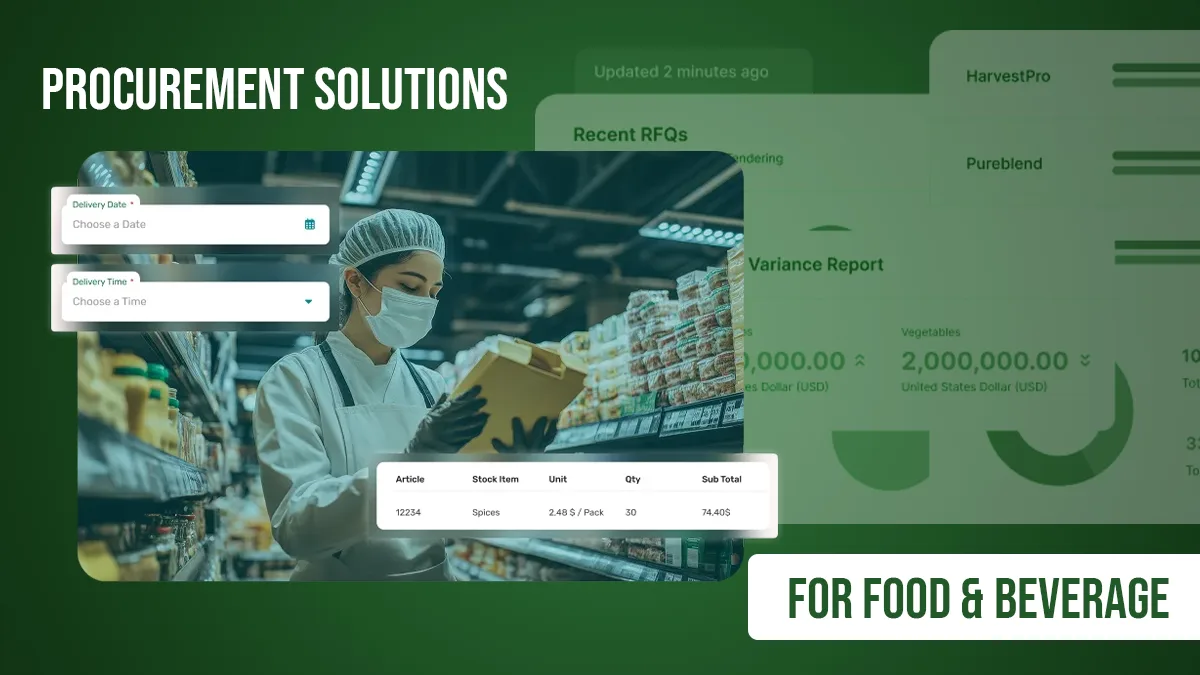
Procurement solutions for food and beverage industry can improve visibility and simplify complexity. These digital procurement platforms help F&B companies streamline approvals and maintain control. This results in minimal impact of approval delays and inventory-related challenges.
Lack of consistency in supply chains causes trouble for the food and beverage sector. Even minor sourcing disruption creates procurement issues and affects profitability. Procurement teams require advanced systems and centralized workflows for managing this issue effectively. This blog talks about key challenges and the role of food and beverage procurement solutions.
Major Procurement Challenges in the F&B Industry
Food manufacturers, distributors, and processing companies face significant challenges these days. These issues affect efficiency and productivity. Some such big challenges include
Fluctuations in Costs
The F&B industry is highly sensitive and prone to vulnerability due to weather conditions, fuel costs, and market demand. Dairy ingredients, edible oils, and packaging materials have unpredictable price variations. Manual procurement processes are not sufficient to resolve this situation. Food purchasing software centralizes quotations, automates workflows, and improves visibility.
Supplier Compliance and Control
Stringent global food safety regulations bring some challenges. It is essential for suppliers to comply with these regulations. Some of them are FSSAI regulations, ISO certifications, and HACCP standards. When companies manage supplier documentation manually, they also face operational risks. Food and beverage procurement solutions can help them centralize supplier onboarding and document tracking. This contributes to reducing risks.
Inventory Management Issues
These issues are one of the most difficult procurement challenges in the food sector. Overstocking leads to product expiration risks and storage inefficiencies. Understocking causes production delays, revenue loss, etc. It is, therefore, necessary for food businesses to get accurate forecasting and inventory planning. Modern procurement solutions integrate inventory intelligence with workflows. This increases speed and improves material planning.
Supply Chain Disruptions
Global supply chains face disruptions because of delays in transportation, geopolitical tensions, and climate change. Food manufacturers have to depend on multiple suppliers across various regions. A delay in raw materials from anywhere can interrupt production schedules. It is, therefore, necessary to avoid delays in sourcing even a single ingredient. Procurement teams should focus on centralizing sourcing data and alternative supplier options.
Lack of Visibility
Many food businesses depend on manual methods- spreadsheets and emails. These traditional methods reduce spending visibility and cause delays in approval processes. The F&B industry faces other issues, including duplicate purchases and inconsistent records. Both finance and procurement teams struggle to control spending and monitor sourcing performance without having a centralized procurement management system.
Supplier Management Hurdles
Food and beverage companies require several ingredients, including raw materials and packaging materials. Logistics services and production supplies are also essential to manage. Multiple suppliers can spoil the F&B industry’s party in the case of communication gaps and operational inefficiencies. Procurement teams, therefore, need a structured approach in comparing supplier performance and evaluating pricing trends.
The food and beverage industry can leverage digital procurement platforms to address these challenges. It is interesting to note the necessary features to choose the right food procurement spend management software.
Top Features of Procurement Solutions for Food and Beverages
Food manufacturers and distributors need to evaluate procurement platforms to get their benefits. The following features of procurement solutions for the food & beverage industry can make a difference in the sector.
Supplier Compliance Management
The F&B procurement management system should support supplier onboarding, certification monitoring, compliance approvals, and audit documentation.
Inventory Forecasting
Inventory forecasting or prediction helps procurement managers reduce the instances of stock shortages and overstocking.
Spend Analytics
This feature is designed to provide the F&B industry with detailed insights related to procurement and cost analysis.
Contract Management
Procurement teams need centralized visibility into supplier contracts and pricing agreements. This feature makes it possible.
Reverse Auctions
Both sourcing and RFX tools improve supplier participation and overall transparency in reverse auctions.
Real-Time Tracking
Businesses monitor progress and supplier activities in real time on interactive dashboards. This is beneficial for effective management.
The right procurement platform should be highly operational and scalable, with higher efficiency. These features can make the food purchasing software capable of handling and automating procurement processes.
Importance of Spend Management and Limitations of Manual Methods
Food procurement spending affects profit margins directly. Increasing costs and inefficiencies in the procurement process are responsible for the rise in expenses. Food procurement spend management is beneficial in monitoring purchasing patterns. It enables F&B companies to identify maverick or unnecessary spending. This ultimately leads to better supplier negotiations and optimized sourcing strategies.
A centralized spend management system can give more information to strengthen the decision-making process for improving financial control. Traditional methods cannot provide the F&B industry with the necessary speed, visibility, and accuracy. Manual or paper-based approvals and fragmented procurement records can delay operations. It can reduce control over spending and increase the process risk.
A food procurement spend management solution can create a structured environment. It is essential for handling sourcing activities and effective management.
How Procure Suite Helps F&B Sector
Procure Suite is an advanced procurement management software. Food and beverage companies streamline sourcing, increase visibility, and strengthen supplier relationships.
Procure Suite supports some key processes, including
Procurement workflows
Supplier compliance management
Spend management
Procure-to-Pay and Source-to-Pay
Reverse Auctions
Procure Suite enables food and beverage companies to build a more controlled and efficient ecosystem for procurement. It reduces operational complexity while increasing spending control. F&B businesses can improve sourcing accuracy, strengthen governance, and maintain accountability with Procure Suite.
Concluding Lines
The food and beverage industry faces several procurement challenges because of different factors. Compliance requirements, supply chain disruptions, and cost fluctuations are some major aspects to consider. Businesses need robust procurement systems to address these aspects.
Modern procurement solutions for the food and beverage industry help these businesses streamline workflows. They can improve supplier management and strengthen inventory planning processes.
Investing in procurement automation can give more visibility, quicker execution, and higher control. F&B companies should choose the right option from the available food and beverage procurement solutions to leverage their benefits.