Overview
Good RFP documentation helps a company make the right supplier selection and achieve expected procurement results. However, the best procurement strategy can still fail when there are inconsistencies in the documentation.
Missing or unclear information confuses suppliers and delays proposal submission. RFP management software helps procurement teams store all the required documents and remain consistent in the sourcing process. Such software makes document management much easier and helps in team collaboration.
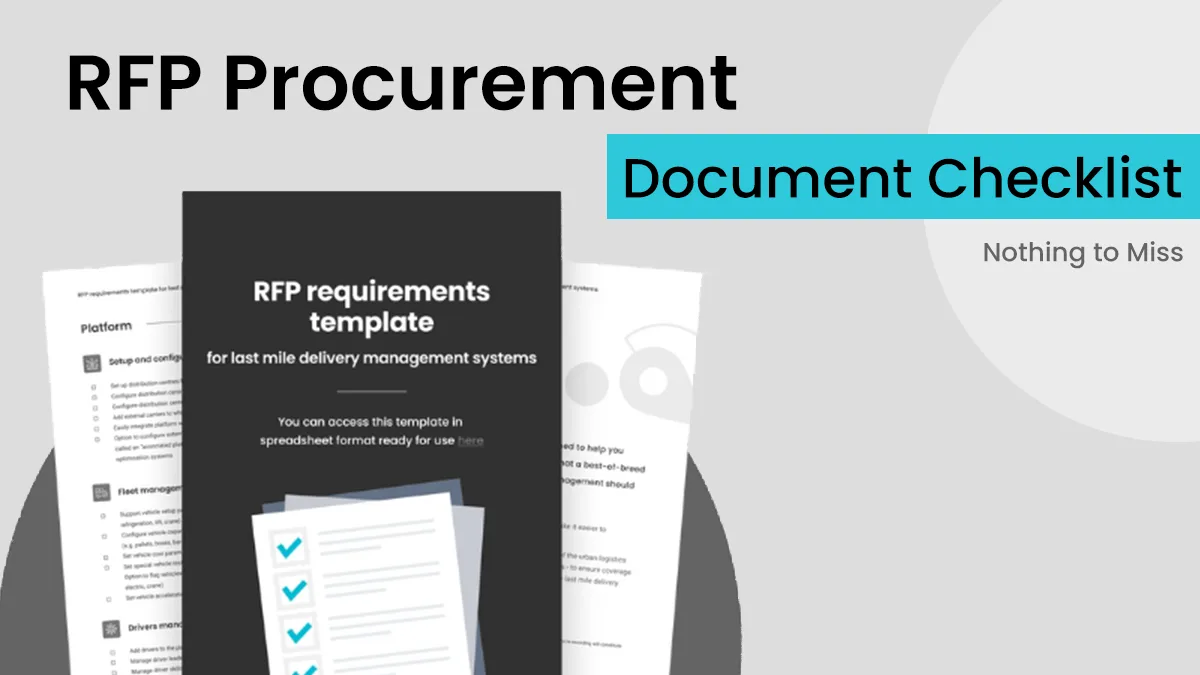
Importance of Complete RFP Document Checklist
RFP is more than just a basic request for supplier proposals. It is a detailed document that outlines project expectations, technical requirements, evaluation methods, and contractual terms. Each section of the RFP contributes to a transparent procurement process.
All stakeholders should provide the required information before the RFP reaches suppliers. It reduces revisions and provides necessary information that suppliers must consider.
Some key benefits of RFP documents are:
It improves proposal quality.
It reduces procurement delays.
It allows fair assessment of suppliers.
It improves compliance.
It promotes teamwork.
Documentation increases the level of trust in the procurement team. It also helps suppliers complete the process faster. Procurement teams receive high-quality proposals from suppliers. It is essential for procurement teams to understand which documents should be included in the RFP.
Essential Documents Required Before Issuing an RFP
Every procurement project has unique requirements. There are some documents that are part of each RFP to ensure suppliers receive complete and accurate information.
Project Overview
Start your documentation with a brief introduction of the organization. Mention the purpose of the procurement. Explain the business challenges.
The project overview gives the context to prepare relevant proposals for suppliers.
Business Objectives
The next step in documentation is to define the procurement project goals. These objectives can be about reducing operational costs, improving efficiency, increasing scalability, or implementing new technology.
Achievable objectives help suppliers suggest the right solutions.
Scope of Work
It is the most important section in an RFP. It defines the products, services, deliverables, and responsibilities a business expects from the selected vendor. It includes:
The deliverables of the project
Roles and responsibilities
Expected outcomes
Service requirements
Performance standards
A well-explained project scope minimizes misunderstandings between the parties.
Technical Requirements
Describe the technical requirements that the suppliers must meet. The technical requirements may include software compatibility, infrastructure requirements, security standards, integration, or certification.
A specific description will help suppliers understand whether they fulfill the required qualification criteria.
Functional Requirements
Describe how the supplier’s solutions should solve your specific business needs. Functional requirements define expected performance. Procurement teams confuse functional requirements with technical specifications.
For example, the business can expect software with features such as workflow automation, reporting dashboards, user management, and approval workflows.
Budget Information
Some organizations state their estimated budget in the RFP document. Some businesses prefer to keep it confidential. If the budget range is pre-disclosed, suppliers find it easy to recommend practical solutions.
A transparent budget helps businesses receive proposals that fall under financial expectations.
Project Timeline
Businesses must mention important procurement and project milestones in the RFP. The document should contain the following:
RFP Release date
Supplier query resolution deadline
Last date to submit proposals
Evaluation time
Supplier selection date
Project start date
Project completion date
These important dates help suppliers plan and submit their proposals on time.
Supplier Qualification Criteria
Define the minimum qualification requirements of the suppliers. It includes:
Industry experience
Financial capability
Technical expertise
Certifications
Project experience
References
It becomes easier to filter out the unqualified suppliers earlier by clearly stating the qualifications.
Proposal Submission Instructions
Explain how suppliers can submit their proposals. Provide information such as:
Proposal submission process
Required document format
Contact information
Deadline
Document titles
Required support documents
Clear guidelines help in minimizing administrative mistakes and ensuring equal evaluation of all the proposals.
Criteria for Evaluation
The suppliers must know how the company will evaluate the proposals. Typical evaluation criteria include:
Technical capability
Experience
Pricing
Project methodology
Customer support
Risk management
Implementation approach
Evaluation criteria provide transparency for suppliers.
Terms and Conditions
Mention the contractual terms for the project a selected supplier must follow.
General terms and conditions include:
Payment terms
Confidentiality
Intellectual property
Warranties
Service-level agreements
Termination clauses
Legal compliance
Collaborate with legal stakeholders to prepare these terms before issuing the RFP. Complete documentation enables suppliers to prepare accurate proposals. It also reduces frequent queries and maintains procurement efficiency from the start. Procurement teams should avoid mistakes when preparing these documents that might happen due to a lack of attention.
Common RFP Documentation Mistakes to Avoid
A well-drafted RFP encourages suppliers to submit accurate proposals. Poor documentation leads to uncertainty and increases supplier queries. These are some common mistakes procurement teams can learn from:
Writing Unclear Scope of Work
Different suppliers understand the poorly drafted scope of work differently. They draft proposals based on what they have understood instead of the actual requirements.
Businesses should clearly state the expected deliverables, responsibilities, and performance standards.
Missing Important Details
When any important details are missing in the documents, suppliers often submit incomplete proposals. They might need additional assistance.
Each document should be checked before releasing the RFP.
Defining Weak Evaluation Criteria
Evaluation criteria should be practical. Broad criteria make proposal comparison difficult for teams.
Clearly assigning weight to each criterion promotes transparency and supports fair selection.
Ignoring Internal Reviews
Procurement documents are the collaborative work of legal, financial, technical, and procurement professionals. Issuing the RFP without careful review by the stakeholders can increase the chances of false information.
Reviewing documents carefully guarantees document precision.
Mishandling Document Versions
Mismanagement of document versions may confuse the team members working on the document and also the suppliers.
Having only one approved document version makes the process easier and error-free.
Setting Unrealistic Timelines
Suppliers need time to understand procurement requirements among their ongoing businesses. It takes a good amount of time to prepare a quality proposal. Short deadlines damage response quality and limit supplier participation.
Create realistic procurement schedules to maximize benefits of the RFI RFP RFQ process.
Underestimating Communication Guidelines
Suppliers should be informed how to submit queries and how they will receive clarification. Effective communication channels assist in enhancing transparency and ensuring the same information reaches each supplier.
Teams can create an effective procurement process by preventing such errors.
Feature-rich request for proposal management software assists businesses in overcoming these documentation challenges.
How RFP Management Software Simplifies Documentation
Manual document management is a tedious task, especially in complex projects. Teams communicate through email and spreadsheets to manage information. There is a high risk in this approach.
Well-designed RFP management software simplifies the RFP tasks.
Centralized documentation management ensures that all procurement documents are stored in one secured place. The teams no longer need to check multiple folders to find the templates, project files, suppliers, and communication channels.
Many teams use the same templates in RFPs for their recurrent procurements. With RFP procurement software, they can create customized templates.
Documents pass through many departments for approval. Businesses can automate the whole process with the help of software.
Software logs all changes made to the document.
An RFP automation software facilitates the procurement process by allowing the procurement department to focus on supplier evaluation without any distractions.
Conclusion
Accurate documentation is the backbone of a good procurement process. A well-structured checklist of RFP documents assists companies in clearly defining their requirements, performance expectations, and determining evaluation criteria. Moreover, it avoids any delay in issuing the RFP and eliminates possible risks.
Documentation becomes easy with the use of modern RFP management software. Centralized storage, automatic workflow, and version control help companies achieve an efficient and consistent RFP process.