Introduction
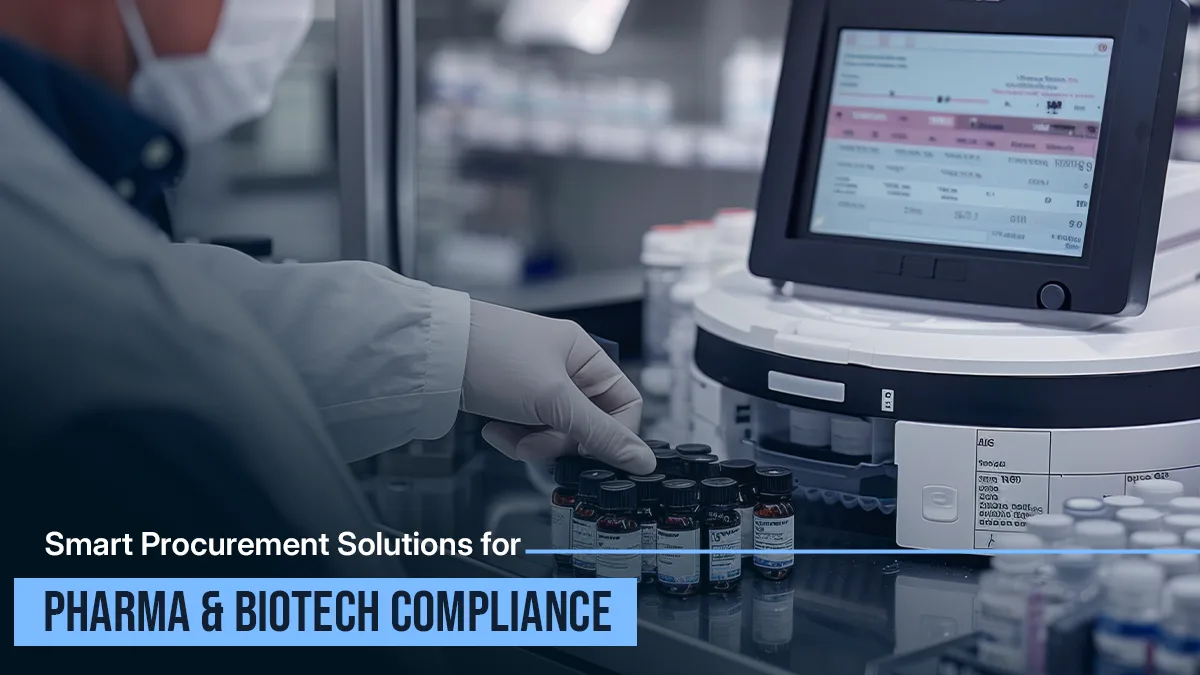
Pharmaceutical and biotechnology companies thrive in the most regulated and supply-sensitive environments. Procurement teams in these companies are responsible for securing raw materials and maintaining strict compliance. These teams need to ensure supplier quality and control operational costs while avoiding any disruption in the process. It is because any hurdle in the process can lead to issues related to regulatory compliance and patient safety.
This is a major reason for adopting biotech procurement software. This digital procurement tool can streamline operations and improve decision-making. They can automate workflows and get audit-ready records with high spend visibility. As pharmaceutical and biotech companies continue to scale, procurement transformation is becoming a priority.
Increasing Complexity of Procurement in Pharmaceutical and Biotech Sectors
The procurement process is quite different in the pharmaceutical and biotech sectors from that in the manufacturing industry. These sectors handle regulated materials, strict standards, and complex ecosystems.
Pharmaceutical and biotech companies must manage procurement for
APIs (Active Pharmaceutical Ingredients)
Laboratory consumables
Clinical trial supplies
Packaging materials
Contract manufacturing services
R&D (Research & Development) equipment
Procurement teams need to maintain regulatory documentation for every process, complying with GMP, ISO, and FDA requirements. Manual procurement processes create issues, including compliance risks and limited visibility into supplier performance. This is one of the key reasons organizations invest in advanced biotech procurement solutions.
Advanced Biotech Procurement Software and Compliance Management
Compliance plays an important role in the pharmaceutical and biotech industry. It has a direct connection with procurement operations. Supplier selection and decision-making affect many things. The role of modern biotech procurement software starts here. It streamlines the sourcing process, keeping all the information about suppliers in one place. This is necessary for reducing compliance risks. Such a strong procurement solution can enhance traceability and transparency. It can standardize the governance process as well. Here are the major ways a biotech procurement solution can handle compliance.
Supplier Qualification
Pharmaceutical procurement teams should ensure that suppliers meet quality and regulatory requirements. Smart biotech procurement solutions can also enable automated supplier validation processes. These solutions can centralize these processes by monitoring document expirations and maintaining supplier lists.
Audit-Ready Documentation
The manual creation and tracking of documents may cause errors and bring non-compliance situations. Procurement systems operating in an intelligent manner will automate purchasing records, approvals, and contracts. Having a central biotech procurement system makes auditing easy and helps ensure compliance.
Controlled Approvals
Compliance-driven procurement requires a stringent approval process. Automatic approvals help companies adhere to internal policies and budget controls. Modern eProcurement software for biotech assists companies in setting up approvals according to different roles. This strengthens procurement accountability across departments.
End-to-End Traceability
Procurement teams in the pharmaceutical and biotech industries need to have visibility into any change in the supplier, procurement operations, and other related processes. The dedicated procurement system helps such procurement groups to have traceability throughout the lifecycle. This process will help in risk avoidance.
Such advanced software can drive the biopharma procurement transformation by helping organizations go from reactive purchasing to proactive strategic sourcing. It brings procurement automation for streamlining requisition management, supplier communication, contract management, invoice matching, and spend analysis.
Role of Procurement Automation in Cost Control
Cost control is another priority for pharmaceutical and biotech companies, especially when expenses related to research and regulations rise. Companies will be able to cut costs without sacrificing quality by using procurement automation.
Consolidation in Supplier Management
A company can avoid supplier fragmentation while conducting negotiations more effectively using centralized sourcing.
RFQ/Reverse Auction Automation
It is possible to automate the entire bidding and evaluation process for comparing the suppliers' prices.
Budget Monitoring and Spend Analysis
The real-time monitoring of spending and budgets can help procurement personnel manage everything proactively. Finance departments also work together with procurement teams through spending analysis.
Reduction in Maverick Spending
Policy-driven workflows can prevent maverick spending. Companies can purchase through the approved suppliers and contracts.
Improved Inventory Coordination
Integrated procurement systems can align purchasing decisions with better inventory planning and reduced overstocking situations.
An enterprise-level biotech procurement software implements financial discipline in pharmaceutical companies. It also supports operational scalability to reduce related costs.
Why Procure Suite is Ideal for Pharmaceutical & Biotech Companies
Procure Suite is an advanced procurement management solution that uses AI technologies. It facilitates the business operations of pharma and biotech organizations through compliance with regulations and cost management. It helps in running businesses efficiently in terms of regulatory compliance and cost reduction. The Procure Suite works effectively even in the most difficult procurement environments without compromising on transparency.
The following are some of the key features of Procure Suite that organizations can use.
Contract Management Platform
This feature helps organizations in negotiating issues like supplier prices, contract renewal, and procurement strategies. It also stops organizations from making purchases outside the scope of their contracts. This results in significant savings.
Supplier Lifecycle Management (SLM)
Procure Suite’s SLM platform centralizes supplier onboarding, certifications, audit records, and performance tracking. It helps companies reduce the issues of duplication and risks related to supplier selection, onboarding, etc.
Real-Time Spend Analytics
An advanced spend analytics dashboard is useful to get real-time visibility into spending across different plants, departments, and business units. Procurement leaders can identify maverick spending, pricing inconsistencies, and budgetary issues in advance using this dashboard.
Compliance-Driven Workflows
Pharmaceutical and biotech organizations must meet compliance requirements. Failure to meet these requirements can increase various costs significantly. Procure Suite can maintain audit-ready records and approval histories with effective sourcing traceability.
Automation of Approval Process
Procure Suite provides a configurable multi-level approval process that helps companies automate the entire process. This means all purchases will adhere to the procurement policy set. This automation increases accuracy and speeds up the procurement process.
Procurement Reporting & Management
Real-time procurement reporting and audit management features are useful for the leadership to make meaningful decisions. Leaders of pharmaceutical and biotech companies can monitor sourcing efficiency and KPIs to grab cost optimization opportunities in real time.
Procure Suite empowers pharma and biotech companies to achieve operational efficiency with high transparency and regulatory compliance. It ensures that companies can follow modern procurement practices.
Future of Procurement in Pharma-Biotech Sectors
Automation, analytics, and artificial intelligence-based procurement are some of the factors that will affect the future of procurement in pharmaceutical and biotechnology industries. Companies will be concerned about sustainable sourcing, diversification of suppliers, decision making, and, through data, process standardization, including smart contract management. As procurement evolves as a strategic business function, these companies will invest more in advanced software.
Concluding Remarks
Pharmaceutical and biotech procurement requires more considerations than traditional purchasing. Companies that fall under this category must balance regulatory compliance, sourcing efficiency, and cost control in a complex global environment. Modern procurement platforms offer the necessary visibility, automation, and governance to manage various challenges of the pharmaceutical and biotech sectors.
It is essential to implement a scalable biotech procurement platform to improve efficiency and strengthen compliance readiness. It is interesting to note that evolving technologies will take contract management, sourcing, and the procurement lifecycle to a new level. Companies can leverage the benefits of biotech procurement solutions to meet compliance requirements and save costs.